What would you do if you could give your patio a fresh, inviting look without draining your savings account?
In This Article
- What You Will Need (or Before You Start)
- Step 1 – Define Your Space and Style
- Step 2 – Source Low‑Cost Materials
- Step 3 – Build or Assemble Your Furniture
- Step 4 – Add Comfort and Personality
- Step 5 – Protect and Maintain Your Investment
- Common Mistakes to Avoid
- Troubleshooting & Tips for Best Results
- Summary
What You Will Need (or Before You Start)
Before diving into patio furniture ideas on a budget, gather these essentials so you won’t have to pause mid‑project:
- Measuring tape – record your patio’s length, width, and any obstacles.
- Sketch pad or free design app (e.g., SketchUp Free) – visualizing layout saves costly re‑arrangements.
- Basic tools – drill, screwdriver set, level, and a handsaw (or a circular saw for larger lumber).
- Materials list – reclaimed wood planks, metal pipe frames, outdoor cushions, waterproof fabric, and a protective sealant.
- Budget spreadsheet – simple Google Sheet with columns for item, source, price, and quantity.
- Safety gear – gloves, safety glasses, and ear protection.
In my experience, a well‑planned spreadsheet prevents surprise expenses. For a 10 × 12 ft patio, I typically allocate $350‑$500 for a complete set of seating, table, and accessories.
Step 1 – Define Your Space and Style
The first decision isn’t about furniture; it’s about how you’ll use the area. Ask yourself:
- Will the patio host daily coffee, weekend BBQs, or evening lounging?
- Do you prefer a minimalist modern look or a cozy cottage vibe?
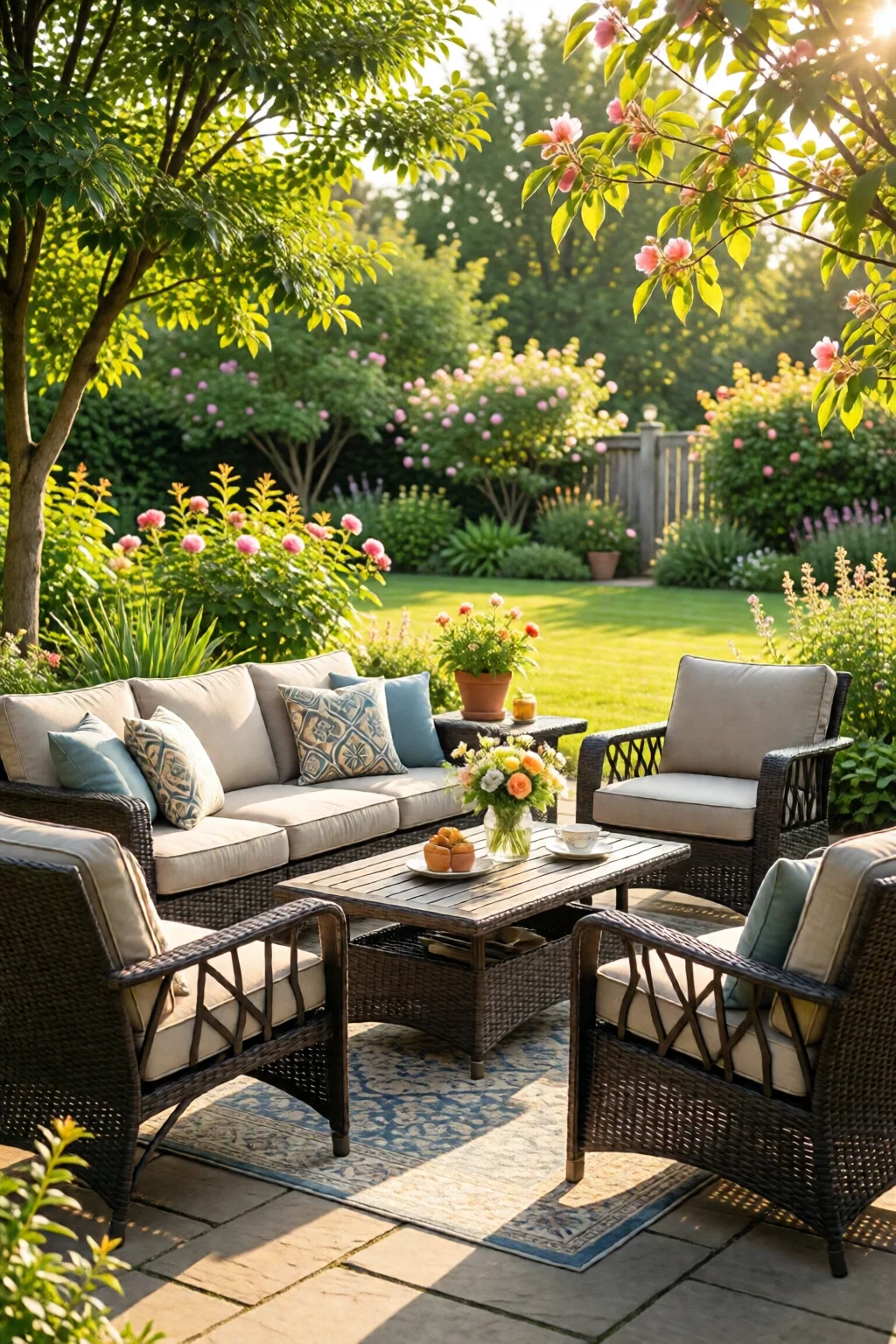
Once you answer, you can choose a layout that maximizes comfort while staying frugal. For a 10 × 12 ft patio, a U‑shaped seating arrangement using a 4‑ft rectangular table and two 30‑inch armchairs fits snugly, leaving a 2‑ft clearance for traffic.
Tip: Sketch the footprint on graph paper (1 sq in = 1 ft). This visual cue helps you avoid buying oversized pieces that waste money.
Step 2 – Source Low‑Cost Materials
Here’s where the budget magic happens. Below are my go‑to sources, including typical prices and dimensions:
2.1 Reclaimed Wood
Old pallet boards, reclaimed barn wood, or discarded decking can become stylish benches or coffee tables. A 12‑ft pallet (approximately 48 × 40 in) often costs $10‑$15 at local hardware stores or for free at a nearby warehouse. After sanding and sealing, you get a sturdy surface that lasts 5‑7 years outdoors.
2.2 Metal Pipe Frames
Industrial pipe furniture kits from Lowe’s or Home Depot start at $45 for a 4‑ft x 2‑ft coffee table frame (½‑inch black pipe, 6‑inch elbows). Pair with reclaimed wood tops for a chic, budget‑friendly look.
2.3 Discount Outdoor Cushions
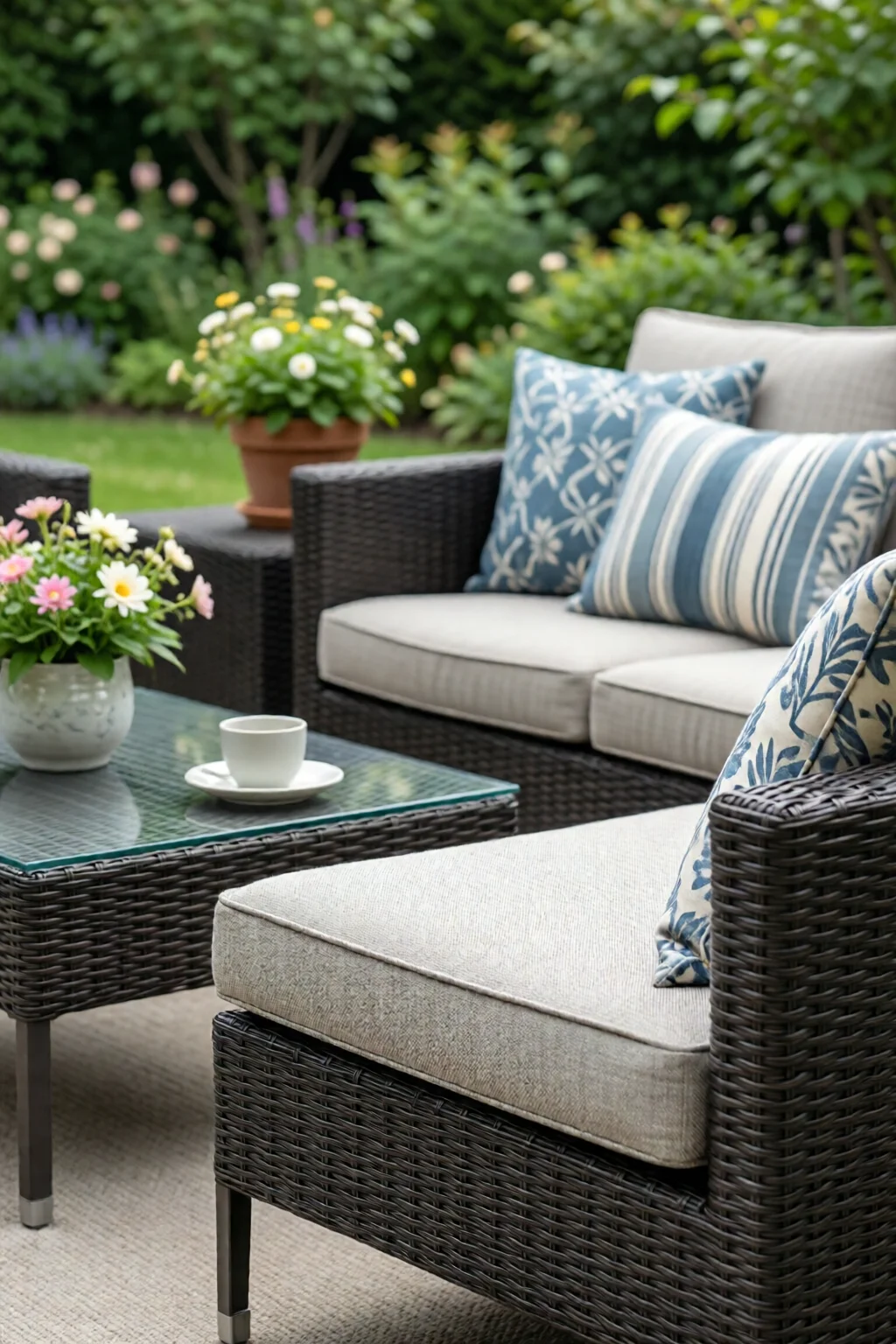
Retail stores like Wayfair run seasonal sales where outdoor cushion sets drop from $80 to $35. Look for UV‑protected polyester fabric, 2‑inch thick foam, and dimensions of 24 × 24 in for armchairs.
2.4 DIY Concrete Pavers
If you enjoy a solid, industrial feel, mix your own concrete pavers. A 60‑lb bag of Quikrete 5000 costs $6.95 and yields three 12‑in × 12‑in squares. Add a silicone release agent for a smooth finish.
2.5 Upcycled Items
Think outside the box: an old wooden crate becomes a side table, a garden hose reel transforms into a swivel chair base. I once turned a discarded wine barrel into a bar-height table for $12 (the barrel) plus $8 for sandpaper and sealant.
By mixing these sources, you can assemble a complete patio set for under $300.
Step 3 – Build or Assemble Your Furniture
Follow these concise instructions; each step includes measurements and time estimates.
3.1 Construct a Pallet Coffee Table
- Disassemble a 48 × 40 in pallet using a crowbar. Remove any broken slats.
- Sand all surfaces with 80‑grit paper, then finish with 120‑grit for smoothness. (≈30 min)
- Arrange three slats side‑by‑side, secure with 2½‑inch exterior wood screws (four per joint). The final tabletop measures 48 × 12 in.
- Apply a waterproof sealant like Thompson’s WaterSeal – two coats, 15 min drying each.
- Attach four 2‑ft metal pipe legs (½‑inch pipe, elbows) using pipe clamps – total cost $20, assembly time 10 min.
Result: a sturdy, stylish table for $45 total (pallet free, hardware from Home Depot).
3.2 Build Two Armchairs from Reclaimed Wood
- Cut two 24‑in × 24‑in seat panels from reclaimed wood. (Use a circular saw; cut time 5 min per piece.)
- Cut backrest panels 24 in × 12 in. Attach with 1‑inch wood screws, pre‑drilling pilot holes.
- Construct a frame using 2‑inch square steel tubing (available at local metal supply for $12 per 4‑ft length). Assemble using corner brackets.
- Secure cushions (24 × 24 in, $35 set) with Velcro strips for removable cleaning.
Total material cost: ~$70, plus 30 min of labor.
3.3 Assemble a DIY Concrete Side Table
- Mix one 60‑lb Quikrete bag with water per instructions (3 qt water). Stir for 2 min.
- Pour into a 12‑in × 12‑in silicone mold, tap to settle.
- Insert a 4‑in diameter metal pipe (from Step 2.2) as a leg, centered.
- Let cure 24 hrs, then sand edges.
Cost: $15 total, time: 2 hrs (including cure).
Step 4 – Add Comfort and Personality
Even the cheapest furniture looks high‑end with the right accessories:
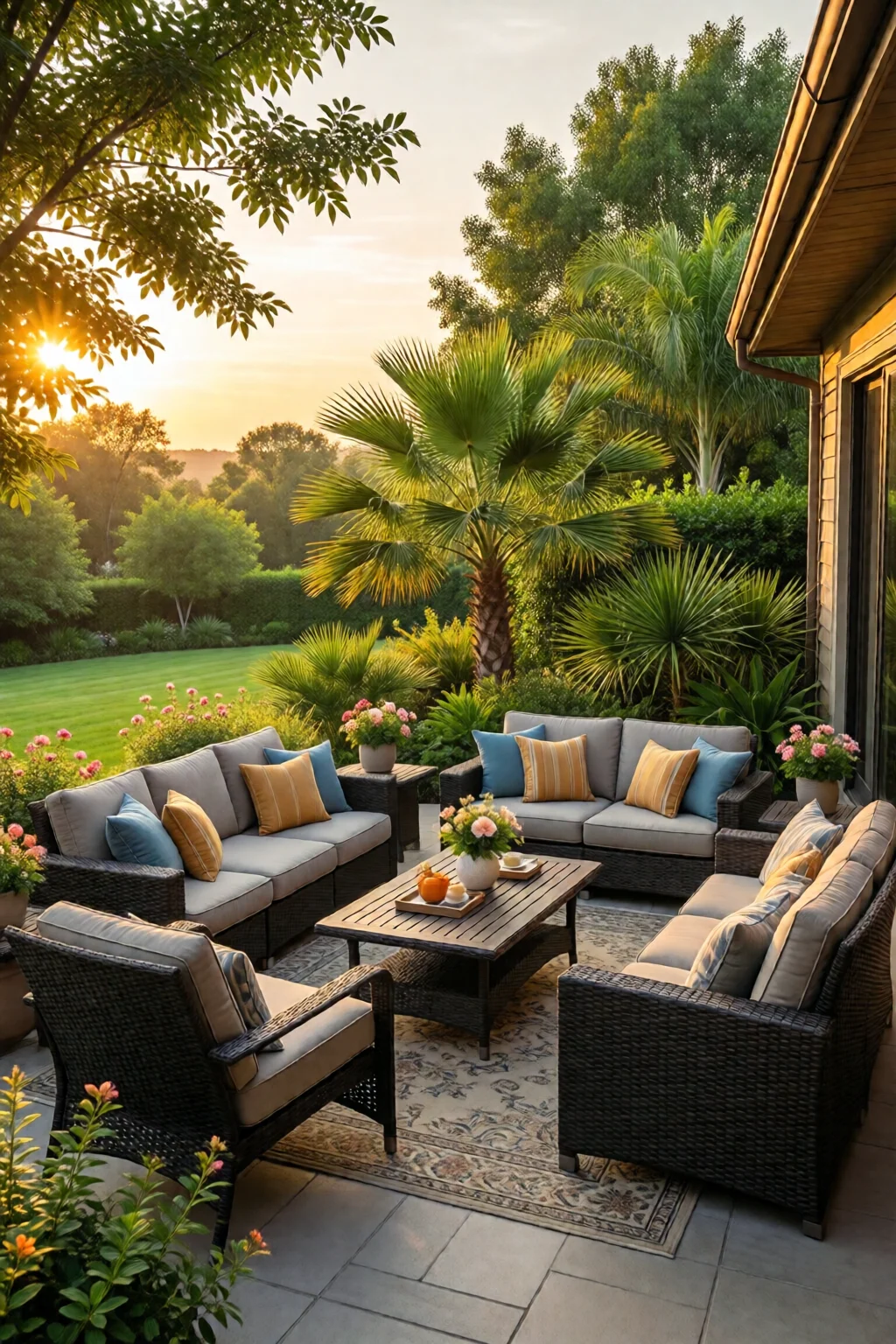
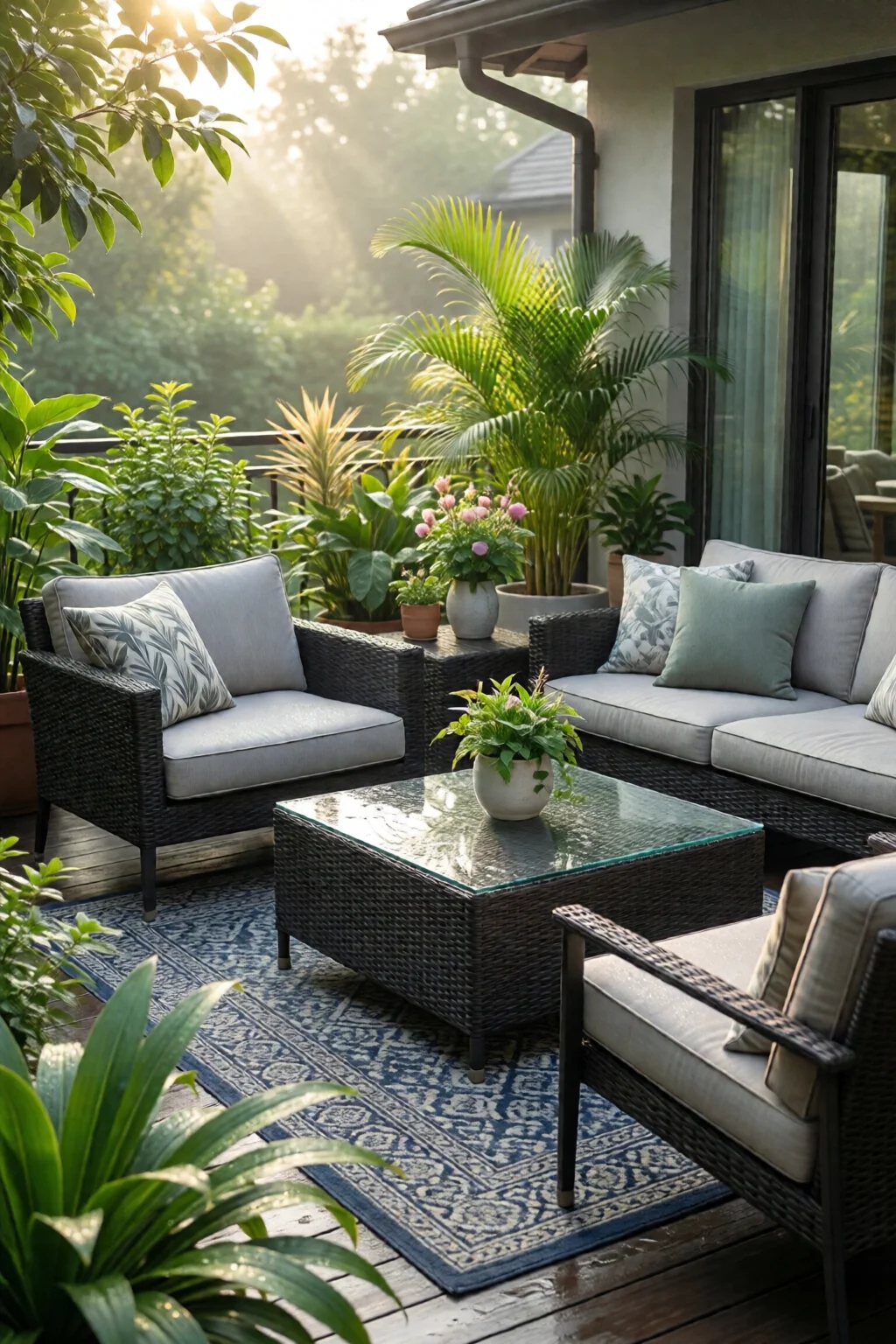
- Outdoor rugs: Look for polypropylene rugs priced $30‑$45 per 5 × 7 ft. They resist mold and add color.
- String lights: 25‑ft LED rope lights (warm white) cost $18 on Amazon; drape across the perimeter for ambience.
- Potted plants: Use pothos plant varieties and care in inexpensive terra cotta pots ($4 each). They provide greenery without high water demand.
- Cushion covers: Swap seasonal prints for $12 per set to refresh the look.
These touches add $70‑$100 to the overall budget, but the impact is priceless. In my backyard, a $35 rug and $20 string lights transformed a plain patio into a nightly retreat.
Step 5 – Protect and Maintain Your Investment
Budget furniture can outlast premium pieces if you care for it:
- Seal wood annually with a clear exterior sealant – $12 per quart covers 200 sq ft.
- Cover cushions with waterproof spray (e.g., 303 Fabric Guard, $9 per 8‑oz bottle).
- Store metal frames under a tarp during winter to prevent rust.
- Clean concrete with a mild detergent and a stiff brush; re‑apply sealant every 2 years.
By spending $30‑$40 on maintenance each year, you extend the life of your patio set by 3‑5 years, effectively lowering the cost per year to under $100.
Common Mistakes to Avoid
- Oversizing furniture – buying a 6‑ft sofa for a 10 × 12 ft patio blocks traffic and forces you to spend more on extra pieces.
- Ignoring weight capacity – cheap metal frames may buckle under heavy cushions; always check the manufacturer’s load rating.
- Skipping proper sealing – untreated wood will rot within 1‑2 years, turning a $30 pallet into a $200 waste.
- Mixing too many styles – a cohesive look (modern industrial or rustic farmhouse) feels intentional; clashing décor looks cheap.
- Forgetting drainage – placing furniture directly on a concrete slab without legs can trap moisture, leading to mold.
Troubleshooting & Tips for Best Results
Problem: Cushions sag after a season.
Solution: Rotate cushions every 2 months and replace the foam core with high‑density 2‑inch foam ($22 per piece). Adding a thin layer of Foam‑Lite improves resilience.
Problem: Metal legs rust.
Solution: Apply a clear rust‑inhibiting spray like Rust-Oleum Stops Rust (8 oz, $7) after cleaning with a wire brush. Reapply annually.
Problem: Concrete paver cracks.
Solution: Ensure the base soil is compacted and add a 1‑inch sand layer before pouring. Use a flexible concrete mix for better crack resistance.
One mistake I see often is neglecting the ground preparation. Even a thin layer of landscape fabric under pavers or wood slats prevents weeds and prolongs stability.
Summary
Creating attractive patio furniture ideas on a budget is less about splurging and more about strategic sourcing, clever DIY, and smart maintenance. By measuring your space, repurposing reclaimed materials, and adding inexpensive accessories, you can assemble a functional, stylish patio for under $300. Keep an eye on common pitfalls, protect your pieces, and enjoy a welcoming outdoor haven without compromising your finances.
How much should I expect to spend on a full patio set on a tight budget?
A complete set—including a coffee table, two armchairs, cushions, rug, and lighting—can be assembled for $250‑$350 if you use reclaimed wood, metal pipe frames, and discounted accessories.
Can I use indoor furniture outdoors without damaging it?
Only if the pieces are rated for outdoor use. Indoor furniture lacks UV protection and moisture resistance, so it will warp or fade within months. Instead, treat indoor pieces with a marine‑grade sealant and add waterproof cushion covers.
What’s the best low‑maintenance material for outdoor seating?
Synthetic rattan (e.g., Trex Outdoor Furniture) and powder‑coated aluminum are both durable, lightweight, and require only occasional cleaning with mild soap.
How do I protect DIY wooden furniture from the elements?
Sand smooth, then apply two coats of a penetrating sealant such as Thompson’s WaterSeal. Reapply annually and store furniture under a tarp during harsh winter weather.
Where can I find inspiration for integrating patio furniture with garden design?
Check out related guides like pergola ideas for small backyard, outdoor planter ideas for front porch, and concrete patio decorating ideas for cohesive design strategies.
4 commentaires sur « How to Patio Furniture Ideas On A Budget (Expert Tips) »