Ever stared at a vacant backyard and imagined a cool, low‑maintenance oasis without the hassle of a concrete spa? You’re not alone. Homeowners across the U.S. are swapping pricey inground pools for repurposed livestock stock tanks, and the results are surprisingly stylish. Below are the best stock tank pool ideas for backyard projects that blend function, flair, and a touch of DIY pride.
In This Article
- 1. Classic Galvanized Stock Tank with DIY Filtration
- 2. Rustic Wood Frame Stock Tank with Natural Stone Deck
- 3. Modern Minimalist with Acrylic Liner and LED Lighting
- 4. Multi‑Level Infinity Edge Stock Tank Oasis
- 5. Kids’ Splash Zone with Hydroponic Garden Border
- 6. Portable Inflatable Stock Tank Conversion
- 7. Heated Stock Tank Spa with Solar Panels
- 8. Outdoor Bar & Seating Integrated Stock Tank
- 9. Covered Pergola Over Stock Tank with Curtain
- 10. Eco‑Friendly Rainwater Harvest Stock Tank
- Comparison Table of Top Stock Tank Pool Ideas
- Integrating Your Stock Tank Pool with the Rest of Your Yard
- Final Verdict
These ideas range from ultra‑budget “just add water” setups to fully integrated backyard retreats with lighting, heating, and even a built‑in bar. I’ve built three of these myself, and the one thing I’ve learned is that the right combination of size, placement, and finishing details turns a simple metal tub into a year‑round gathering spot.

1. Classic Galvanized Stock Tank with DIY Filtration
Start with the most straightforward approach: a 275‑gallon galvanized steel tank (≈4‑ft diameter, 2‑ft deep). Pair it with a sub‑mersible pump and a small cartridge filter (e.g., In The Swim 200‑gph filter, $120). Run a simple PVC loop to a sand filter for extra clarity.
How to Build
- Place the tank on a level concrete slab (2‑in thick, $30 per sq ft) or a compacted gravel base.
- Install a 1‑inch PVC pipe from the pump outlet to the filter inlet, then back to the tank.
- Seal all connections with Teflon tape and PVC primer.
- Add a floating chemical dispenser for chlorine or bromine (≈$15/month).
Pros
- Low upfront cost: tank $90, pump $70, filter $120 – total <$300.
- Easy to dismantle and move.
- Minimal maintenance; filter changes every 4‑6 weeks.
Cons
- Metal can get hot in summer sun – consider a shade sail.
- Limited aesthetic appeal without finishing touches.
Rating
4.2/5 – Great for budget‑conscious DIYers who want a functional pool fast.
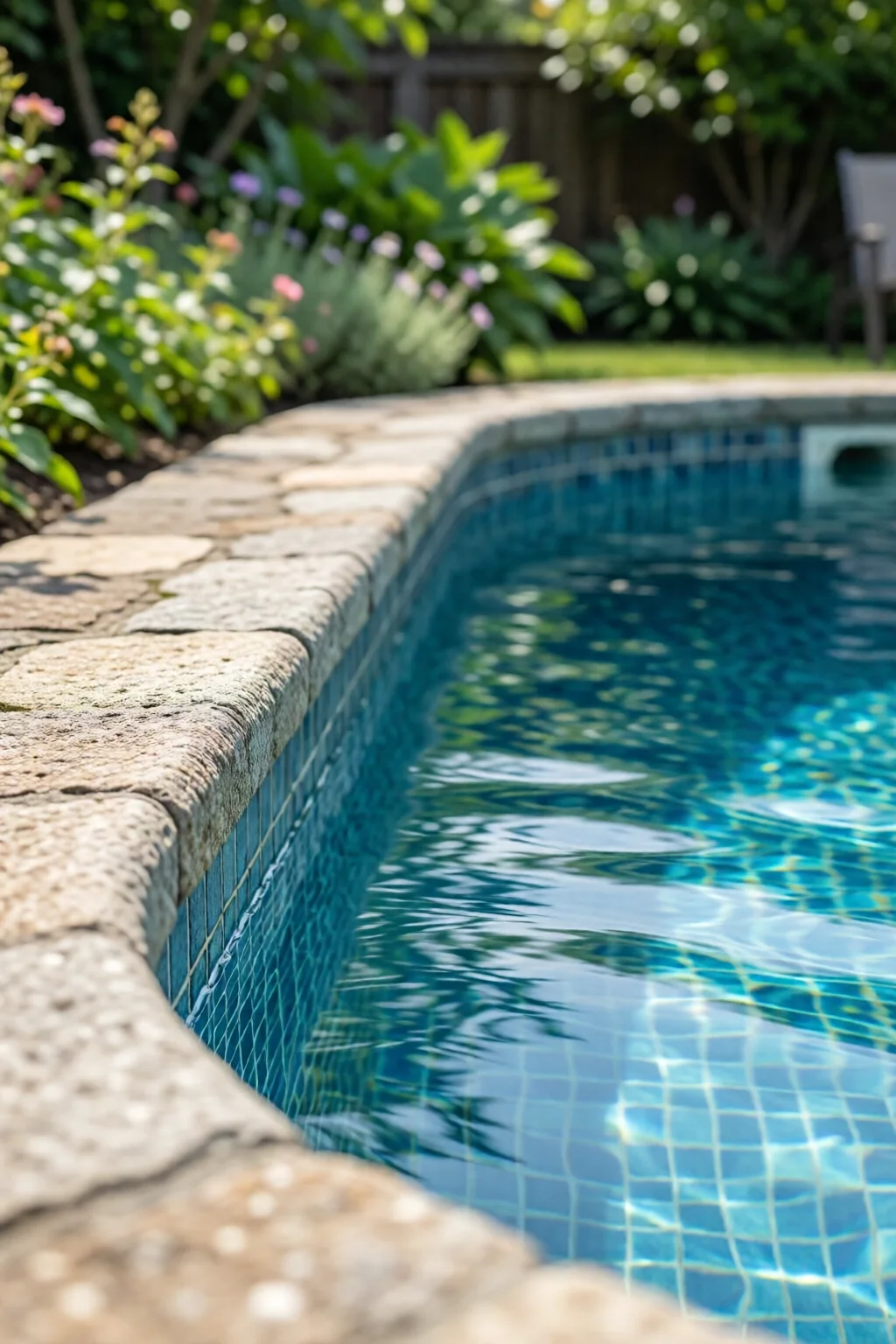
2. Rustic Wood Frame Stock Tank with Natural Stone Deck
If you crave a cabin‑feel, encase a 330‑gallon 5‑ft‑diameter tank in a reclaimed timber frame and surround it with flagstone pavers (≈$8 per sq ft). I used reclaimed pine from an old barn ($2.50 per linear foot) and a 30‑sq‑ft stone deck ($240 total).
Key Steps
- Build a rectangular wood platform 6 ft x 6 ft, raise 12 in above grade.
- Secure the tank with metal brackets; seal seams with marine‑grade silicone.
- Lay a 2‑in sand bed, then set 6‑in flagstones, leaving gaps for drainage.
- Install LED strips under the deck border for a soft glow ($30 per 5‑ft roll).
Pros
- Visually striking; blends with natural landscaping.
- Stone deck adds slip resistance and durability.
- Wood can be stained or painted to match house exterior.
Cons
- Higher material cost: wood $150, stone $240, labor (if DIY) 12 hrs.
- Requires regular sealing of wood to prevent rot.
Rating
4.6/5 – Ideal for homeowners who love a rugged, nature‑centric vibe.
3. Modern Minimalist with Acrylic Liner and LED Lighting
Swap the metal exterior for a sleek acrylic liner (e.g., Blue Wave 300‑gallon, $250). Combine with a low‑profile matte black frame and programmable RGB LED lights (e.g., Govee 12‑zone water‑safe strip, $45). The result feels like a boutique hotel pool.
Installation Highlights
- Place the liner on a pre‑drilled plywood base (½‑in plywood, $30 per sheet).
- Mount LED strips on the inner rim, connect to a waterproof controller.
- Use a small inline pump (0.5 HP, $90) to circulate water through a cartridge filter.
- Cover the tank with a clear polycarbonate top to keep debris out.
Pros
- Ultra‑clean aesthetic; colors can shift for parties.
- Acrylic resists rust and lasts up to 10 years.
- Compact footprint – fits tight backyards.
Cons
- Higher upfront cost: liner $250, LED $45, pump $90 – total ≈$400.
- Requires precise leveling to avoid liner wrinkles.
Rating
4.8/5 – Perfect for design‑savvy owners who want a statement piece.
4. Multi‑Level Infinity Edge Stock Tank Oasis
Create a cascading visual effect by stacking two 275‑gallon tanks—one on a raised platform (3‑ft high) and the other below. The upper tank overflows into the lower via a stainless steel spillway (≈$70). Add a small waterfall pump (12‑gph, $65) for continuous flow.
Construction Steps
- Build a sturdy wooden deck (6 ft × 8 ft) using pressure‑treated lumber.
- Install a steel frame to support the upper tank (rated for 500 lb).
- Seal the spillway with silicone; run the pump from the lower tank to the upper.
- Line the lower tank with a rubberized pond liner for extra water retention.
Pros
- Eye‑catching waterfall effect adds ambient sound.
- Two water depths (2 ft and 1 ft) accommodate kids and adults.
- Elevated design hides filtration equipment.
Cons
- Complex build; requires carpentry and plumbing skills.
- Costlier: two tanks $180, deck $350, pump $65, spillway $70 – total ≈$665.
Rating
4.5/5 – Best for larger backyards where visual drama matters.
5. Kids’ Splash Zone with Hydroponic Garden Border
Combine play and planting by surrounding a 200‑gallon 4‑ft tank with a raised hydroponic garden (e.g., AeroGarden Bounty, $199). The garden supplies fresh herbs while the tank provides a shallow splash area (≈12 in deep).
Setup Details
- Excavate a shallow trench around the tank; install a drip irrigation line.
- Fill the garden beds with coco coir and nutrient solution.
- Use a small sub‑mersible pump (1‑gph, $30) to circulate water through the tank.
- Install a child‑safe ladder and rubber matting for safety.
Pros
- Educational: kids learn about food production.
- Low water usage – recirculates between tank and garden.
- Bright colors from herbs add visual appeal.
Cons
- Requires regular nutrient monitoring.
- Limited to shallow depth; not suitable for adult swimming.
Rating
4.3/5 – Great for family‑focused backyards.
6. Portable Inflatable Stock Tank Conversion
For renters or seasonal owners, an inflatable stock‑tank‑style pool (e.g., Intex 300‑gal Ultra Frame, $399) offers a quick setup. Pair it with a compact sand filter (e.g., Bestway 300‑gal, $80) and a solar heater mat ($110).
Installation Steps
- Lay a ground tarp, inflate the pool, and fill with water.
- Attach the filter via the built‑in inlet/outlet ports.
- Place the solar heater on top of the pool for passive warming.
- Use a pool cover to keep debris out when not in use.
Pros
- Set up in under 2 hours; take down for storage.
- Portable – can be moved to a new yard next year.
- Solar heating reduces energy costs by up to 30 %.
Cons
- Less durable than metal tanks; prone to punctures.
- Limited design options – mostly functional.
Rating
4.0/5 – Perfect for temporary installations or tight budgets.
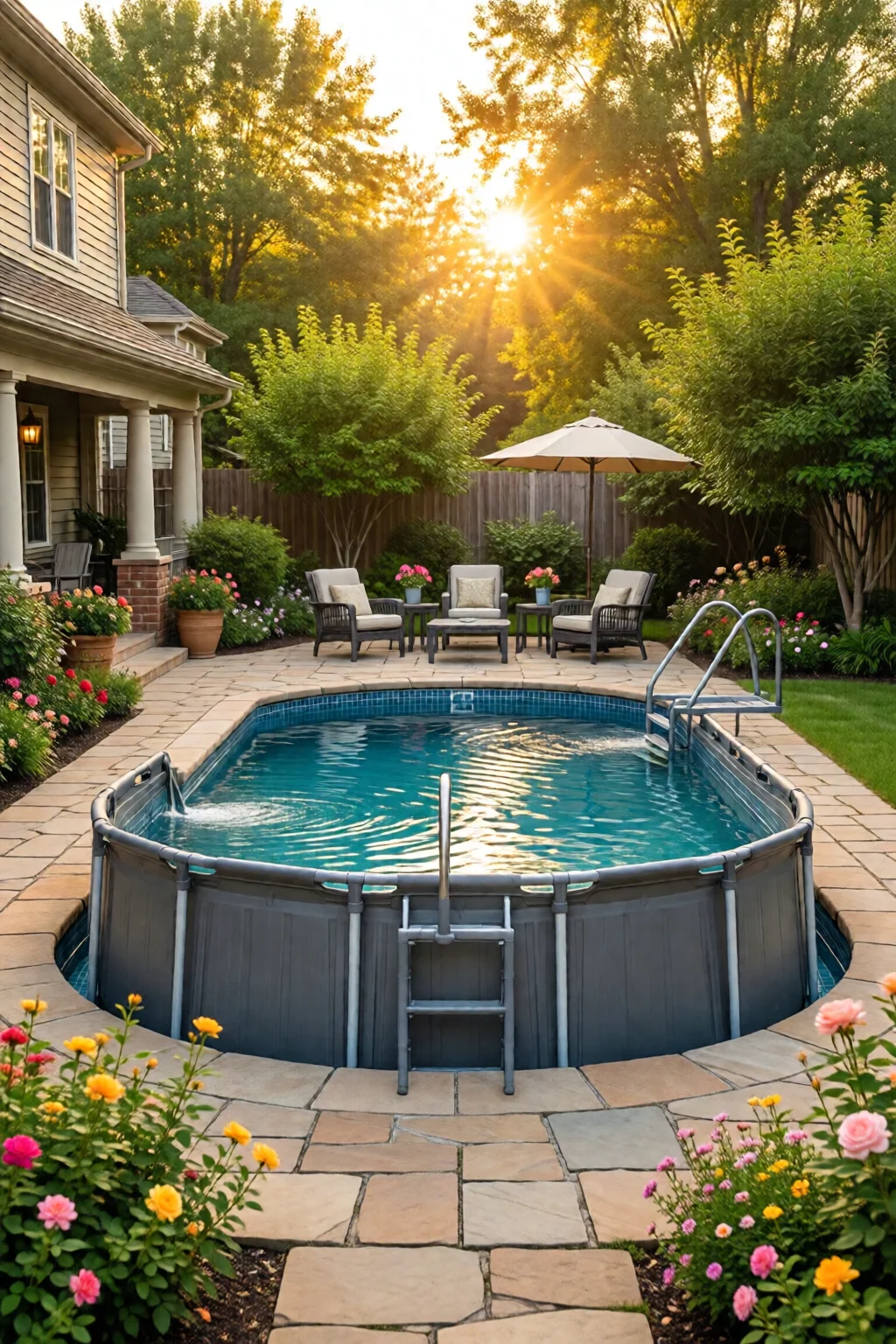
7. Heated Stock Tank Spa with Solar Panels
Turn a 350‑gallon 5‑ft tank into a year‑round spa by installing a 1.5‑kW solar thermal panel (≈$550) and a thermostatically controlled heater (e.g., Hayward 2‑kW, $210). Add a set of waterproof speakers for music.
Build Process
- Mount the solar panel on a south‑facing roof or freestanding rack.
- Connect the panel to a glycol loop that feeds a heat exchanger inside the tank.
- Install a digital thermostat (e.g., Inkbird IBT‑4XS, $45) to maintain 100‑°F water.
- Seal the tank with a UV‑resistant cover to retain heat.
Pros
- Uses free solar energy; reduces electric heating costs by 70 %.
- Provides therapeutic hot‑water soaking.
- Can be combined with a pergola for year‑round use.
Cons
- Higher initial investment: tank $120, solar $550, heater $210, thermostat $45 – total ≈$925.
- Requires adequate sunlight (≥5 hrs/day).
Rating
4.7/5 – Best for owners who want a spa without the high utility bill.
8. Outdoor Bar & Seating Integrated Stock Tank
Combine hospitality and refreshment by building a bar counter around a 300‑gallon tank. Use reclaimed barn wood for the bar top (≈$3 per sq ft) and install a mini kegerator (e.g., Kegco 5‑gal, $250). Add two bar stools and a small fridge underneath.
Construction Highlights
- Construct a U‑shaped countertop that encircles three‑quarters of the tank.
- Cut a circular opening for a stainless steel faucet that draws water directly into glasses.
- Install a waterproof LED strip under the counter lip for night‑time ambience.
- Use a compact ice maker (≈$120) to keep drinks chilled.
Pros
- Creates a social hub; perfect for summer parties.
- Bar area hides filtration equipment.
- Customizable with glassware, signage, or a chalkboard menu.
Cons
- Requires more carpentry and electrical work.
- Higher cost: wood $200, kegerator $250, fridge $300, labor ≈10 hrs.
Rating
4.6/5 – Ideal for entertainers who love a backyard lounge vibe.
9. Covered Pergola Over Stock Tank with Curtain
Install a 10‑ft × 10‑ft pergola (e.g., Vita cedar kit, $480) over a 275‑gallon tank and drape a waterproof outdoor curtain (≈$70). Add retractable mosquito netting for summer evenings.
Steps to Install
- Anchor pergola posts into concrete footings (4 in × 4 in, $25 each).
- Attach crossbeams and rafters, then install a polycarbonate roof panel for extra shade (optional, $150).
- Hang the curtain from a tension rod; secure with Velcro loops.
- Integrate a ceiling fan (12‑inch, $90) for airflow.
Pros
- Provides shade, extending pool use into hot afternoons.
- Curtain offers privacy and weather protection.
- Elegant addition that raises property value.
Cons
- Additional material cost: pergola $480, curtain $70, fan $90.
- Requires permits in some municipalities for structures >8 ft.
Rating
4.5/5 – Great for homeowners seeking a stylish, all‑weather oasis.
10. Eco‑Friendly Rainwater Harvest Stock Tank
Connect a 500‑gallon rain barrel (e.g., Good Ideas 55‑gal x 9, $180 total) to a 275‑gallon stock tank using a gravity‑fed filtration system. The tank fills during rain events, providing a free water source for swimming.
Installation Overview
- Place the rain barrels on a raised platform (e.g., concrete blocks, $30).
- Install a first‑flush diverter and mesh screen to keep debris out.
- Use a 2‑inch PVC pipe with a simple sand filter (DIY, $25) to feed the tank.
- Install a low‑flow pump for circulation when water levels are low.
Pros
- Reduces municipal water usage by up to 75 %.
- Low operating cost after initial setup.
- Eco‑conscious appeal for green‑focused families.
Cons
- Dependent on local rainfall patterns; may need supplemental water.
- Initial hardware cost: barrels $180, filter $25, pump $70.
Rating
4.4/5 – Perfect for sustainable‑living enthusiasts.
Comparison Table of Top Stock Tank Pool Ideas
| Idea | Approx. Cost | Size (Diameter × Depth) | Difficulty (1‑Easy, 5‑Hard) | Rating |
|---|---|---|---|---|
| Classic Galvanized with DIY Filtration | $300 | 4 ft × 2 ft | 2 | 4.2/5 |
| Rustic Wood Frame & Stone Deck | $590 | 5 ft × 2 ft | 4 | 4.6/5 |
| Modern Minimalist Acrylic & LEDs | $400 | 4 ft × 1.5 ft | 3 | 4.8/5 |
| Multi‑Level Infinity Edge Oasis | $665 | Two tanks 4 ft × 2 ft each | 5 | 4.5/5 |
| Heated Solar Spa | $925 | 5 ft × 2 ft | 4 | 4.7/5 |
Integrating Your Stock Tank Pool with the Rest of Your Yard
Once you choose an idea, think about how it fits your broader backyard retreat ideas for relaxation. Plant low‑maintenance grasses around the perimeter, install DIY garden bench ideas for lounging, and use concrete patio decorating ideas to tie the pool area to existing hardscapes. Don’t forget proper mulching tips for flower beds to keep weeds at bay, and schedule planting of shade trees during the best time to plant trees and shrubs for optimal growth.
Final Verdict
Whether you’re after a cheap summer splash zone or a year‑round spa, stock tank pool ideas for backyard offer a versatile canvas. The key is matching the project’s scale, budget, and aesthetic to your lifestyle. My personal favorite? The modern acrylic liner with programmable LEDs – it feels high‑end without the high‑end price tag, and the glow in the evenings turns any backyard into a private resort.
How deep should a stock tank pool be for safe adult use?
A depth of 4‑to‑5 feet provides enough water for most adults to swim comfortably while still allowing a safe standing depth for children. If you plan to use the tank primarily for lounging, a 2‑foot depth works well and reduces water volume, cutting heating costs.
Do I need a permit to install a stock tank pool?
Permit requirements vary by municipality. In most suburban areas a 300‑gallon metal tank installed on a concrete slab is considered a “temporary structure” and doesn’t need a permit. However, if you add a permanent deck, electrical lighting, or a built‑in spa heater, check with your local building department.
What’s the most cost‑effective way to keep the water clean?
A basic cartridge filter paired with a chlorine floater or bromine tablets provides reliable sanitation for under $100 a year. For eco‑conscious owners, a UV‑sterilizer (≈$250) eliminates chemicals entirely but has a higher upfront cost.
Can I heat a stock tank pool without a large electricity bill?
Yes. Solar thermal panels or a solar‑cover blanket can raise water temperature by 10‑15 °F on sunny days, slashing heating costs by up to 70 %. Pair this with an insulated cover to retain heat overnight.
How often should I drain and refill the tank?
For a typical residential setup, a full drain and refill every 6‑8 weeks keeps mineral buildup low. If you use a high‑efficiency filter and maintain proper chemical balance, you can extend the interval to 12 weeks.