Creating a backyard playground that sparks imagination, encourages physical activity, and fits seamlessly into your family’s outdoor space is a rewarding project for any homeowner. From sturdy swing sets to nature‑inspired play zones, the possibilities are endless—but the key to a successful backyard oasis lies in thoughtful planning, safety awareness, and a touch of creativity. In this guide we’ll walk you through practical tips, expert advice, and actionable steps to design a kid‑friendly playground that will delight your children for years to come while enhancing the overall appeal of your yard.
Assessing Space, Budget, and Safety First
Measure Your Yard and Define Play Zones
Before you order a swing set or dig a sandbox, start by measuring the available area. Sketch a rough map of your yard, marking existing features such as trees, garden beds, patios, and utility lines. This visual layout helps you identify ideal zones for play—ideally a flat, level surface with enough clearance for equipment to operate safely. Remember to leave at least 6‑8 feet of clear space around each structure to prevent accidental collisions.
Set a Realistic Budget
Backyard playground projects can range from a few hundred dollars for a DIY sandpit to several thousand for a premium, all‑in‑one play system. Break your budget into three categories: equipment, ground surfacing, and accessories. Allocate roughly 50 % of the total to the main play structure, 30 % to safety surfacing (rubber mulch, engineered wood fibers, or poured rubber), and the remaining 20 % for supplemental items like shade sails, storage benches, and decorative elements.
Prioritize Safety Standards
All playground equipment sold in the United States should comply with the Consumer Product Safety Commission (CPSC) guidelines and ASTM International standards (ASTM F1487 for public playgrounds, ASTM F2291 for residential). Verify that any purchased set includes a safety certification label. In addition, install impact‑absorbing surfacing beneath and around the equipment, and regularly inspect for wear, rust, or loose bolts.

Core Playground Elements That Kids Love
Swings and Seats
Swings are a timeless favorite. Choose between traditional belt‑type seats, bucket seats for toddlers, or even tire swings for a rustic vibe. For added safety, consider a swing set with a protective canopy that shields children from direct sunlight and reduces the risk of falls caused by sudden weather changes. When installing, double‑check the chain length and ensure the swing’s clearance zone remains unobstructed.
Slides—From Classic to Curvy
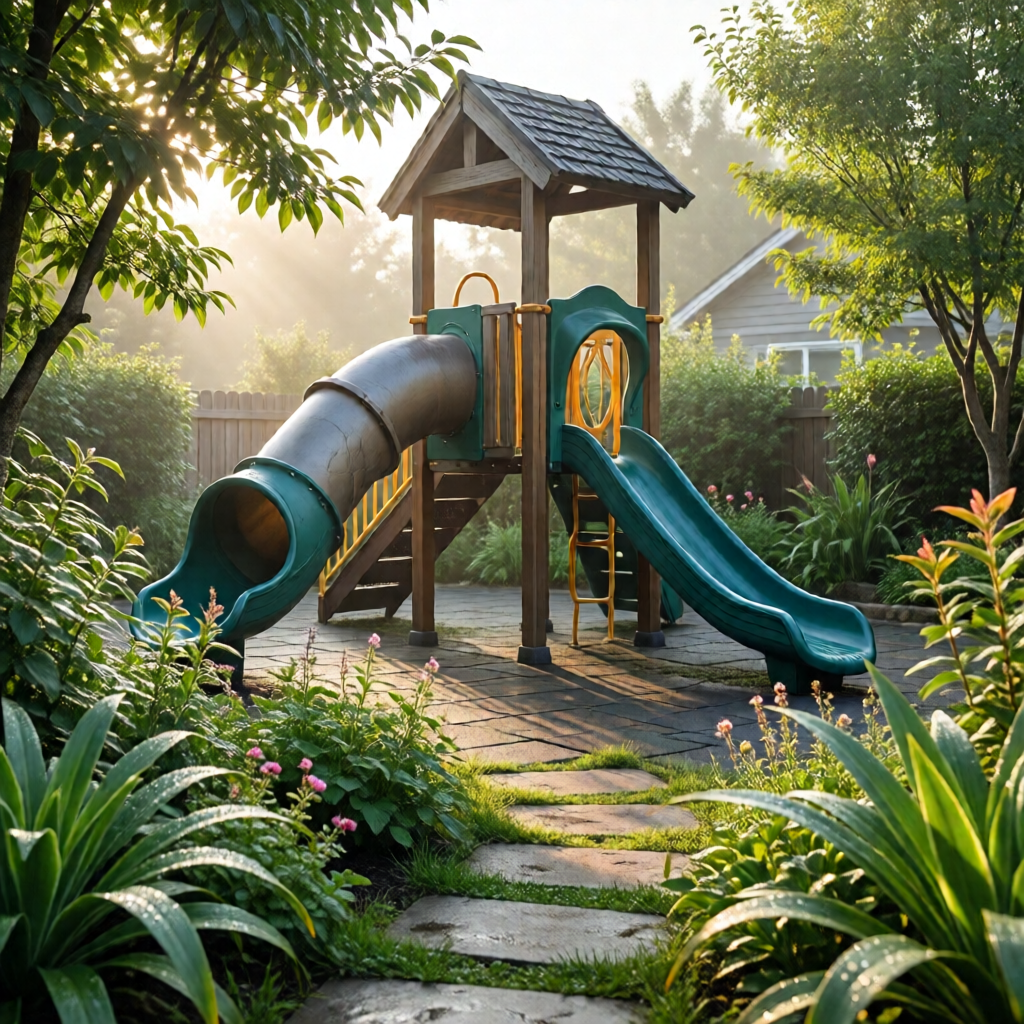
Slides come in a variety of shapes and materials. While metal slides are durable, they can become hot in summer; plastic or composite slides stay cooler and are less likely to cause splinters. A spiral slide adds excitement and uses less horizontal space, making it perfect for smaller yards. Pair slides with a gentle landing surface such as rubber mulch to cushion any falls.
Climbing Structures and Playhouses
Climbing walls, rope ladders, and multi‑level playhouses encourage strength, coordination, and problem‑solving. When selecting a climbing structure, look for features like wide rungs, low steps, and sturdy handholds that accommodate a range of ages. Incorporating a small “lookout” platform gives children a sense of achievement while staying safely within reach of adult supervision.
Sandboxes and Sensory Bins
Sand play nurtures creativity and fine motor skills. A covered sandbox protects the sand from debris and animals, extending its usability throughout the year. For a more eco‑friendly twist, blend sand with natural materials like wood chips or shredded leaves to create a sensory bin that offers varied textures and promotes exploratory learning.
Nature‑Based Play Areas
Integrating natural elements—such as a log balance beam, a small “mud kitchen,” or a butterfly garden—adds a touch of wilderness to your backyard. Deer‑resistant plants like lavender, sage, and ornamental grasses not only deter wildlife but also provide aromatic and visual interest. Check out our guide on deer resistant plants for landscaping for plant ideas that thrive in play zones.
DIY and Budget‑Friendly Playground Ideas
Repurposed Materials for Creative Play
Don’t underestimate the power of reclaimed wood, old pallets, and discarded tires. A simple wooden pallet can become a teepee or a “fort” with a few fabric drapes. Stack tires horizontally and secure them with metal brackets to form a sturdy climbing tunnel. Adding a fresh coat of non‑toxic paint brings personality while keeping the project affordable.
DIY Rope Swing or Tarzan Bar
Install a heavy‑duty eye bolt into a sturdy tree branch, then attach a rope with a secure knot. Ensure the rope is at least 8‑10 feet long for a comfortable swing height. For extra safety, use a “safety line” that runs parallel to the swing’s path, preventing children from drifting too far.
Homemade Sensory Garden
Design a low‑maintenance sensory garden using fragrant herbs (mint, rosemary), textured stones, and wind chimes. Position the garden near the play area so kids can transition seamlessly from active play to quiet observation. This also encourages an early appreciation for horticulture.
Shade Solutions on a Budget
Sun protection is crucial for prolonged outdoor play. A simple shade sail made from UV‑blocking fabric can be anchored to existing fence posts or pergola beams. For a more natural approach, plant fast‑growing shade trees like silver maple or use a trellis with climbing vines such as clematis or honeysuckle.

Choosing the Right Surface Materials
Engineered Wood Fiber (EWF)
EWF is a popular choice for residential playgrounds because it provides excellent impact attenuation and blends well with natural landscaping. It’s also relatively inexpensive and easy to install—simply spread a 6‑inch layer over a geotextile underlayment. Replace the material every 2‑3 years to maintain optimal safety.
Poured Rubber and Interlocking Tiles
For a sleek, low‑maintenance option, consider poured‑in‑place rubber or modular rubber tiles. These surfaces are ADA‑compliant, offer consistent cushioning, and come in a variety of colors that can be coordinated with your playground equipment. Though pricier upfront, their durability reduces long‑term replacement costs.
Mulch and Pea Gravel
Organic mulch, such as shredded bark, is an eco‑friendly surfacing choice that also enriches the soil as it decomposes. Pea gravel provides good drainage and a firm surface, but be aware that small stones can pose a choking hazard for toddlers; always pair with a protective barrier or netting.
Surfacing Maintenance Tips
Regularly rake and level surfacing material to prevent uneven spots that could cause trips. For rubber or tile surfaces, clean with a mild detergent and hose down to remove dirt and debris. Inspect drainage pathways to avoid water pooling, which can degrade the material and create slip hazards.

Incorporating Learning and Creativity
Alphabet and Number Boards
Attach weather‑proof alphabet or number boards to a fence or the side of a playhouse. Kids can practice letter recognition while waiting for their turn on the swing. Paint the boards in bright, contrasting colors to attract attention.
Interactive Water Features
A small, shallow splash pad or a DIY rain‑gutter water table encourages sensory exploration and basic physics concepts like flow and pressure. Ensure the water area is kept shallow (no more than 2 inches) and includes a non‑slip surface to prevent accidents.
Art Stations and Chalk Walls
Mount a weather‑resistant chalkboard or a roll‑up canvas on an exterior wall for spontaneous drawing. Provide a set of washable paints, markers, and natural art supplies like leaves and pinecones. This encourages free expression and can double as a calm‑down zone when play intensity peaks.
Reading Nooks and Picnic Corners
Integrate a cozy seating area with cushions, a small bookshelf, and a shade canopy. Kids can retreat to this nook for storytime or a snack break, fostering a love for reading and outdoor relaxation. Pair the nook with a low table for crafts or board games to extend the playground’s utility beyond active play.
Seasonal Adjustments and Year‑Round Use
Winter Play Strategies
When snow arrives, transform the space into a sledding hill or a snow‑castle building zone. Remove or cover swing chains to prevent rust, and store loose parts in a weather‑proof container. Consider installing a heated mat under a small play area to keep the ground from freezing solid.
Summer Heat Management
Install a misting system or a portable evaporative cooler near the play structures to lower ambient temperature. Ensure that any water source is child‑safe and that surfaces remain slip‑resistant when wet. A strategically placed outdoor fireplace can also provide evening warmth for after‑dark play sessions.
Fall Leaf Management
Rake leaves regularly to prevent them from building up on surfacing material, which can reduce impact absorption. Use the collected leaves as mulch in garden beds, creating a sustainable cycle within your backyard ecosystem.
Spring Refresh
Spring is the perfect time for a playground makeover. Inspect all hardware, repaint wooden components with non‑toxic exterior paint, and replace any worn surfacing. Add fresh plantings—like flowering perennials or a butterfly garden—to invigorate the space and attract pollinators.
Maintaining a Safe and Inviting Playground
Routine Inspections
Conduct a weekly visual check for loose bolts, cracked plastic, or rusted metal. Tighten all fasteners according to the manufacturer’s torque specifications, and replace any damaged components promptly. Keep a maintenance log to track inspections and repairs.
Cleaning and Hygiene
Encourage kids to wash hands after playing in sand or soil. Use a garden hose to rinse surfaces and remove debris after heavy use or after storms. For wooden structures, apply a natural wood preservative annually to prevent rot and insect damage.
Safety Signage and Rules
Post clear, child‑friendly signs outlining playground rules—such as “No running on the slide” or “Age‑appropriate equipment only.” Use bright colors and simple icons to make the guidelines easy to understand. Parents should reinforce these rules consistently.
Engaging the Whole Family
Invite grandparents, cousins, and friends to join in by creating multi‑generational activities—like a backyard movie night. Pair your playground with a backyard movie night setup to extend the fun beyond daylight hours, making the space a hub for family gatherings.
Design Inspiration: Putting It All Together
When finalizing your backyard playground, consider the overall aesthetic and flow. Blend the play structures with existing landscape features to create a cohesive look. For instance, line the perimeter with a privacy hedge of evergreen shrubs, which offers both visual privacy and a natural backdrop for imaginative play. Use planters with colorful annuals to add pops of color—check out outdoor planter ideas for front porch for inspiration that can be adapted to side or rear yard placements.
Remember that the best playgrounds evolve with the children who use them. Regularly solicit feedback from your kids—what do they love? What would they add? By staying responsive to their interests, you’ll keep the space fresh, engaging, and safe for years to come.
What is the safest surfacing material for a backyard playground?
Engineered wood fiber, poured‑in rubber, or interlocking rubber tiles are all considered safe options because they provide consistent impact attenuation and meet ASTM safety standards.
How much space do I need for a standard swing set?
A typical swing set requires at least 12 × 12 feet of clear space to allow for swing motion and safe clearance around the structure.
Can I use reclaimed wood for a playhouse?
Yes, reclaimed wood is a great sustainable option. Ensure the wood is free of nails, screws, or chemicals, and finish it with a non‑toxic exterior paint or sealant.
What are some low‑maintenance shade solutions for a backyard playground?
Shade sails, pergola umbrellas, or fast‑growing shade trees such as silver maple provide effective coverage with minimal upkeep.
How often should I inspect and maintain playground equipment?
Perform a visual inspection weekly, tighten any loose bolts, replace damaged parts immediately, and conduct a thorough safety check at least once a season.