When I first moved into a fifth‑floor walk‑up with a narrow balcony that barely fit a folding chair, I thought a garden was out of the question. Yet, after a few weeks of watching a single basil plant thrive in a repurposed shoe box, the space transformed into a miniature oasis. That tiny success sparked a cascade of ideas, and today I’m sharing the most practical balcony garden ideas for apartments that turn even the slimmest railings into productive, beautiful green spots.
In This Article
Assessing Your Space and Limits
Sunlight & Wind
Start by charting the sun’s path. Use a free app like Sun Surveyor or simply mark the balcony with a piece of chalk at 9 am, noon, and 3 pm for three consecutive days. Most herbs need 4–6 hours of direct light, while leafy greens can tolerate 2–3 hours of shade. On windy decks, a 1‑meter (3‑ft) windbreak—such as a bamboo screen or a lightweight lattice—prevents seedlings from toppling.
Weight & Safety
Apartment building codes often cap balcony loads at 40–50 kg/m² (≈ 90–110 lb/ft²). Before loading up on terracotta pots (which can weigh 8 kg each when filled), calculate the total weight. A quick spreadsheet can help: Number of containers × (container weight + soil weight + plant weight) ≤ allowable load. If you’re close to the limit, swap heavy ceramic for lightweight fabric grow bags (≈ 1 kg each) or hollow‑core wooden boxes.
Budget & Timeframe
Set a realistic budget. A starter kit with three self‑watering containers (Lechuza Classico, €79 each) plus premium potting mix (Espoma Organic, $19.95 for 2 gal) runs about $300. If you’re DIY‑inclined, reclaimed pallets and inexpensive soil from a local garden center can cut costs by 60 %.
Choosing the Right Containers
Material & Cost
Here’s a quick comparison of the most common container types. Choose based on weight, durability, and aesthetic fit for your balcony.
| Material | Avg. Cost (USD) | Weight (filled, kg) | Durability | Pros | Cons |
|---|---|---|---|---|---|
| Plastic (e.g., Bloem 10‑in. pot) | $9.99 | 2.5 | 5‑year UV‑resistant | Lightweight, cheap | Can become brittle |
| Ceramic/terracotta | $24.99 | 5.0 | 10‑year | Classic look, good insulation | Heavy, prone to cracking |
| Fabric grow bag (e.g., Gardener’s Supply Co.) | $12.95 | 1.0 | 3‑year | Excellent airflow, very light | Less decorative |
| Wood (cedar, 12‑in. box) | $34.95 | 3.5 | 7‑year (treated) | Natural aesthetic, can be built to size | Requires maintenance |
Size & Placement
Measure your balcony’s usable floor area. A 1 m × 1 m (3 ft × 3 ft) space can comfortably hold three 30‑cm (12‑in.) diameter containers with a 15‑cm (6‑in.) gap for airflow. Position taller containers on the back wall to create a tiered effect; this also keeps the balcony’s sightline open.
DIY Options
Repurposing is both eco‑friendly and economical. I once turned a set of IKEA Kallax shelves (≈ $79) into a vertical garden by adding 12‑in. fabric grow bags to each cube. Drill a few drainage holes, line the bottom with a mesh screen, and you have a modular, lightweight system that fits under a railing.
Soil, Fertilizer, and Watering Systems
Best Potting Mixes
Never use garden soil straight from the yard; it compacts and suffocates roots. A high‑quality mix like Miracle‑Gro Indoor Potting Mix (2 qt, $6.99) contains peat moss, perlite, and a slow‑release fertilizer. For organic purists, blend 40 % compost, 30 % coconut coir, and 30 % perlite. This blend holds moisture while draining excess water, crucial on balconies where over‑watering can lead to rot.
Efficient Watering
Self‑watering containers such as the Lechuza Classico have a built‑in reservoir that can hold up to 2 L of water, feeding plants for up to 10 days. If you prefer a low‑tech approach, place a saucer under each pot and set a drip line using a 1/4‑in. tubing with a simple timer (e.g., Orbit 62061, $49.95). A 5‑minute daily cycle at 0.5 gal/min provides just enough moisture for herbs without waterlogging.
Nutrient Management
Fertilize sparingly—over‑feeding is a common mistake I see often. A balanced 10‑10‑10 soluble fertilizer (e.g., Jobe’s Organics, $12.99 per 1‑lb bottle) applied at ½ tsp per gallon of water every two weeks keeps leafy greens lush. For fruiting plants like cherry tomatoes, switch to a 5‑10‑10 formula after the first fruit set to promote blooms.
Plant Selection for Small Balconies
Herbs & Culinary Greens
Herbs are the low‑maintenance workhorses of balcony gardens. Basil (Ocimum basilicum) thrives in 6‑in. pots with 6 hours of sun and needs only a pinch of fertilizer every month. I grow a trio—sweet basil, Thai basil, and lemon basil—in three stacked Lechuza containers; each yields enough leaves for a week’s worth of pesto.
Compact Vegetables & Fruits
When space is limited, choose dwarf varieties. Best vegetables to grow in shade like baby carrots (Daucus carota) and leaf lettuce (Lactuca sativa) tolerate 2–3 hours of direct sun. For fruit, look for “patio” tomatoes such as ‘Tiny Tim’ (max 45 cm tall) or dwarf pepper plants like ‘Mohawk’ (produces 30 g peppers). Detailed guidance on grow peppers from seed to harvest helps you plan the timing.
Ornamental & Pollinator Plants
To attract bees and butterflies, add a splash of colour with dwarf lavender (Lavandula angustifolia ‘Hidcote’) or trailing petunias. These not only look elegant but also improve pollination for nearby vegetable plants. A single 12‑in. pot of lavender can produce up to 30 g of fragrant blooms per season, enough for homemade sachets.
Design Themes & Layout Ideas
Vertical Gardens & Trellises
Vertical space is a game‑changer. Install a 1‑m (3‑ft) tall metal trellis (e.g., Gardener’s Supply Co., $29.95) against the railing and train pole beans, peas, or climbing strawberries. I’ve mounted a hanging pocket system (10 pockets, $39.99) that holds a mix of herbs and small succulents, creating a living wall that also shades the balcony floor.
Tiered Container Gardens
Stacking containers creates depth without sacrificing floor space. Use a tiered plant stand (e.g., Winsome 3‑Tier, $49.99) to place a 10‑in. pot of tomatoes on the top, a 12‑in. pot of basil in the middle, and a shallow saucer of salad greens below. This arrangement mimics a raised‑bed effect, improves drainage, and makes harvesting easier.
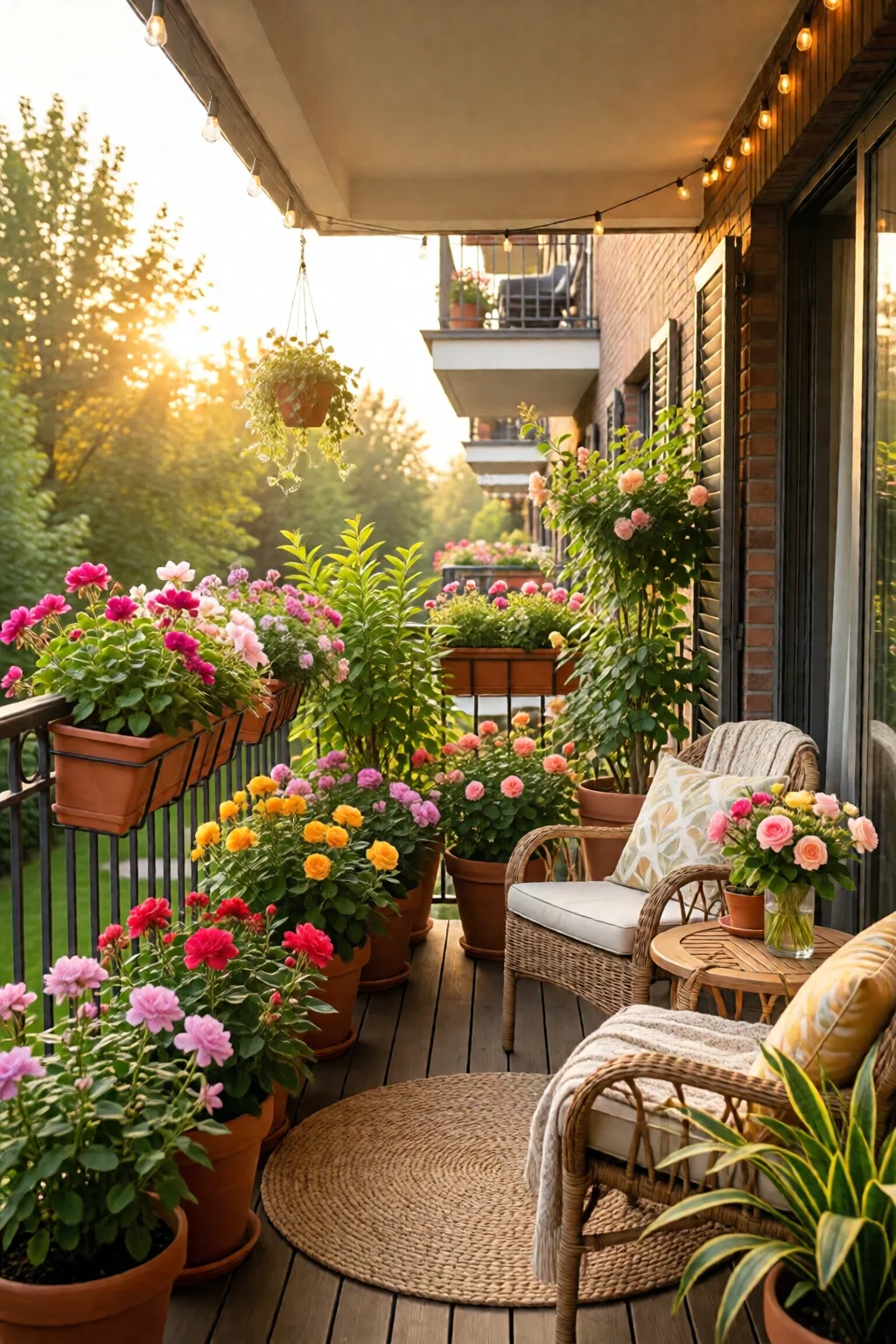
Cozy Seating & Lighting
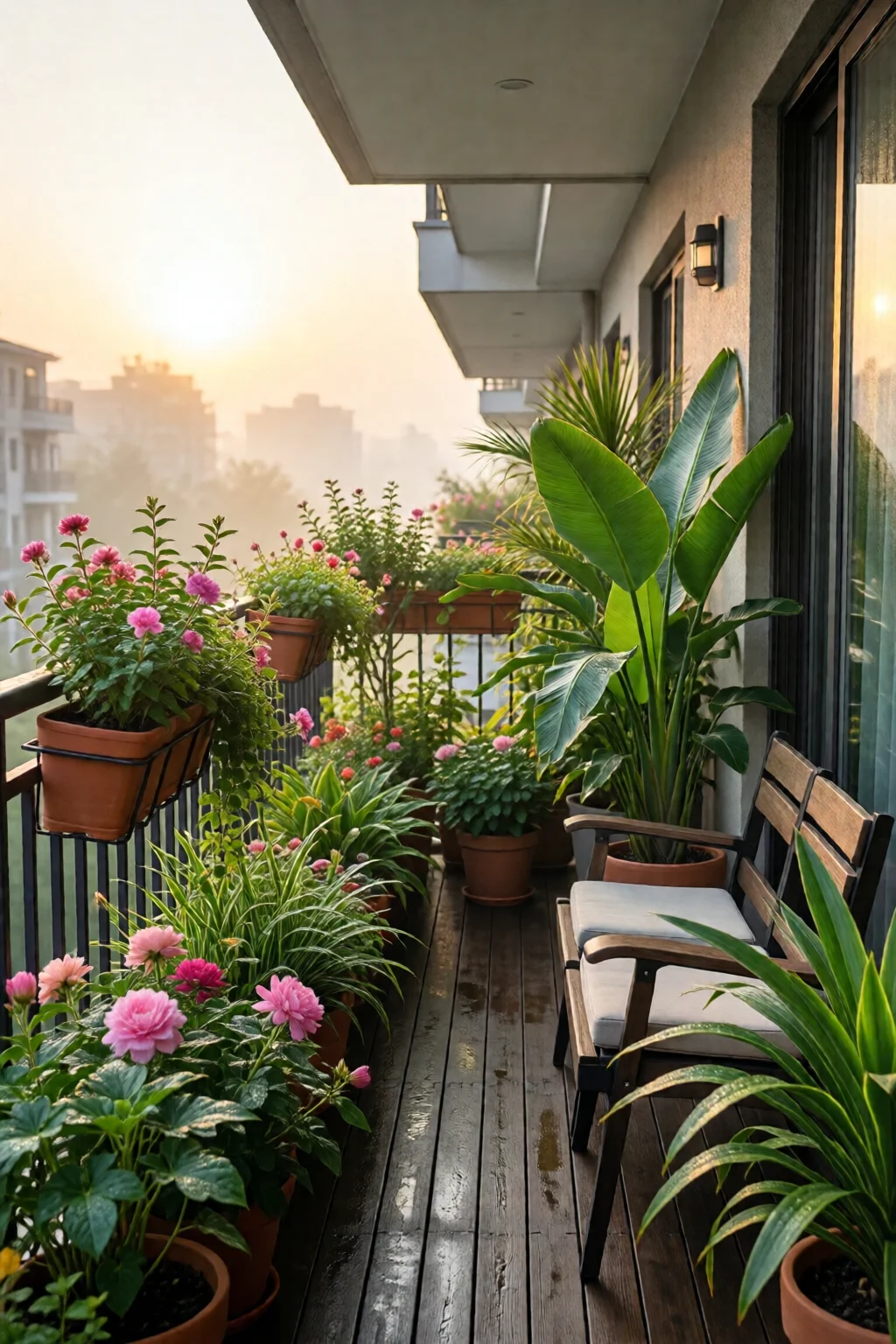
Finish the garden with a small bistro set (IKEA “LISABO” table & chairs, $119) and string lights for ambience. For safe, low‑heat illumination, I recommend outdoor string light ideas for patio using LED bulbs rated for damp locations. A solar‑powered lantern (e.g., GIGALUMI, $24.95) adds a warm glow without extra electricity.
Pro Tips from Our Experience
- Rotate crops every season. Even on a balcony, rotating from leafy greens in spring to dwarf tomatoes in summer prevents soil‑borne diseases.
- Use a moisture meter. A simple probe (e.g., XLUX Soil Moisture Sensor, $9.99) helps avoid over‑watering, especially on sunny rooftops.
- Group plants by water needs. Place drought‑tolerant succulents on the wind‑exposed side and thirstier herbs where morning dew collects.
- Protect against extreme heat. During heatwaves, drape a breathable shade cloth (50 % density, $14.99 per 2 × 2 m) over the balcony for a few hours.
- Leverage community resources. Many city farms offer free compost or discounted containers to apartment dwellers—don’t overlook them.
Frequently Asked Questions
How much weight can a typical apartment balcony support?
Most modern apartments are designed for a live load of 40–50 kg/m² (≈ 90–110 lb/ft²). Check your lease or building management for exact limits, and always calculate the combined weight of containers, soil, and plants before loading the balcony.
Can I grow fruit‑bearing plants on a balcony?
Yes. Choose dwarf or patio varieties—‘Tiny Tim’ tomatoes, ‘Patio’ peppers, or dwarf strawberries. Provide at least 4–6 hours of sunlight, a sturdy support system, and regular feeding with a high‑potash fertilizer.
What is the best soil mix for container gardening on a balcony?
A blend of 40 % compost, 30 % coconut coir, and 30 % perlite offers excellent drainage and moisture retention. For a ready‑made option, use Miracle‑Gro Indoor Potting Mix or Espoma Organic Potting Mix.
How do I water my balcony garden efficiently?
Self‑watering containers, drip‑irrigation with a timer, or simple saucers with a water‑absorbing polymer (e.g., Water Gel Crystals) reduce daily watering needs. Aim for deep watering 2–3 times per week rather than light daily misting.
Conclusion: Your Actionable Takeaway
Transforming a modest balcony into a thriving garden is less about space and more about smart choices. Start by measuring sunlight, confirming load limits, and selecting lightweight, self‑watering containers. Use a premium potting mix, set up an efficient drip or self‑watering system, and pick dwarf herbs, greens, and fruiting plants that fit your light conditions. Finally, add vertical elements, tiered stands, and cozy lighting to make the space both functional and inviting.
Take the first step today: sketch a simple layout on graph paper, purchase two Lechuza Classico containers and a bag of Espoma mix, and plant basil, lettuce, and a dwarf tomato. Within weeks you’ll have fresh produce at hand and a green retreat that neighbors will envy.
1 commentaire sur « Balcony Garden Ideas For Apartments: Complete Guide for 2026 »