Imagine pulling a crisp, peppery radish from the garden just 21 days after you sow the seed – a snack so fresh it still smells of the soil. That’s the kind of speed I love to achieve, and it’s exactly what you’ll get when you follow this step‑by‑step guide on how to grow radishes fast. By the end, you’ll have a fast‑growing, high‑yield radish patch that can keep up with your cravings and your dinner plans.
In This Article
- What You Will Need (or Before You Start)
- Step 1 – Choose the Right Variety for Speed
- Step 2 – Prepare the Soil for Rapid Growth
- Step 3 – Sow Seeds at the Perfect Time and Depth
- Step 4 – Water Consistently and Mulch Early
- Step 5 – Thin and Feed for Optimal Size
- Step 6 – Harvest at the Peak for Maximum Speed and Flavor
- Common Mistakes to Avoid
- Troubleshooting or Tips for Best Results
- Summary
- Frequently Asked Questions
What You Will Need (or Before You Start)
- Radish seeds – I swear by the “Cherry Belle” variety (pack of 2 oz, $3.49 at Burpee) for its quick 22‑day harvest and sweet flavor.
- Seed starting kit – Jiffy Seed Starter Kit (10 trays, $7.99) or a reusable peat block system if you prefer sustainability.
- Soil mix – A 1:1 blend of premium garden loam (e.g., Miracle-Gro All Purpose Garden Soil, 5 qt, $5.99) and coarse sand for drainage.
- pH tester – Digital meter (e.g., Sonkir Soil pH Meter, $9.99) to keep soil between 6.0‑6.8.
- Fertilizer – Espoma Organic Seed Starter ($12) applied at planting, plus a light side‑dress of Miracle‑Gro Water Soluble Plant Food (1 L, $5) halfway through growth.
- Mulch – Fine straw or shredded newspaper (≈$2 per bale) to retain moisture and cool the soil.
- Watering can or hose with a fine rose – Consistent moisture is key; aim for 1‑1.5 inches per week.
- Garden tools – Small hand trowel, garden fork, and a 2‑inch garden rake.
Step 1 – Choose the Right Variety for Speed
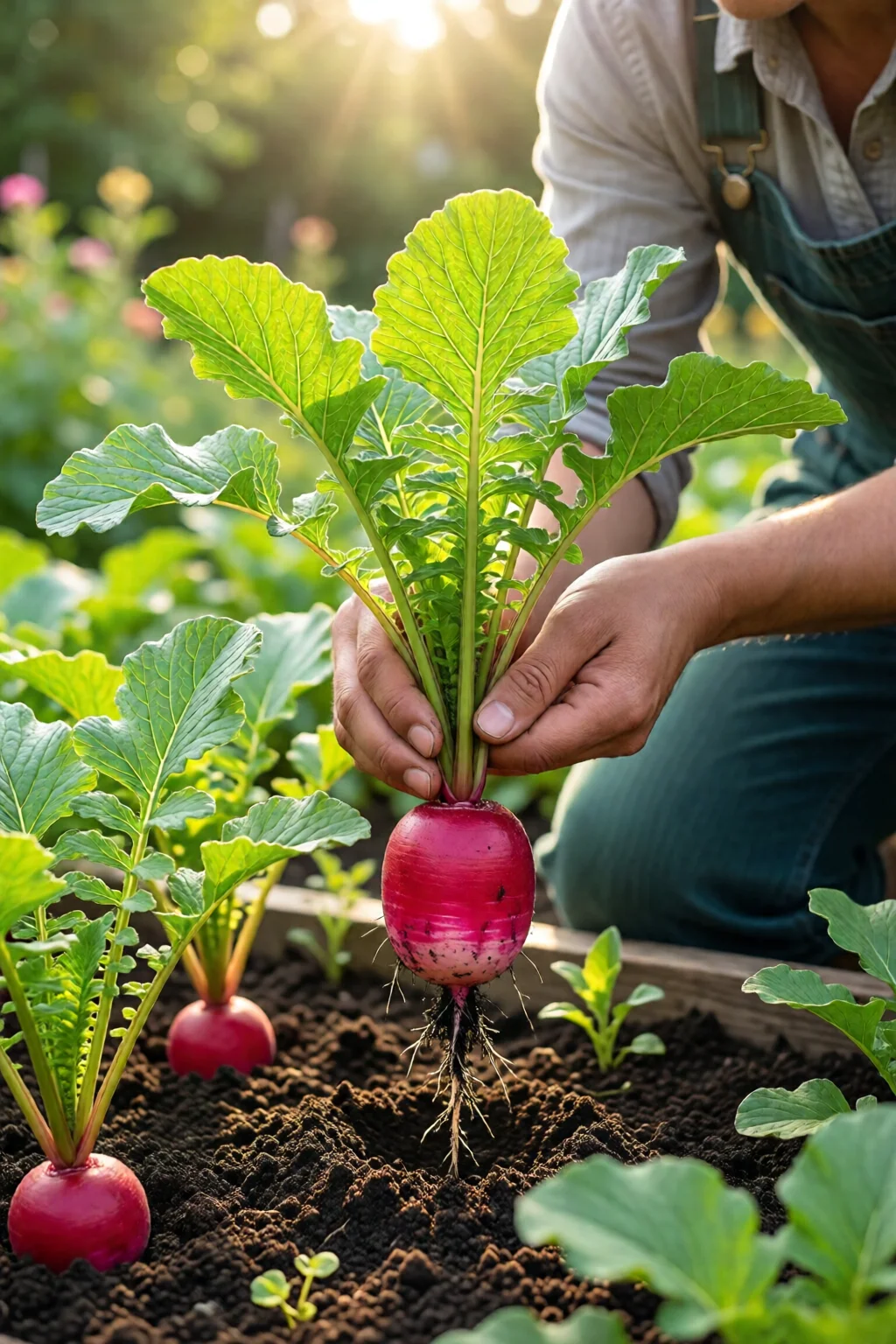
Not all radishes mature at the same pace. In my 12‑year gardening career, I’ve found “French Breakfast” (red‑top, white‑bottom) and “Easter Egg” (multicolored) also hit the 20‑day mark under optimal conditions. If you want the absolute fastest, go with “Cherry Belle.” Check the seed packet for the “days to maturity” rating – aim for ≤ 22 days.
Step 2 – Prepare the Soil for Rapid Growth
Radishes love loose, well‑draining soil. Start by loosening the top 6‑8 inches with a garden fork; compacted soil slows root expansion. Mix in 2 cups of the Espoma Seed Starter per 10 sq ft to give seedlings a nitrogen boost without overwhelming them. Use the Sonkir pH meter; if the reading is below 6.0, add a tablespoon of garden lime per square foot. If above 6.8, a half‑teaspoon of elemental sulfur per sq ft will bring it down.
For raised beds, a pre‑filled 4‑by‑8‑foot bed filled with the 1:1 loam‑sand mix costs about $30 in materials and yields a quick‑draining medium perfect for fast radish cycles.
Step 3 – Sow Seeds at the Perfect Time and Depth
Timing is everything when learning how to grow radishes fast. Sow seeds as soon as soil temperature reaches 50‑65 °F (10‑18 °C). In most zones, that’s early spring (March‑April) or late summer for a fall crop. Direct‑seed into the prepared bed, spacing rows 12 inches apart.
Plant seeds ¼‑inch deep, covering lightly with soil. Press gently with the back of a hand or a flat board to ensure good seed‑to‑soil contact. Water immediately with a fine spray to avoid washing seeds away.
Step 4 – Water Consistently and Mulch Early
Radishes require steady moisture to germinate quickly. Keep the soil evenly damp for the first 5‑7 days; this encourages rapid sprouting, often within 3‑4 days. Once seedlings emerge, water once daily in hot weather, aiming for a total of 1‑1.5 inches per week.
Apply a 1‑inch layer of fine straw or shredded newspaper mulch right after the first true leaves appear. Mulch reduces temperature fluctuations and cuts water loss by up to 30 %, which translates to faster, more uniform growth.
Step 5 – Thin and Feed for Optimal Size
When seedlings reach 2 inches tall (usually day 7‑9), thin them to 1‑2 inches apart. This prevents crowding, which otherwise leads to stunted roots and slower maturation. Use the thinned seedlings as micro‑greens in salads – a win‑win.
Two weeks after planting, side‑dress with a diluted solution of Miracle‑Gro Water Soluble Plant Food (½ teaspoon per gallon). This light nitrogen boost fuels rapid leaf development without sacrificing root size.
Step 6 – Harvest at the Peak for Maximum Speed and Flavor
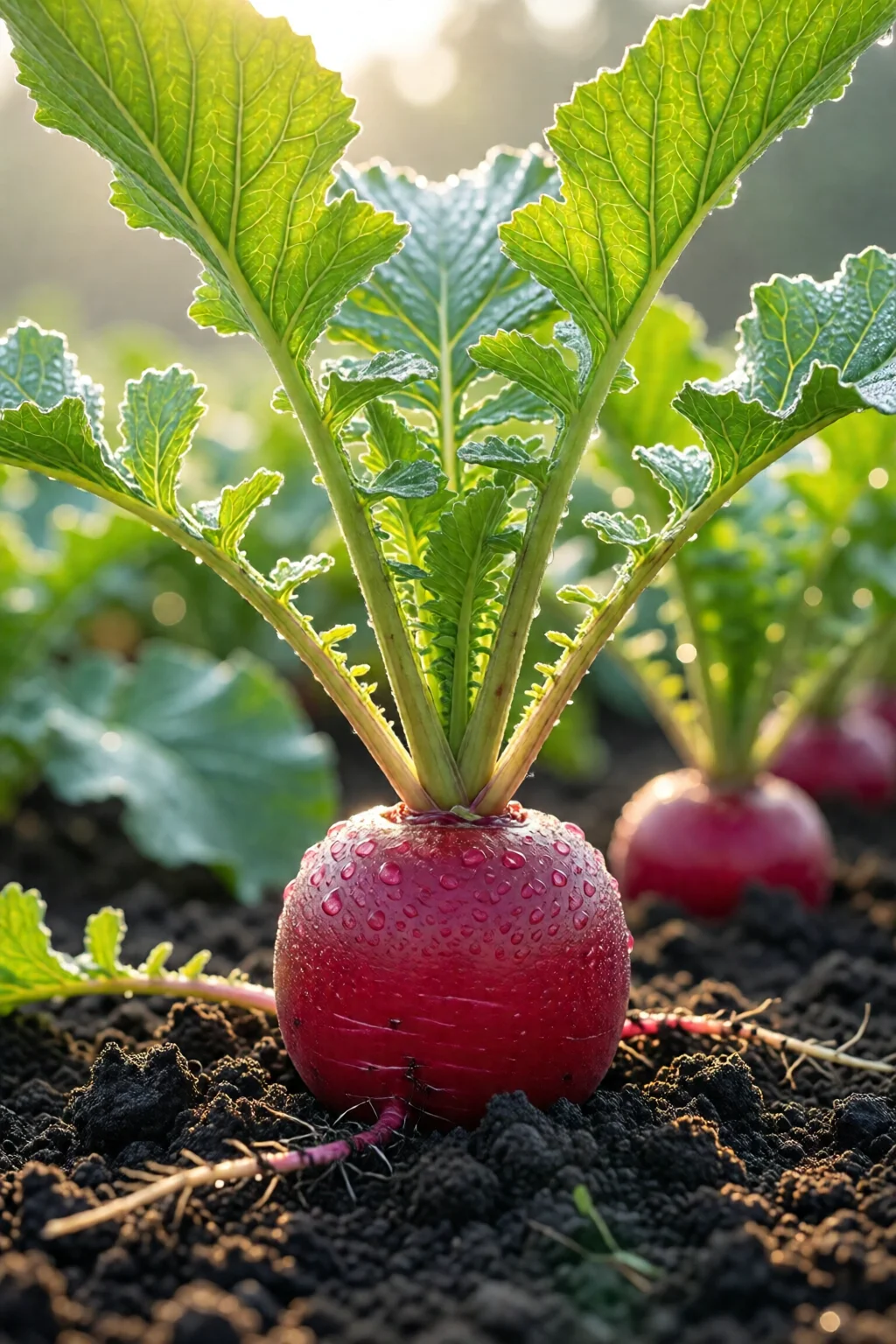
Radishes are ready to pull when the tops are about 1‑2 inches tall and the roots have reached ½‑inch to 1‑inch diameter. Check daily after day 20; most “Cherry Belle” radishes are perfect at 22 days. Harvest by gently pulling; a quick twist often releases the root cleanly.
Immediately rinse under cool water, trim the greens (they’re edible too), and enjoy. If you miss the window by a day or two, the roots become woody and the flavor turns bitter – a clear sign you waited too long.
Common Mistakes to Avoid
- Planting too deep – Seeds deeper than ½‑inch can struggle to reach the surface, delaying germination.
- Over‑watering or underwatering – Waterlogged soil suffocates roots; too dry soil stalls growth. Use a moisture meter to stay in the sweet spot.
- Skipping the thinning step – Crowded seedlings compete for nutrients, resulting in slow growth and misshapen roots.
- Planting in heavy clay – Compacted soils impede root expansion; always amend with sand or use raised beds.
- Harvesting too early or too late – Early harvest yields tiny, mild radishes; late harvest produces tough, peppery roots.
Troubleshooting or Tips for Best Results
Problem: Slow germination (more than 7 days)
Solution: Check soil temperature; if it’s below 50 °F, use black plastic mulch to warm the bed by 5‑10 °F.
Problem: Radishes bolt (go to seed) early
Solution: Bolting is caused by heat stress. Provide shade cloth (30 % density) during hot afternoons, and keep soil consistently moist.
Problem: Misshapen or forked roots
Solution: This usually means the soil is too compact. Loosen the soil an extra 2‑3 inches before planting, and add more sand to improve texture.
Tip: Succession planting
For a continuous harvest, sow a new row every 7‑10 days. This staggering ensures you have fresh radishes every week, ideal for busy families.
Tip: Companion planting
Radishes thrive next to lettuce, carrots, or onions. They can even act as a “trap crop” for pests that might otherwise attack beans or peas. See my guide on how to grow onions from seed for more companion ideas.
Tip: Use a raised garden box
A 12‑inch deep raised box filled with the loam‑sand mix costs about $45 (including lumber and soil) and can produce up to 3 lb of radishes per season when planted densely.
Summary
Growing radishes fast isn’t magic; it’s a combination of selecting the right variety, preparing loose, well‑draining soil, sowing at the optimal temperature, maintaining consistent moisture, thinning properly, and harvesting at the perfect moment. By following the steps above, you’ll shave days off the usual growth cycle and enjoy crunchy, peppery radishes in under a month. Remember to avoid common pitfalls, keep an eye on soil conditions, and experiment with succession planting for a steady supply.
Frequently Asked Questions
How many radish seeds should I plant per square foot?
Plant about 12‑16 seeds per square foot. After germination, thin to 1‑2 inches apart, leaving roughly 4‑6 plants per square foot for optimal growth.
Can I grow radishes indoors?
Yes. Use a deep container (at least 8‑inch depth) filled with a potting mix blended with perlite. Provide 6‑8 hours of bright light (grow lights work well) and keep the temperature between 55‑70 °F. Harvest in about 30 days.
Do radishes need fertilizer?
A light dose of starter fertilizer at planting (Espoma Seed Starter) and a mid‑season side‑dress of a balanced water‑soluble fertilizer (like Miracle‑Gro) are sufficient. Over‑fertilizing can cause leafy growth at the expense of root size.
What pests should I watch for?
Aphids, flea beetles, and root maggots are the most common. Use row covers to block flea beetles, and apply neem oil or insecticidal soap for aphids. Companion planting with garlic or onions can deter many pests.
Can I plant radishes with other vegetables?
Absolutely. Radishes make excellent companions for lettuce, carrots, beans, and onions. They help break up soil, and their quick growth can be harvested before larger crops need the space.
4 commentaires sur « Best How To Grow Radishes Fast Ideas That Actually Work »