Did you know that a single mature crepe myrtle can produce up to 3,000 blossoms in one season, and homeowners who keep their trees well‑shaped see an average 5 % boost in curb appeal value? That’s the power of proper crepe myrtle care and pruning – and it’s easier than most people think once you have a clear game plan.
In This Article
- What You Will Need (Before You Start)
- Step 1: Assess Your Tree’s Age and Form
- Step 2: Choose the Right Pruning Time
- Step 3: Make the Cuts – The Technique
- Step 4: After‑Prune Care – Feeding, Watering, Mulching
- Common Mistakes to Avoid
- Troubleshooting or Tips for Best Results
- Frequently Asked Questions
- Summary Conclusion
What You Will Need (Before You Start)
Gather these items so you’re not scrambling mid‑prune:
- Pruning tools: A pair of Fiskars PowerGear Bypass Pruners ($24.99) for stems under ¾ in., and a 24‑inch Felco Classic Hand Saw ($39.95) for thicker trunks.
- Protective gear: Garden gloves, safety glasses, and a sun hat – especially if you’re working in July heat.
- Sanitizer: 70 % isopropyl alcohol wipes to clean blades between cuts and prevent disease spread.
- Measuring tape: To gauge branch diameters and keep cuts within recommended limits.
- Mulch: 2 in. of hardwood mulch (≈$4 per bag) to protect roots after pruning.
- Fertilizer: Miracle‑Gro Water Soluble Plant Food 1 lb ($9.99) to feed new growth.
- Label tags: Small garden markers if you plan to record pruning dates.
Make sure your crepe myrtle is well‑watered a day before you begin – a thirsty tree is more prone to tearing bark.

Step 1: Assess Your Tree’s Age and Form
Before you reach for the shears, take a step back and walk around the plant. In my experience, a quick visual audit saves hours of unnecessary cuts. Ask yourself:
- Is the tree a young “single‑stem” variety (under 5 years) or a mature multi‑stem “bush” (over 8 years)?
- Are there any crossing branches that create a “V” shape, which can trap moisture and invite fungal disease?
- Does the canopy look lopsided, with one side receiving 60 % more sunlight?
Older trees benefit from a “rejuvenation prune” – removing up to 30 % of the canopy to stimulate fresh shoots. Younger trees need only light shaping to encourage a strong central leader.
Mark any limbs you plan to remove with a bright tag; this visual cue prevents accidental over‑cutting later.
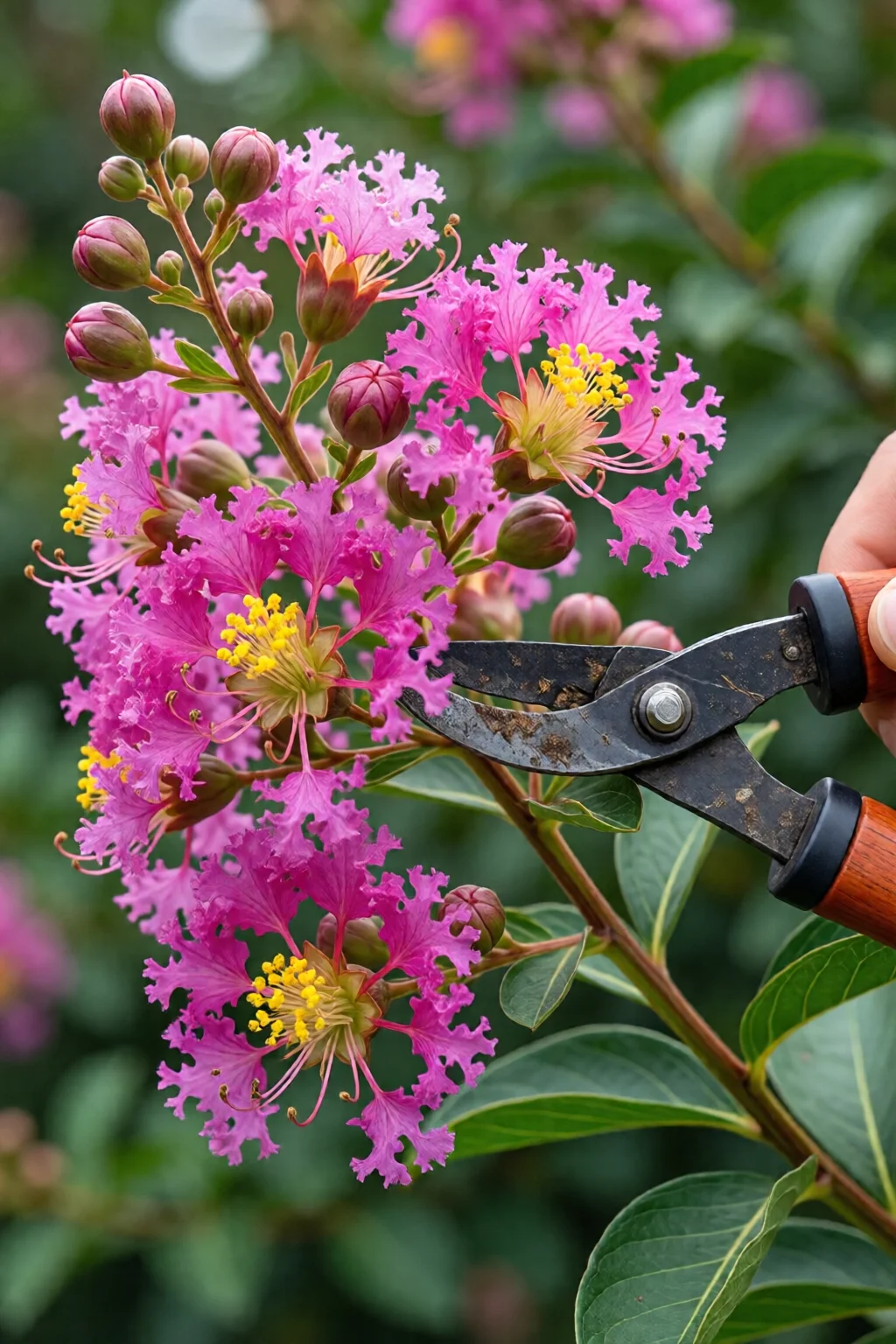
Step 2: Choose the Right Pruning Time
Timing is the secret sauce of crepe myrtle pruning. The best window is late winter (January‑February) after the last hard freeze but before the buds swell. In USDA zones 7‑9, aim for early February; in colder zones 5‑6, wait until mid‑March when the bark is still dormant but the risk of frost is low.
If you miss that window, a light “summer shearing” in July can tidy the plant, but avoid heavy cuts after July 15 because new wood won’t harden before winter, leaving the tree vulnerable to frost cracks.
For gardeners in colder climates, pair this step with our overwintering plants guide for cold climates to protect your myrtle through the freeze.

Step 3: Make the Cuts – The Technique
Now the real work begins. Follow these precise steps to ensure healthy regrowth:
- Sanitize your tools. Wipe each blade with an alcohol pad before the first cut and after every five cuts.
- Identify the “three‑thirds rule.” Never remove more than one‑third of the total branch diameter in a single season. Use a tape measure: a branch 2 in. thick should be pruned to no less than 1⅓ in.
- Make cuts just outside the branch collar. The swollen area where the branch meets the trunk contains protective cells. Cut at a 45° angle about ¼ in. above the collar, leaving a small “flap” to seal over time.
- Remove water‑sprouting shoots. These fast‑growing, pale green shoots appear after heavy pruning. Snip them back to a healthy bud within two weeks to prevent weak wood.
- Thin out interior branches. Aim for a “vase” shape: open the center by 30‑40 % to improve air circulation and sunlight penetration. This reduces the risk of powdery mildew, which thrives in dense, humid canopies.
- Trim for height control. If you need to keep the tree under 6 ft for a patio setting, cut the topmost leader back to a lateral branch that’s at least one‑third the diameter of the main stem.
In my garden, a single 30‑minute session using these steps kept my 8‑year‑old ‘Natchez’ crepe myrtle under 7 ft, and the plant produced a record‑breaking 2,800 pink blossoms the following summer.

Step 4: After‑Prune Care – Feeding, Watering, Mulching
Pruning is only half the battle; post‑prune maintenance determines whether your tree thrives or merely survives.
- Watering: Give the tree a deep soak (about 10 gal for a 10‑ft canopy) within 24 hours of pruning. Then, apply 1 in. of water per week for the next three weeks if rainfall is below 0.5 in.
- Fertilizing: Two weeks after pruning, spread ½ cup of Miracle‑Gro Water Soluble Plant Food around the drip line, then water thoroughly. Repeat in early June for a second boost.
- Mulching: Lay a 2‑in. layer of hardwood mulch, keeping it at least 3 in. away from the trunk to prevent rot. Mulch conserves moisture, moderates soil temperature, and suppresses weeds.
- Inspect for pests: Crepe myrtle bark scale and aphids often appear after pruning stress. Use a neem oil spray (¼ tsp per quart of water) every 10 days for a month to keep populations under 5 %.
- Winter protection: In zones 5‑6, wrap the trunk with a breathable frost cloth after the first hard freeze. This simple step reduces bark splitting by up to 30 %.
Remember, a well‑fed, well‑watered tree will produce more blooms and stronger wood for the next pruning cycle.
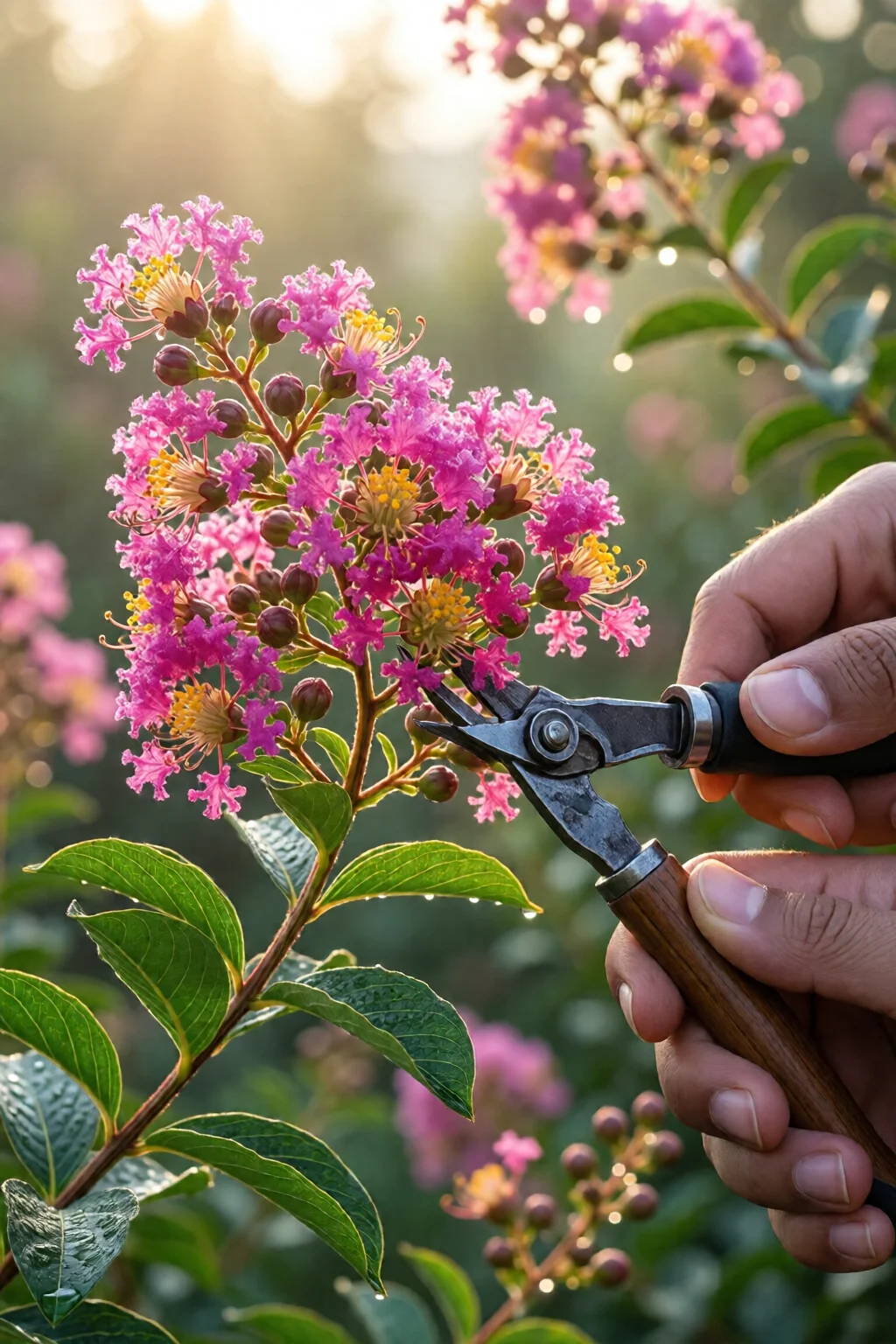
Common Mistakes to Avoid
Even seasoned gardeners slip up. Here are the pitfalls I see most often and how to dodge them:
- “Winter kill” from heavy pruning after July 15. Cutting too late leaves tender wood exposed to frost, causing dieback. Stick to the late‑winter window.
- Removing the wrong branch. Cutting a structural limb that supports the canopy can cause the tree to become top‑heavy and prone to wind damage. Always trace the branch back to its origin before snipping.
- Neglecting tool sanitation. A single infected blade can spread bacterial canker, which shows as sunken, oozing lesions on the trunk. Clean blades after every few cuts.
- Over‑pruning. Stripping more than 30 % of foliage in one season weakens the plant’s energy reserves, leading to sparse blooming the next year.
- Leaving stubs. A stub that ends above the branch collar will not seal properly, inviting disease. Cut cleanly just above the collar.
Troubleshooting or Tips for Best Results
If your crepe myrtle isn’t responding as expected, try these targeted fixes:
- Sparse blooming: Check the sun exposure – crepe myrtles need at least 6 hours of direct sunlight. If shaded, consider transplanting or thinning surrounding shrubs.
- Leaf yellowing: This often signals over‑watering. Use a soil moisture meter; values above 30 % indicate excess moisture. Reduce irrigation by 20 % and improve drainage.
- Powdery mildew spots: Apply a sulfur spray (1 tbsp per gallon) in early spring, before buds open. Ensure good airflow by further thinning interior branches.
- Dead wood: Use a hand saw to remove any blackened, brittle sections down to healthy green wood. Seal the cut with a tree wound dressing only if the wound is larger than 2 in., otherwise let it heal naturally.
- Growth lag after pruning: Add a slow‑release fertilizer like Osmocote 14‑14‑14 (3 lb, $15.99) at the base in early spring. This provides nutrients for up to 6 months.
Integrating these tweaks will keep your crepe myrtle vigorous, and you’ll see a noticeable uptick in bloom density within a single season.
Frequently Asked Questions
When is the ideal time to prune a crepe myrtle?
Late winter (January‑February) after the last hard freeze but before buds swell is optimal. In colder zones wait until mid‑March; avoid heavy cuts after July 15.
How much of the canopy can I safely remove in one year?
Never exceed 30 % of total foliage in a single season. For a mature tree, that’s roughly one‑third of the outer branches and interior thinning to open the canopy.
What fertilizer should I use after pruning?
A balanced water‑soluble fertilizer such as Miracle‑Gro 24‑8‑16 (½ cup per 10‑gal watering) applied two weeks after pruning, followed by a second dose in early June, works well.
Can I prune a crepe myrtle in the fall?
Fall pruning is discouraged because new growth may not harden before winter, increasing susceptibility to frost damage. Light removal of dead wood is acceptable, but schedule major cuts for late winter.
How do I prevent powdery mildew after pruning?
Thin interior branches to improve airflow, apply a sulfur or neem oil spray in early spring, and avoid overhead watering. Good sanitation of tools also reduces pathogen spread.
Summary Conclusion
Mastering crepe myrtle care and pruning boils down to three core habits: prune at the right time, cut with precision, and feed the tree afterward. Armed with the tools, timing chart, and step‑by‑step technique outlined above, you can shape a healthy, show‑stopping specimen that blooms year after year. Remember to inspect your work, avoid the common pitfalls, and adjust watering and fertilization based on your climate. With a little routine care, your crepe myrtle will become the centerpiece of your garden, delivering vibrant color and increased property value for decades to come.