Sunflowers (Helianthus annuus) are the ultimate summer show‑stoppers: tall, bright, and surprisingly easy to grow from seed. Whether you’re a seasoned gardener looking to add a dramatic backdrop to a vegetable bed, or a beginner hoping to watch a seed sprout into a towering masterpiece, this guide walks you through every step—from selecting the right variety to harvesting the golden heads for cut flowers or snacks. By following these practical tips, expert advice, and actionable strategies, you’ll enjoy a bountiful stand of sunflowers that not only beautify your garden but also support pollinators, birds, and even your family’s kitchen.
Choosing the Right Sunflower Variety
Sunflowers come in a dazzling array of sizes, colors, and growth habits. The first decision you make will shape the rest of your planting plan.
Height and Growth Habit
– Dwarf varieties (e.g., ‘Munchkin’, ‘Little Becka’) stay under 3 feet and are perfect for borders, containers, or small gardens.
– Standard tall types (e.g., ‘Mammoth’, ‘Russian Giant’) can reach 8‑12 feet, creating dramatic vertical interest.
– Branching or “multi‑head” types (e.g., ‘SunPatiens’, ‘Italian White’) produce several stems per plant, ideal for cut‑flower bouquets.
Color and Petal Shape
While the classic bright yellow is a favorite, there are also deep orange, red, burgundy, and even bi‑colored varieties such as ‘Velvet Queen’ and ‘Chianti’. Choose colors that complement your garden’s palette or that will stand out against a green backdrop.
Purpose‑Driven Selections
– For edible seeds, pick ‘Mammoth Grey Stripe’ or ‘Prolific’ which produce large, plump kernels.
– For cut flowers, select varieties with sturdy stems and uniform heads like ‘Autumn Beauty’.
– For wildlife, consider “wild‑type” sunflowers that attract birds and beneficial insects.
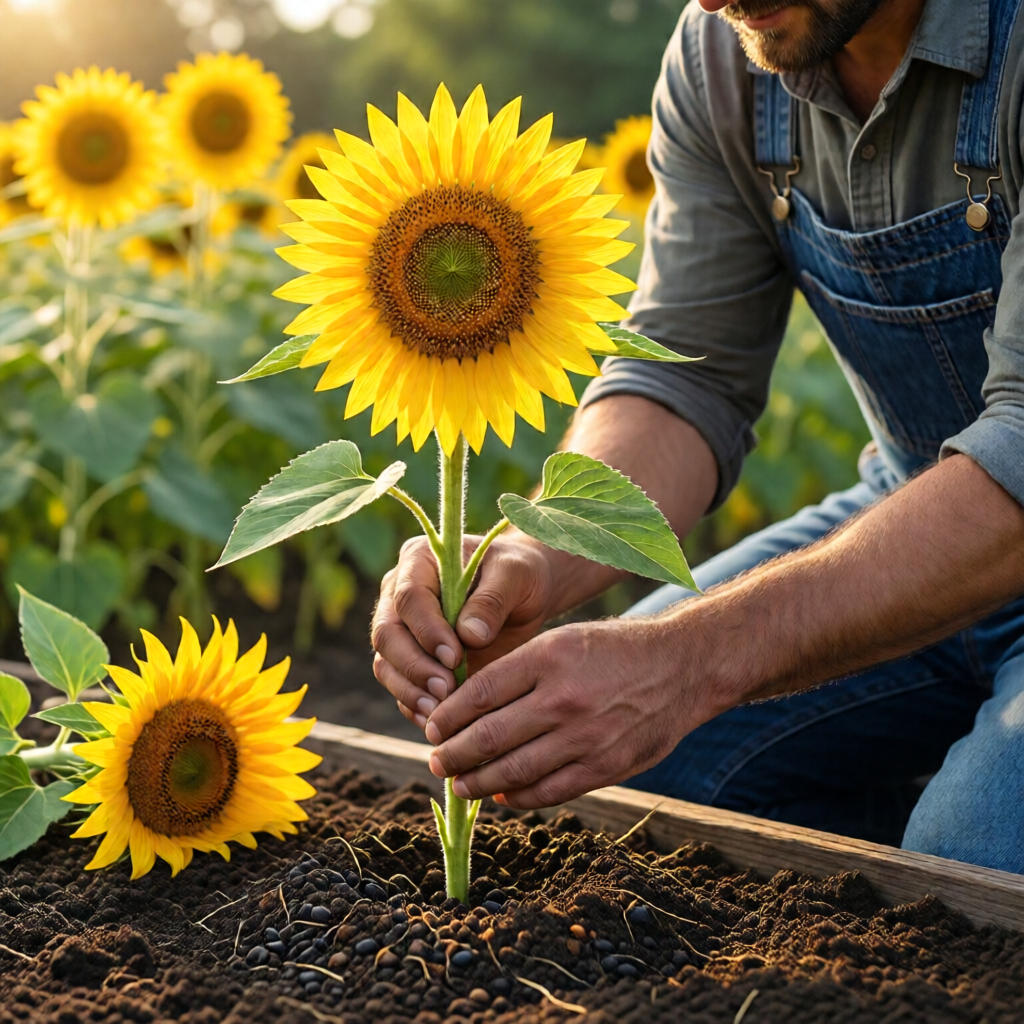
Preparing the Soil for Optimal Growth
Sunflowers thrive in well‑drained, loamy soil with a pH between 6.0 and 7.5. While they’re tolerant of less‑than‑perfect conditions, a few simple steps will give your plants a strong start.
Testing and Amending Soil
Begin by testing your garden soil with a home kit or through your local extension service. If the pH is low (acidic), add lime; if it’s high (alkaline), incorporate elemental sulfur. For most U.S. gardens, a modest amendment of compost (1‑2 inches) mixed into the top 6‑8 inches of soil supplies the organic matter sunflowers love.
Ensuring Proper Drainage
Sunflowers dislike “wet feet.” If your garden has heavy clay, create raised beds or amend the planting zone with coarse sand and organic matter to improve drainage. A simple “percolation test”—digging a hole 12 inches deep, filling it with water, and watching how long it takes to drain—helps you gauge if adjustments are needed.
Fertilizing Before Planting
Because sunflowers are heavy feeders, incorporate a balanced, slow‑release fertilizer (10‑10‑10) at a rate of 1 pound per 10 square feet before sowing. This provides a steady nutrient supply as the seedlings push through the soil.
When and How to Plant Sunflower Seeds
Timing is crucial. Sunflowers need warm soil to germinate, but planting too early can expose seedlings to frost.
Ideal Planting Window
In most of the United States, sow seeds after the last average frost date, when soil temperatures consistently reach 55‑60 °F (13‑16 °C). In the South, this can be as early as early March; in the northern Midwest, wait until late May.
Seed Spacing and Depth
– Depth: Plant seeds 1‑1.5 inches deep. Deeper planting can delay emergence, while shallower planting risks drying out.
– Spacing: For dwarf varieties, space seeds 6‑12 inches apart in rows 2‑3 feet apart. For tall giants, increase spacing to 18‑24 inches between plants and 3‑4 feet between rows. This ensures adequate airflow and reduces disease pressure.
Planting Technique
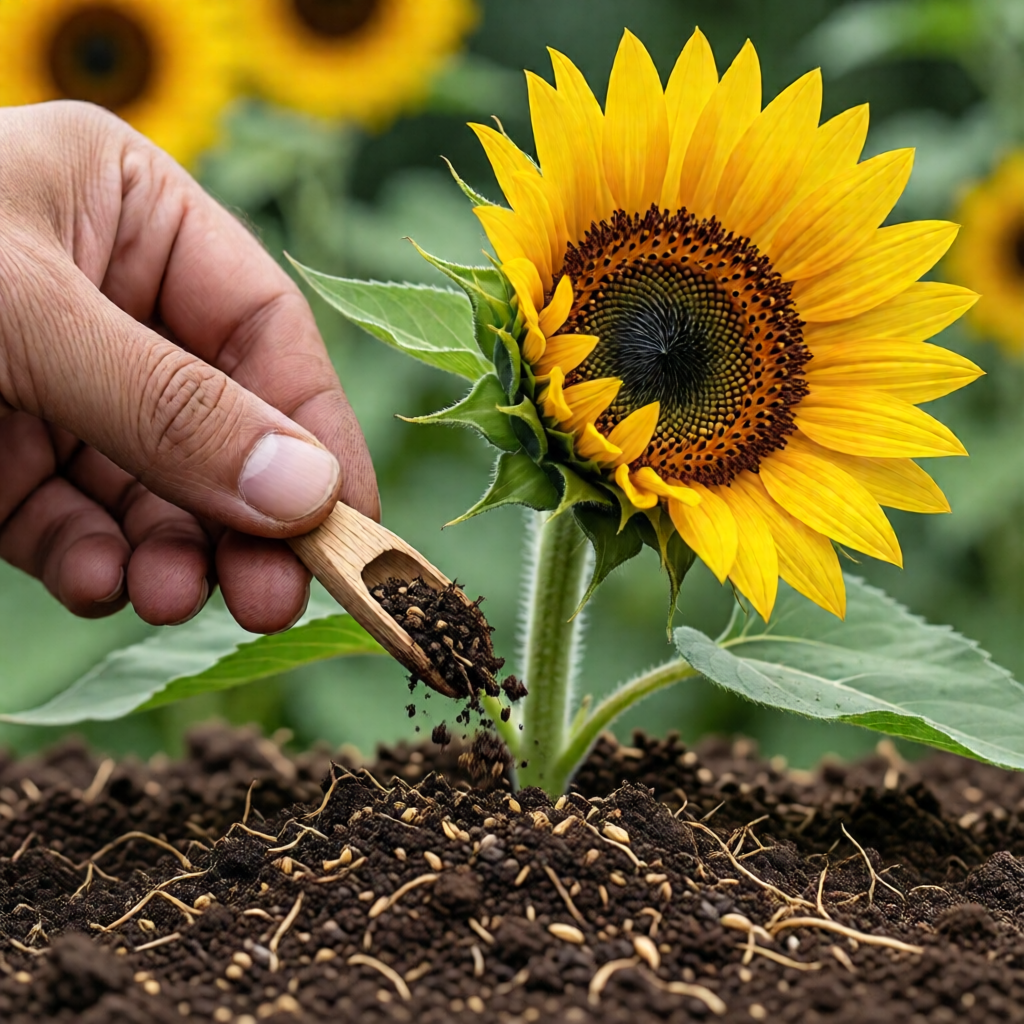
Use a garden hoe or a seed‑planting tool to create uniform furrows. Drop seeds at the recommended spacing, cover lightly with soil, and firm gently. Water immediately with a fine spray to settle the soil around the seed.
Watering and Early Care
Sunflower seedlings are surprisingly resilient, but proper moisture management during the first few weeks sets the tone for robust growth.
Initial Watering Schedule
Keep the soil consistently moist (but not soggy) until the seedlings emerge—usually 7‑10 days after planting. A light daily mist or a gentle soak with a watering can works well.
Transition to Deep Watering
Once seedlings reach 6‑8 inches tall, shift to deep watering once a week, delivering 1‑1.5 inches of water per session. This encourages deep root development, making plants more drought‑tolerant later in the season.
Mulching Benefits
Apply a 2‑inch layer of organic mulch (straw, shredded leaves, or wood chips) around the base of each plant. Mulch conserves moisture, suppresses weeds, and moderates soil temperature—especially important during early summer heat waves.
Feeding Sunflowers for Maximum Height and Bloom
While the initial fertilizer boost helps seedlings, ongoing feeding ensures tall, sturdy stems and abundant heads.
Side‑Dressing with Compost
When plants reach 12‑18 inches tall, side‑dress each row with a thin strip of compost (½‑1 inch wide) about 6‑8 inches from the stem. This supplies a steady flow of nitrogen for vegetative growth.
Mid‑Season Fertilizer Application
At the onset of blooming (approximately 6‑8 weeks after sowing for most varieties), apply a high‑phosphorus fertilizer (5‑10‑5) at half the recommended rate. Phosphorus promotes flower development and seed formation.
Avoid Over‑Fertilizing
Too much nitrogen after the flowering stage can cause weak, leafy stems that topple under the weight of large heads. Stick to the recommended schedule and watch the plants’ vigor to gauge if additional feeding is needed.
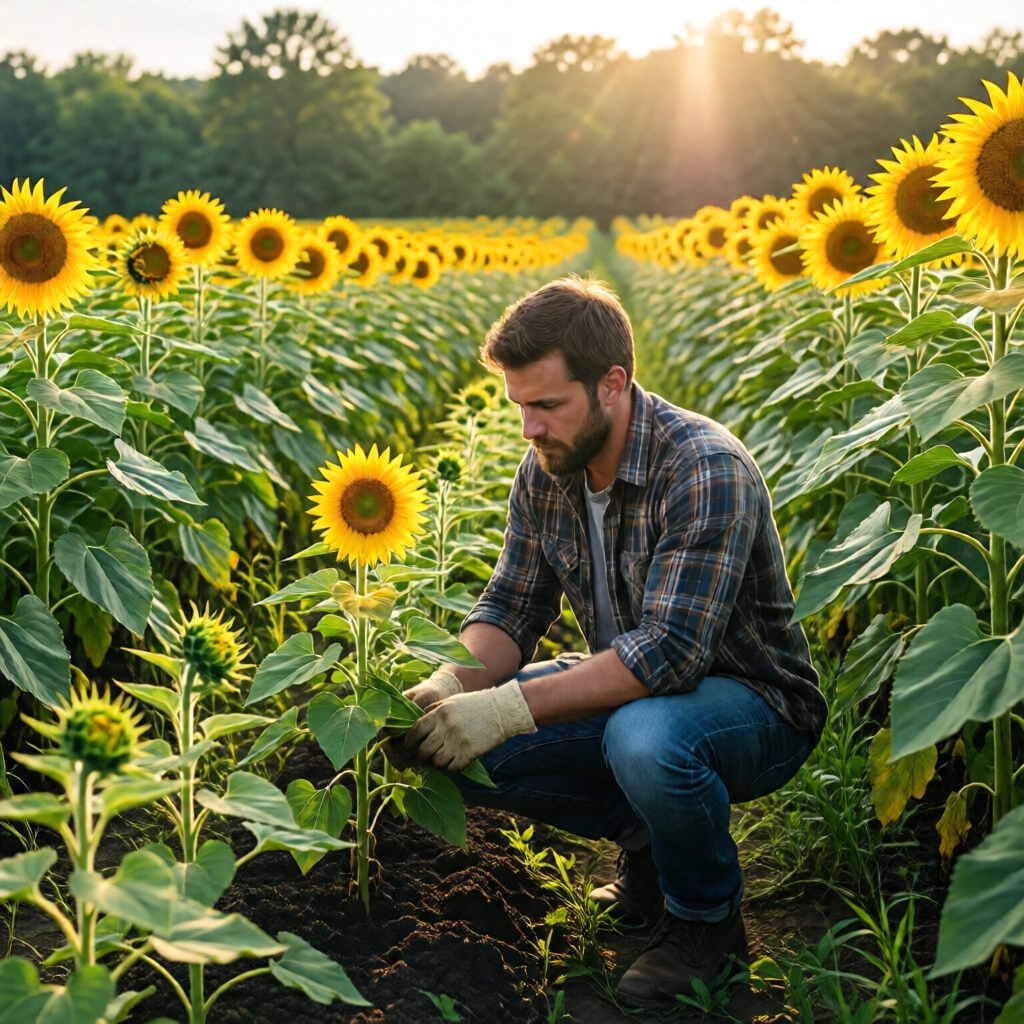
Pest and Disease Management
Sunflowers are generally hardy, but a few common adversaries can affect yield and appearance.
Insect Pests
– Aphids: Small, sap‑sucking insects that cluster on new growth. Control with a strong jet of water or neem oil sprays.
– Sunflower moth larvae: Chew holes in leaves and stems. Hand‑pick caterpillars early in the morning and apply Bacillus thuringiensis (Bt) if infestations persist.
– Birds: While they love the seeds, they can strip heads prematurely. Use netting or place a lightweight garden fleece over the heads once they begin to form.
Fungal Diseases
– Powdery mildew: White, powdery spots on leaves. Increase airflow by proper spacing, and apply a sulfur‑based fungicide if needed.
– Downy mildew: Yellowing leaves and fuzzy growth underside. Prevent by watering at the base (not overhead) and rotating crops annually.
Integrated Pest Management (IPM)
Adopt a proactive approach: start with cultural controls (spacing, watering), monitor regularly, and intervene with organic treatments only when thresholds are exceeded. For more detailed seasonal care, see our guide on how to winterize garden for cold weather, which includes tips on protecting perennials and seed heads from early frosts.
Supporting Tall Sunflowers
Giant varieties can become wind‑blown giants if left unsupported.
Staking Techniques
Insert a sturdy wooden stake (6‑8 feet tall) next to each plant when it’s about 2‑3 feet tall. Tie the main stem loosely with garden twine or soft cloth strips, allowing for growth. For rows of giants, a simple “T‑post” system with a horizontal wire can support multiple stems.
Using a Support Net
Commercial tomato cages or a nylon garden net can be draped over a row of sunflowers, providing a flexible support that adjusts as the plants sway.
When to Remove Supports
As heads mature and become heavy, gently loosen ties to prevent girdling. If you plan to harvest seeds for snacks, remove supports a week before the first frost to let the stems naturally dry.
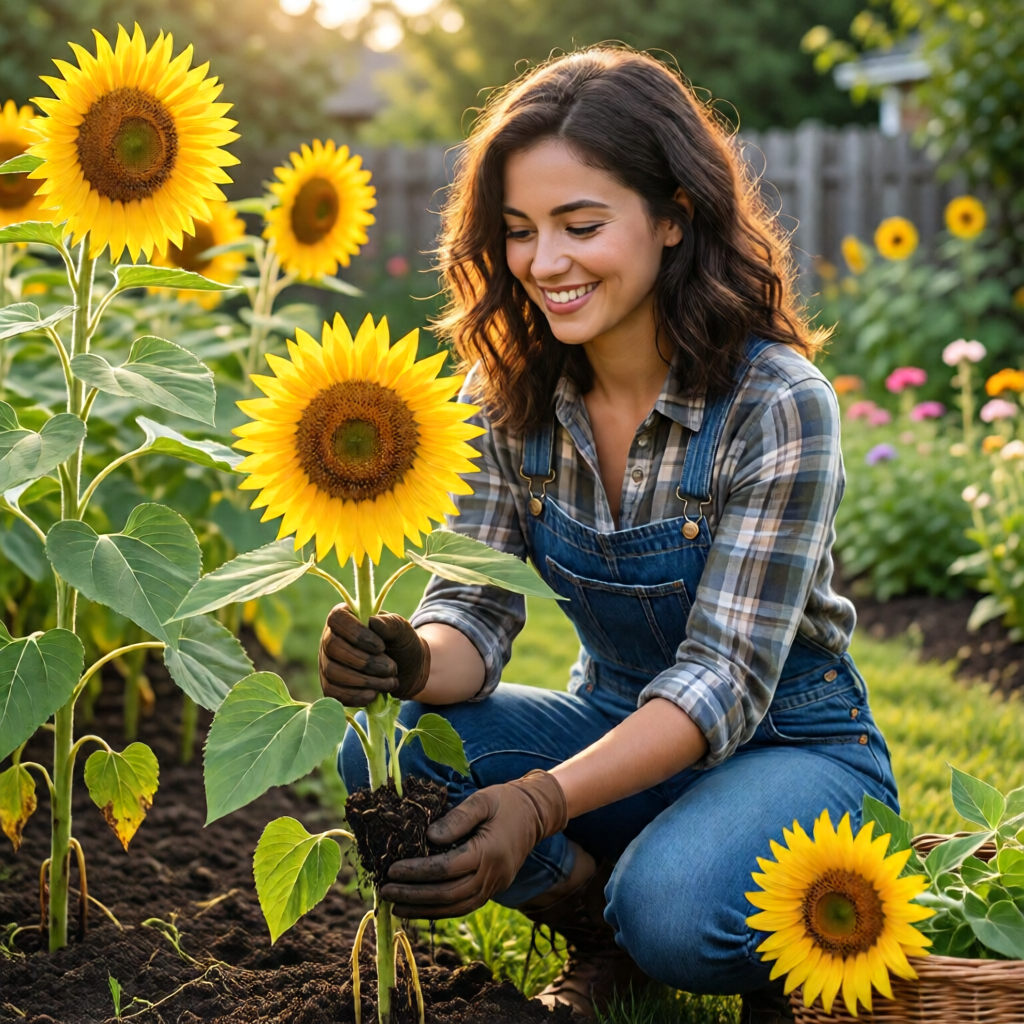
Harvesting Sunflower Seeds and Flowers
Sunflowers reward patient gardeners with both edible seeds and stunning cut flowers.
Harvesting Seed Heads
Watch for the back of the head turning from bright green to a silvery‑gray hue. When the outer petals begin to wilt and the seeds are plump, cut the head with a sharp knife, leaving a 6‑inch stalk attached.
Drying and Storing Seeds
Hang heads upside down in a well‑ventilated, dry area (ideally 70‑80 °F) for 2‑3 weeks. Once fully dry, rub the seeds out with your fingers or a soft brush, discard the chaff, and store the seeds in airtight containers in a cool, dark pantry. Properly stored seeds can last up to a year.
Cut Flower Use
Harvest stems early in the morning when buds are tight. Place them in a bucket of water immediately, and recut the ends at a 45‑degree angle to improve water uptake. Sunflowers thrive in vases for up to 10 days with daily water changes.
Companion Planting and Garden Design
Sunflowers are not just showpieces; they can improve the health and productivity of neighboring plants.
Beneficial Companions
– Beans and peas: Nitrogen‑fixing legumes thrive in the shade of taller sunflowers, while the sunflowers benefit from the added nitrogen.
– Marigolds: Their pungent scent deters nematodes and aphids, creating a healthier micro‑environment.
– Lavender: Planting lavender near sunflowers adds fragrance and attracts pollinators. For detailed pruning tips, check the lavender care and pruning guide.
Plants to Avoid
Sunflowers compete heavily for water and nutrients, so avoid planting them next to shallow‑rooted vegetables like lettuce or carrots that may be outcompeted.
Design Ideas
Use dwarf sunflowers as a natural border for the best vegetables to grow in shade like spinach and kale. Tall giants make striking backdrops for flower beds or can be trained on a pergola for a living wall—read our how to grow wisteria on pergola guide for inspiration on integrating vertical greenery.
Seasonal Care and Extending the Sunflower Season
While sunflowers are an annual, you can extend their presence in the garden and even bring a piece of summer indoors.
Late‑Season Watering
As temperatures dip in early fall, reduce watering to prevent seed heads from splitting. Keep the soil just moist enough to avoid premature drying, which can cause seed loss.
Saving Seeds for Next Year
Collect mature heads, dry them as described earlier, and store seeds in labeled envelopes. Plant them the following spring for a “heirloom” crop that may be even more vigorous.
Indoor Sunflower Gardening
For a unique indoor touch, grow dwarf varieties in large containers near a sunny window. Use a light‑reflective material (like Mylar) to boost light intensity, and maintain a temperature of at least 65 °F. While indoor sunflowers won’t reach giant heights, they provide fresh cut flowers and a splash of summer color year‑round.
Preparing for Frost
If a hard freeze threatens before you can harvest, cover heads with a breathable garden fleece to protect seeds. This simple step can preserve a portion of the crop for later processing.
Common Problems and Troubleshooting
Even with careful planning, issues can arise. Below are quick fixes for frequent challenges.
Leggy Seedlings
Leggy growth usually signals insufficient light. Ensure seedlings receive at least 6‑8 hours of direct sun or supplemental grow lights. If already leggy, thin them out and provide a temporary shade cloth to reduce heat stress.
Heads Not Forming
Insufficient pollination can result in misshapen heads. Plant a mix of early‑blooming and late‑blooming varieties to attract a range of pollinators. Hand‑pollinate with a soft brush if needed.
Stem Breakage
Weak stems may snap under the weight of large heads. This can be mitigated by proper staking, consistent watering, and avoiding excessive nitrogen after flowering.
Yellowing Leaves
Yellow leaves often indicate nitrogen deficiency or over‑watering. Apply a nitrogen‑rich side‑dressing or reduce watering frequency, ensuring the soil dries slightly between irrigations.
When is the best time to plant sunflower seeds in different US regions?
In the South, sow seeds as early as March once the soil reaches 55 °F. In the Midwest and Northeast, wait until late May after the last average frost, when soil temperatures consistently stay above 60 °F. Adjust timing based on local climate data for optimal germination.
How much space should I give each sunflower plant?
Dwarf varieties need 6‑12 inches between plants, while tall giants require 18‑24 inches. Space rows 2‑3 feet apart for dwarfs and 3‑4 feet apart for giants to ensure good airflow and reduce disease risk.
Can I grow sunflowers in containers?
Yes. Choose dwarf or medium‑height varieties, use a 15‑gal pot with drainage holes, fill with a high‑quality potting mix, and water consistently. Provide at least 6‑8 hours of direct sun daily.
How do I protect sunflower heads from birds?
Cover mature heads with lightweight garden fleece or bird netting. You can also place a floating row cover over the entire row, securing it with stakes. This keeps birds out while still allowing sunlight and airflow.
What are the best ways to store harvested sunflower seeds?
After drying heads for 2‑3 weeks in a cool, well‑ventilated area, rub the seeds out, remove chaff, and store them in airtight glass jars or Mylar bags kept in a cool, dark pantry. Properly stored seeds remain viable for up to one year.