Ever wondered why some boxwoods look like perfectly manicured sculptures while others end up a tangled mess of brown tips?
In This Article
Boxwood care and shaping tips are the secret sauce that turns an ordinary hedge into a year‑round backdrop for roses, summer gatherings, and winter wonderland scenes. In the next few minutes, I’ll walk you through everything from soil prep to the exact moment you should pull the trigger on that hedge trimmer, all backed by a decade of hands‑on work in residential and public gardens.
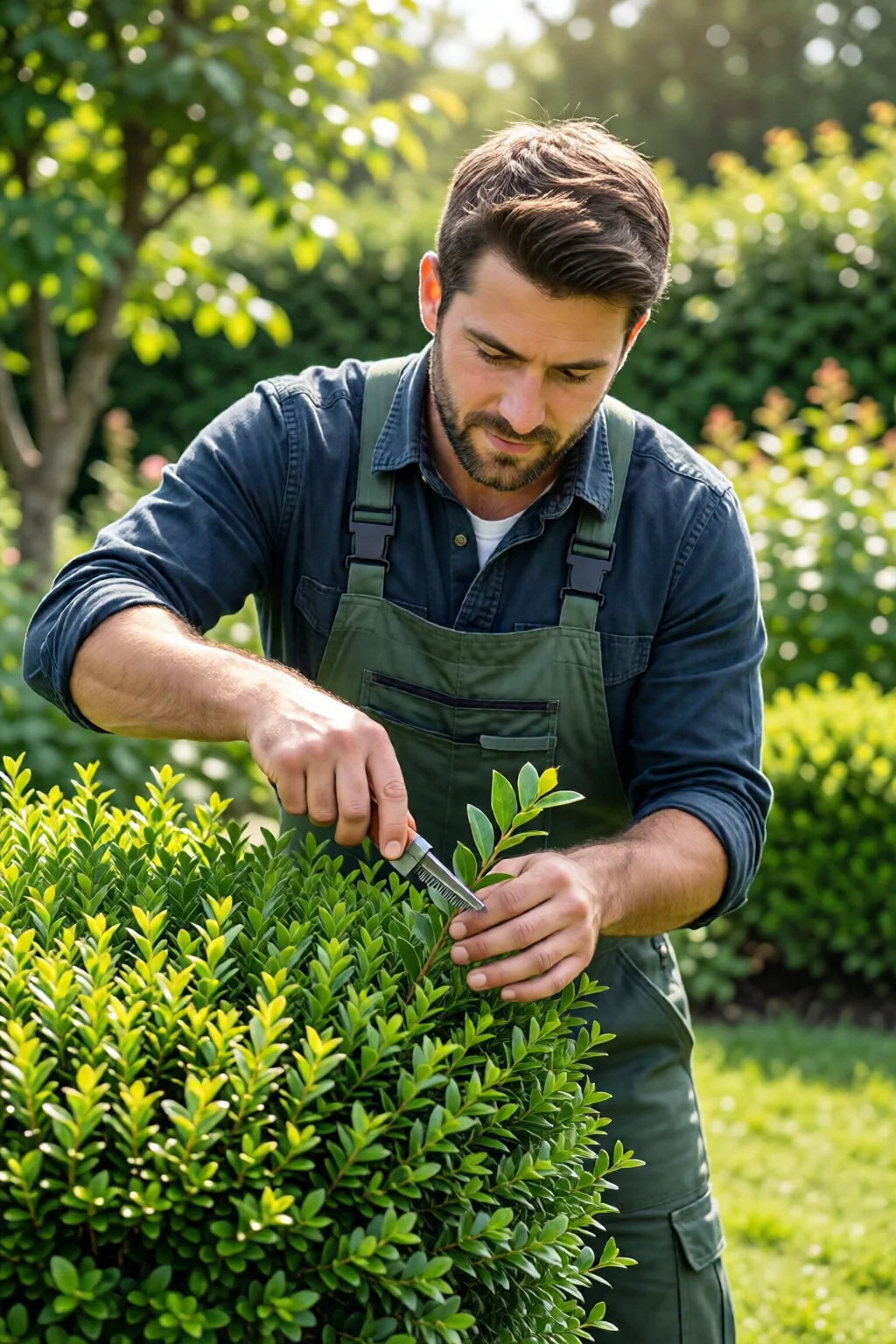
Understanding Boxwood Biology
Varieties and Growth Habits
Boxwoods (Buxus spp.) fall into three main groups: American (B. sempervirens), English (B. hederifolia ‘Suffruticosa’), and Japanese (B. microphylla). The American variety can reach 20 ft tall, while the dwarf English stays under 4 ft. Knowing which type you have determines pruning frequency and the amount of sunlight it tolerates.
Evergreen Advantage
Unlike deciduous hedges, boxwoods keep their foliage all year. This means they demand consistent moisture and nutrient management, especially during the winter months when photosynthesis slows to a crawl. One mistake I see often is treating them like a summer‑only plant; they need winter feeding too.
Root System Basics
Boxwoods develop a shallow, fibrous root system that spreads horizontally up to 3 ft from the base. This makes them excellent for tight borders but also vulnerable to soil compaction. Aerating the soil once a year with a garden fork at a depth of 6‑8 in can improve oxygen flow and reduce root stress.
Planting and Soil Preparation
Site Selection
Choose a location with morning sun and afternoon shade. Full sun (6+ hours) can scorch the foliage, while deep shade encourages fungal growth. In my backyard, I placed a row of ‘Green Velvet’ English boxwoods on a north‑facing wall; they thrive with 4‑5 hours of filtered light.
Soil Mix and pH
Boxwoods prefer a loamy, well‑draining soil with a pH of 6.5–7.2. Amend heavy clay with 2 parts compost and 1 part coarse sand. For a 10‑ft planting bed, that’s roughly 30 gal of compost and 15 gal of sand. A simple garden‑store test kit (e.g., Luster Leaf 18430) costs about $8 and gives instant results.
Planting Depth and Spacing
Dig a hole twice as wide as the root ball but no deeper. The top of the root ball should sit 1 in below the surrounding soil to allow for settling. Space dwarf varieties 2–3 ft apart; larger types need 4–5 ft to avoid crowding.
Watering and Feeding Schedule
Establishing Roots (First 12 Weeks)
Water newly planted boxwoods deeply – 1 in of water every 3 days – using a slow‑release hose attachment. Over‑watering leads to root rot; under‑watering causes leaf scorch. A garden‑grade moisture meter (e.g., REOTEMP 202) costs $25 and helps you gauge soil wetness.
Regular Feeding (Year‑Round)
Apply a balanced 10‑10‑10 granular fertilizer in early spring (March) and again in late summer (August). Use 1 lb per 100 sq ft; for a 6‑ft hedge, that’s about 0.5 lb, roughly $4 for a 25‑lb bag of Espoma Garden-tone.
Winter Watering
Even dormant boxwoods need moisture. In climates where the ground freezes, give a final soak in late November before the first hard freeze. If you have a drip‑irrigation system, set it to 0.5 gal per hour for 30 minutes on the coldest nights.
For broader watering strategies, see our guide on watering schedule for garden plants.
Pruning and Shaping Techniques
When to Prune
The ideal window is early spring (late March to early April) when new buds are swelling but before full leaf-out. A second light trim in late summer (mid‑August) keeps the shape crisp without stimulating excessive new growth that could be vulnerable to frost.
Tools of the Trade
Invest in quality tools; cheap plastic shears will crush stems. Here’s a quick comparison:
| Tool | Price (USD) | Best For | Key Feature |
|---|---|---|---|
| Fiskars SoftTouch Bypass Pruning Shears (8‑inch) | $15 | Fine tip shaping | Ergonomic grip, rust‑resistant |
| Felco 2 Classic Hand Pruner | $30 | Medium cuts, hardwood | Adjustable tension, lifetime warranty |
| EGO Power+ 21‑in Cordless Hedge Trimmer | $120 | Large hedges, quick shaping | Battery powered, 2‑speed |
Step‑by‑Step Shaping
- Outline the silhouette. Use a string line or a wooden stake and twine to mark the desired height and width. I usually set the top line 1 ft above the intended final height; this gives room for a “soft‑fade” at the top.
- Remove dead or diseased wood. Cut back to healthy green tissue, typically ¼ in above a leaf node.
- Thin out interior growth. For dense hedges, remove 20–30 % of interior stems to improve air flow. This is crucial for preventing boxwood blight.
- Shape the exterior. Using the shears, trim the outer edges to the string line, working from the bottom up. Keep the blade at a 45° angle for a clean cut.
- Finish with a “hand‑trim.” Step back frequently; a good rule is to step 10 ft away and assess the shape before making final adjustments.
Common Mistakes to Avoid
One mistake I see often is “shearing too low.” Cutting more than one‑third of the plant’s height in a single season stresses the plant and invites pests. Another is pruning in late fall; new shoots won’t harden off before frost, leading to winter burn.
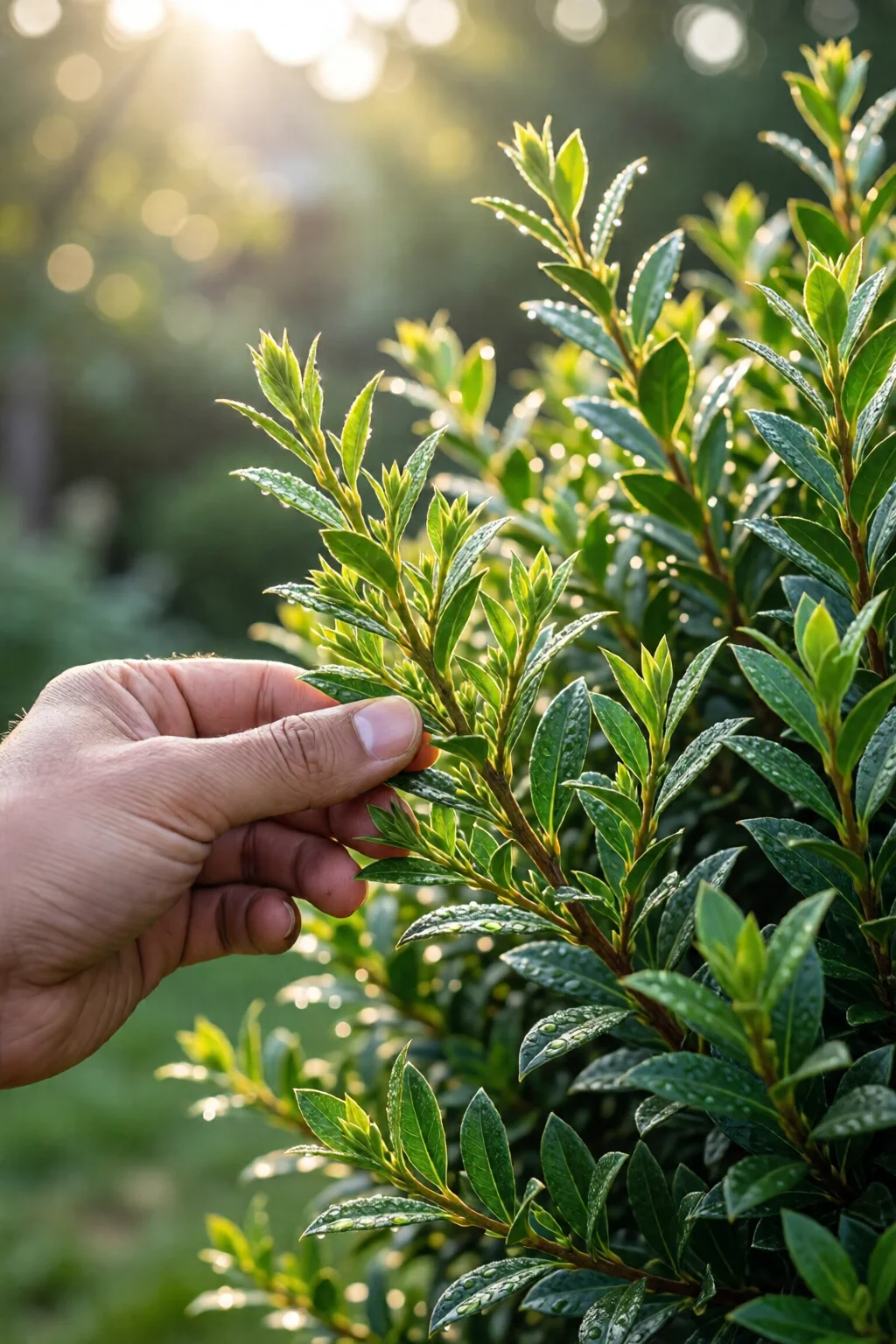
Seasonal Maintenance Calendar
Spring (Mar‑May)
- Apply pre‑emergent herbicide (e.g., Scotts Halex) around the base to reduce weed competition.
- First pruning session – shape and remove dead wood.
- Mulch with 2–3 in of shredded bark to retain moisture.
Summer (Jun‑Aug)
- Mid‑season light trim after the first flush of growth.
- Inspect for leaf miners and apply neem oil (5 ml per liter) if needed.
- Deep watering every 10 days during drought conditions.
Fall (Sep‑Nov)
- Apply a slow‑release fertilizer (e.g., Jobe’s Organics 10‑10‑10) at ½ lb per 100 sq ft.
- Remove fallen leaves to reduce fungal inoculum.
- Wrap trunks with horticultural fleece if you expect temperatures below 20 °F.
Winter (Dec‑Feb)
- Check for winter burn; gently spray the foliage with water if it looks desiccated.
- Use a windbreak (e.g., burlap screen) for exposed hedges.
- Plan next year’s design – consider garden border ideas for edges that incorporate boxwoods.
Common Problems and Solutions
Boxwood Blight (Calonectria pseudonaviculata)
Symptoms: brown lesions on leaves, twig dieback, and a characteristic “shot‑hole” pattern. Control: prune affected branches, improve air circulation, and spray a copper‑based fungicide (e.g., Bonide Copper Shield) at 2 qt per 100 sq ft.
Boxwood Leaf Miner (Monarthropalpus flavus)
Symptoms: serpentine mines on leaf underside, causing yellowing. Solution: hand‑pick larvae in early summer or treat with spinosad (e.g., Monterey Garden Insect Spray) at 1 tsp per gallon.
Root Rot (Phytophthora spp.)
Caused by water‑logged soil. Remedy: improve drainage, reduce watering frequency, and apply a phosphite drench (e.g., Phosetyl‑Al) at 0.1 lb per 100 sq ft.
Winter Burn
Dry, brown tips appear after harsh winds. Prevention: apply a 1‑in layer of mulch, wrap trunks, and give a final deep watering before the first freeze.
Pro Tips from Our Experience
- Use a “hand‑hold” technique. When shaping a low hedge, hold the shears at waist height and work in short, controlled strokes. This reduces fatigue and yields cleaner cuts.
- Rotate your tools. Sharpen pruning shears after every 20 hours of use; a dull blade tears tissue and invites disease.
- Integrate companion plants. Pair boxwoods with lavender or rosemary; the aromatic foliage deters aphids and adds visual contrast.
- Test soil every two years. Nutrient depletion can be subtle; a simple $8 test kit keeps you ahead of deficiencies.
- Document your pruning dates. I keep a small garden log; noting the date, weather, and amount cut helps predict growth patterns for the next season.
Frequently Asked Questions
How often should I prune my boxwoods?
Prune lightly in early spring and again in late summer. Avoid cutting more than one‑third of the plant’s height in a single season.
Can I shape boxwoods into formal topiaries?
Yes, but choose a slow‑growing dwarf variety like ‘Green Velvet’ and use a hand‑pruner for fine detail. Topiaries require more frequent (monthly) maintenance during the growing season.
What fertilizer is best for boxwoods?
A balanced 10‑10‑10 granular fertilizer applied in early spring and late summer works well. For acidic soils, a slow‑release ammonium sulfate can raise pH slightly.
How do I protect boxwoods from winter burn?
Mulch 2‑3 in around the base, wrap trunks with horticultural fleece, and give a deep watering in late November before the first hard freeze.
Where can I learn more about integrating boxwoods into garden borders?
Check out our article on garden border ideas for edges for design inspiration and planting layouts.
Conclusion – Your Action Plan
Boxwood care and shaping tips boil down to three core habits: prepare the right soil, water and feed consistently, and prune at the proper times with sharp tools. Grab a pair of Felco shears, test your soil pH, and mark your spring pruning date on the calendar. Within one growing season you’ll see denser foliage, cleaner lines, and a hedge that stands proud through summer heat and winter frost alike.
Now, roll up those sleeves, head out to the garden, and give your boxwoods the attention they deserve. Your neighbors will soon be asking, “What’s your secret?” and you’ll have a ready answer – the same practical, tried‑and‑true guide you just read.