Imagine stepping into a backyard oasis where every plant thrives on neglect, every color pops against stone, and water—if any—drips only when you want it to. That’s the promise of a well‑planned succulent garden, and the good news is you can create it without a landscape architect or a massive budget.
In This Article
In my decade of designing gardens across the Southwest, I’ve seen the same mistakes repeat: overcrowding, ignoring light patterns, and choosing succulents that demand more water than the climate provides. Below you’ll find a step‑by‑step roadmap packed with succulent garden design ideas that turn those pitfalls into polished, low‑maintenance spaces you’ll love year after year.
Planning Your Succulent Garden Layout
Assessing Light and Soil Conditions
Succulents are sun‑loving, but not all of them need full‑day exposure. Start by mapping the sun path for a typical summer day. Areas that receive 6‑8 hours of direct sun are perfect for Echeveria and Aloe vera. Spots with 3‑5 hours of filtered light work better for Haworthia and Gasteria. Use a simple notebook or a free app like Sun Seeker to log the hours.
Soil is the next big factor. A gritty, well‑draining mix such as Miracle‑Gro Moisture Control Potting Mix (4 qt, $8.99) works for most species. If you’re on a slope, add coarse sand at a 1:2 ratio to prevent water pooling.
Choosing a Shape and Scale
Shapes guide the eye. I often start with a simple geometric base—think a 4 ft by 6 ft rectangle or a 5‑foot diameter circle. For a modern look, staggered rectangles create a “step garden” that feels larger than the square footage suggests. Keep pathways at least 18 in wide for easy access with a wheelbarrow or a garden cart.
Scale matters: a single 12‑in Fiskars 12‑in. Pruning Shear ($24.95) can tidy a compact bed, while a 24‑in Fiskars Garden Knife ($29.95) handles larger beds. Pair plant height with container depth—taller succulents like Agave need 12‑in deep pots, while low‑growers like Sedum ‘Dragon’s Blood’ thrive in 4‑in dishes.
Budgeting Materials
Here’s a quick cost snapshot for a 30‑sq‑ft succulent garden:
- Terracotta pots (12 in) – 6 pcs, $3 each = $18
- Gravel (½‑in) – 2 cu ft, $5 per cu ft = $10
- Mulch (coconut coir) – 1 cu ft, $8 = $8
- Drip kit (Dramm 5‑gal) – $49.99
- Plants – average $4 per plant, 30 plants = $120
Total: roughly $205.99. Adjust the plant count or swap terracotta for reclaimed concrete to shave off $30‑$50.
Selecting the Right Succulents
Drought‑Tolerant Classics
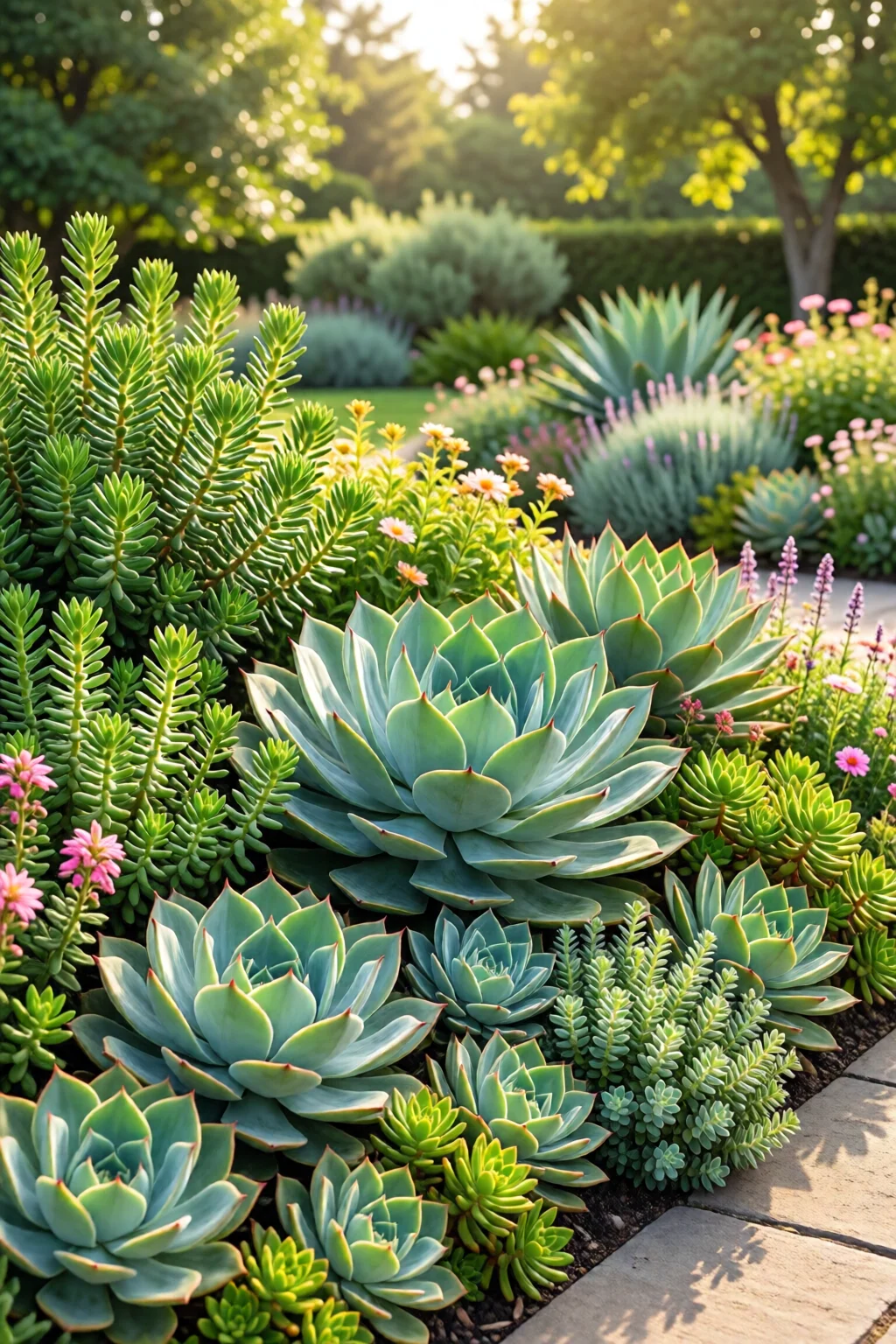
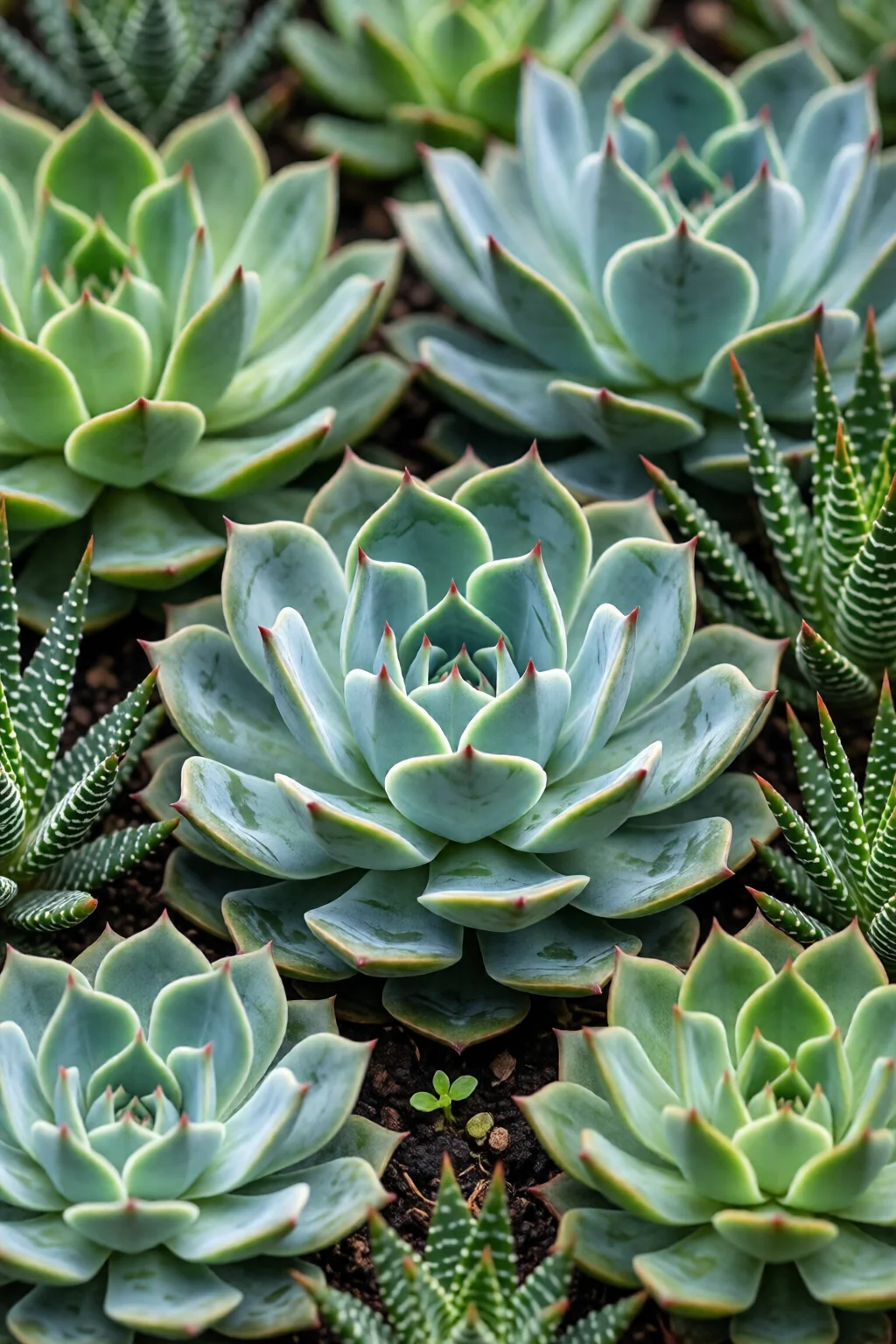
Echeveria ‘Perle von Nurnberg’ (12‑in spread, $4.50 each) offers rosette foliage that holds water like a tiny vase. Sedum ‘Autumn Joy’ (15‑in height, $5.00 each) adds a soft, pink‑purple bloom in late summer, extending visual interest.
For a dramatic focal point, plant a 3‑ft Aloe maculata ($22) in the center. Its speckled leaves contrast nicely with smoother rosettes.
Color‑Contrast Pairings
Pair blue‑gray Sedum ‘Blue Spruce’ with the fiery orange of Echeveria ‘Lola’. The juxtaposition creates a natural “pop” that works from any viewing angle. If you love pastel tones, combine Graptopetalum paraguayense (silver‑blue, $6) with Crassula ‘Petite Bicolor’ (green‑white variegation, $5).
Seasonal Interest
Succulents aren’t just summer stars. Sempervivum ‘Cobweb’ sends out tiny pink offsets in fall, while Kalanchoe tomentosa (the “Panda Plant”) produces a subtle pink flower spike in winter. Plant these as border fillers to keep the garden lively all year.
Container and Ground‑Cover Options
Terracotta vs. Concrete Planters
Terracotta breathes, which helps prevent root rot, but it’s porous and can crack in freeze‑thaw cycles. Concrete planters (e.g., Blooms & Beyond 12‑in. Concrete Pot, $22) are heavier, retain moisture longer, and cost only $3 more per unit. For a garden that faces nightly frost, concrete wins.
Raised Beds and Rock Gardens
Build a raised bed using reclaimed cedar boards (2 in × 6 in, $3 per board). A 4‑ft × 4‑ft bed costs about $48 in materials and lasts 10‑15 years. Fill it with a 2‑in layer of crushed granite ($10 per cu ft) for drainage, then top with a 1‑in layer of decorative river rock ($12 per cu ft).
Rock gardens add texture. Choose river stones ranging from 2‑in to 8‑in diameter; arranging them in a “random cluster” pattern mimics natural outcrops and reduces the need for additional edging.
Mulch Choices
Mulch conserves moisture and suppresses weeds. For succulents, I recommend coconut coir (1‑cu‑ft, $8) or fine crushed lava rock ($15 per cu ft). Coir breaks down slowly, adding organic matter, while lava rock stays inert and reflects heat, which can boost growth in cooler climates.
Watering Systems and Maintenance
Drip Irrigation Basics
A simple drip kit like the Dramm 5‑gal Drip Irrigation Kit ($49.99) can cover a 30‑sq‑ft garden with a flow rate of 0.5 gph. Install a pressure regulator (adjust to 15 psi) and set timers for 5‑minute cycles twice a week. This delivers ~0.8 gal per plant per month—enough to keep succulents happy without encouraging rot.
DIY Self‑Watering Pots
Reuse 2‑liter soda bottles as self‑watering reservoirs. Cut the bottom off, fill with soil, insert the top upside‑down, and bury the neck 2 in deep. The water wicks upward through capillary action, providing a steady supply for up to two weeks.
Pest Management
Mealybugs love the sheltered undersides of rosettes. A quick spray of diluted neem oil (1 tsp per quart of water, $12 for a 16‑oz bottle) applied early in the morning keeps infestations under control. For larger beds, a 1‑gal sprayer costs $25 and covers 300 sq ft.
Styling Elements and Accessories
Rocks, Gravel, and Sand
Mix 70 % river rock with 30 % white sand for a high‑contrast base. Spread the mixture 1‑in deep; it creates a reflective surface that highlights the succulent colors, especially under evening lights.
Lighting for Night Appeal
LED spotlights (e.g., Philips Hue White & Color Ambiance Outdoor Spot, $45 each) mounted on low poles illuminate focal plants without heat buildup. A 12‑hour timer set to dusk‑to‑midnight adds drama without extra electricity costs—average power draw is 5 W per fixture.
Decorative Accents
Consider a weathered metal sculpture (approx. $60) or a reclaimed wooden sign with a witty quote. These pieces become conversation starters and can be swapped out seasonally—think a copper birdbath in summer, a stone lantern in winter.
Pro Tips from Our Experience
One mistake I see often: Planting succulents too tightly. Give each plant at least 8‑12 in of breathing room; overcrowding leads to fungal problems.
When sourcing plants, buy in bulk from a reputable nursery like Succulent Gardens. Their 10‑plant starter kit (mix of Echeveria, Sedum, and Haworthia) costs $35, a 65 % savings versus individual purchases.
For a seamless look, edge your garden with reclaimed brick pavers (4‑in × 8‑in, $2 each). A 4‑ft × 4‑ft bed needs 12 pavers, totaling $24, and adds a rustic finish that ties the whole design together.
Finally, schedule a “rain check” every 6 months. Even drought‑tolerant succulents benefit from a deep soak (cover the soil, let it drain, then let it dry completely) to flush salts and promote healthy root growth.
Comparison of Popular Succulent Varieties
| Variety | Average Height | Light Requirement | Water Frequency | Typical Price (per plant) |
|---|---|---|---|---|
| Echeveria ‘Perle von Nurnberg’ | 6 in | Full sun (6‑8 h) | Every 3 weeks | $4.50 |
| Sedum ‘Dragon’s Blood’ | 8 in | Full sun to light shade | Every 2‑3 weeks | $5.00 |
| Haworthia fasciata | 5 in | Partial shade (3‑5 h) | Every 4 weeks | $6.00 |
| Aloe vera | 12‑18 in | Full sun | Every 2 weeks | $22.00 |
| Crassula ‘Petite Bicolor’ | 4 in | Bright indirect | Every 3‑4 weeks | $5.00 |
FAQ
How much sunlight do succulents really need?
Most succulents thrive with 6‑8 hours of direct sun, but shade‑loving varieties like Haworthia and Gasteria are comfortable with 3‑5 hours of filtered light. Mapping the sun path in summer helps you place each species in its sweet spot.
Can I use regular garden soil for a succulent garden?
Regular soil retains too much moisture and can cause root rot. Mix equal parts potting mix, coarse sand, and perlite, or purchase a pre‑blended cactus/succulent mix (e.g., Miracle‑Gro Moisture Control, $8.99 for 4 qt).
What’s the best way to water succulents without over‑watering?
Use a drip irrigation system set to 5‑minute cycles twice a week, or apply the “soak‑and‑dry” method: water thoroughly until runoff, then let the soil dry completely before the next watering. A moisture meter can help you verify dryness.
How can I protect my succulent garden in winter?
Move potted specimens to a protected spot or wrap containers with frost‑cloth. For in‑ground beds, apply a 2‑in layer of mulch (coconut coir or straw) and use a low‑profile frost blanket on particularly cold nights.
Conclusion: Your Actionable Takeaway
Start small, map your light, choose a mix of classic and color‑contrasting succulents, and install a simple drip system. Within a weekend you can have a 30‑sq‑ft garden that looks polished, conserves water, and requires only a quick check‑in every two weeks. Grab a few terracotta pots, lay down river rock, and let those hardy beauties do the heavy lifting—your garden will thank you, and so will your schedule.
1 commentaire sur « Succulent Garden Design Ideas: Complete Guide for 2026 »