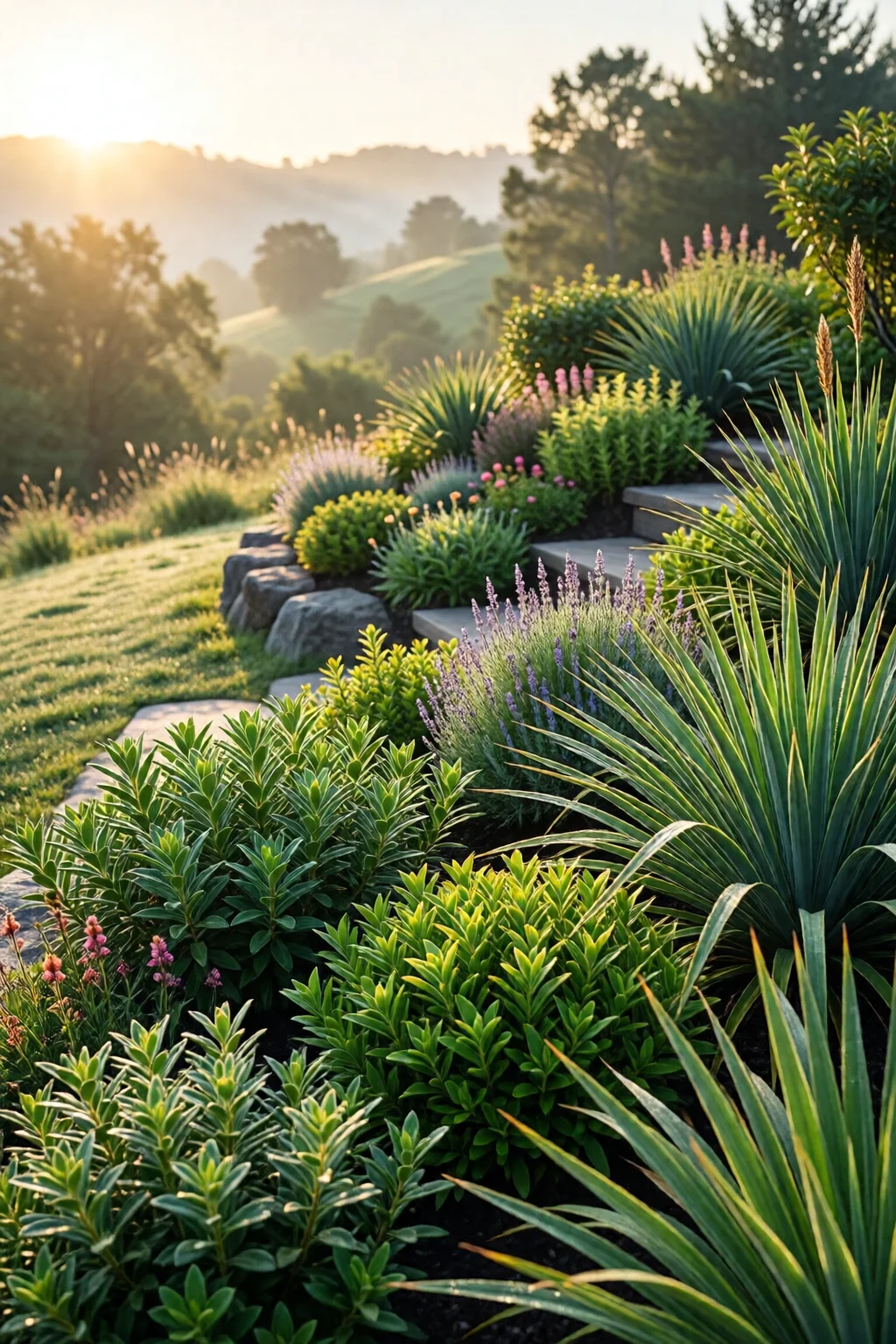
Transform your slope into a stunning, affordable oasis with these hillside landscaping ideas on a budget.
In This Article
- What You Will Need (Before You Start)
- Step 1 – Assess the Site and Sketch a Rough Plan
- Step 2 – Stabilize the Slope (Erosion Control)
- Step 3 – Build Low‑Cost Retaining Structures
- Step 4 – Choose Inexpensive, Drought‑Tolerant Plantings
- Step 5 – Mulch, Groundcover, and Water Management
- Step 6 – Add Hardscape Features for Function and Flair
- Step 7 – Final Touches and Seasonal Care
- Common Mistakes to Avoid
- Troubleshooting & Tips for Best Results
- Summary
What You Will Need (Before You Start)
Before you swing a shovel, gather these essentials. Having everything on hand saves trips to the hardware store and keeps costs under control.
- Measuring tools: 25‑ft tape measure, 10‑ft carpenter’s level, and a slope‑finder app (free on iOS/Android).
- Soil test kit: The Milwaukee Soil Test Kit runs about $12 and tells you pH, nitrogen, phosphorus, and potassium levels.
- Erosion control fabric: 3‑by‑50‑ft roll of Scotts GeoFabric – $19.99.
- Mulch: 2‑cube yard of recycled hardwood mulch, $35 at Home Depot.
- Retaining wall material: Reclaimed railroad ties ($2.50 each) or a 6‑ft section of Trex Composite Decking ($45 per piece).
- Plants: Native perennials (e.g., Echinacea purpurea, Aster novae‑angliae) – $3–$5 per plant, or seed mixes ($12 for 5 lb).
- Basic tools: Shovel, pickaxe, garden hose with a spray nozzle, wheelbarrow (10‑gal, $55), and a compact plate compactor (rental $35/day).
- Water features (optional): 5‑gal rain barrel ($45) and a small PVC “dry creek” kit ($22).
In my experience, buying a bulk bag of mulch and spreading it over the entire slope cuts labor time by 30 % because you avoid repeated trips for small bags.
Step 1 – Assess the Site and Sketch a Rough Plan
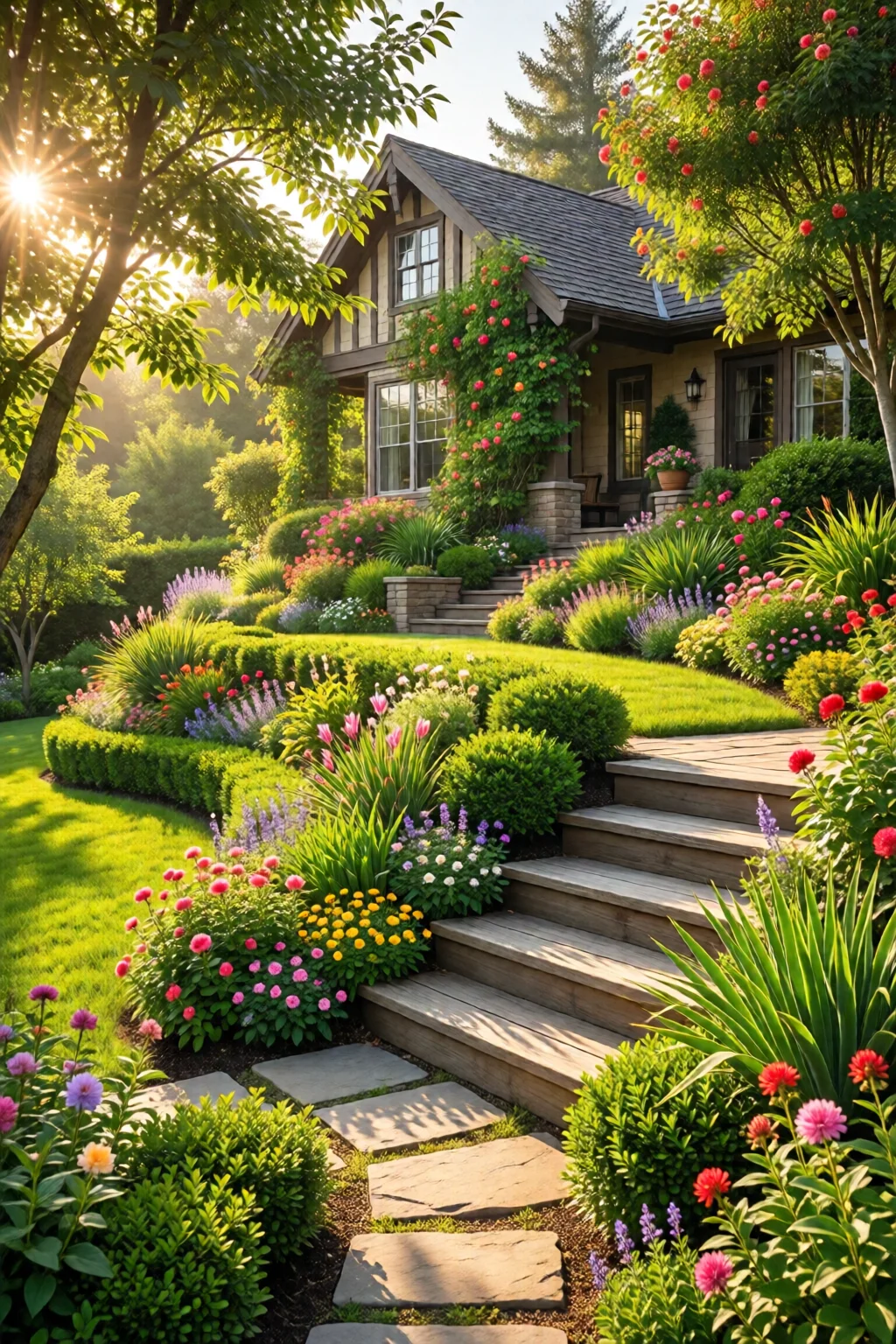
Walk the hillside and note three things: slope grade, drainage patterns, and sun exposure. Use the slope‑finder app; a 30 % grade (about 17 ft rise over 50 ft run) is steep enough to need erosion control but gentle enough for most shrubs.
Grab graph paper, draw the contour lines, and mark where you want terraces, planting zones, and pathways. A simple “T‑shaped” layout—one main path leading to a small patio and a secondary “step‑down” garden—keeps excavation minimal.
One mistake I see often is over‑designing the layout before knowing the soil’s load‑bearing capacity. Keep the first sketch flexible.
Step 2 – Stabilize the Slope (Erosion Control)
Lay the GeoFabric on the most vulnerable 30‑ft stretch. Overlap edges by 12 inches and secure with 1‑in. galvanized staples ($0.15 each, pack of 100 for $4). This creates a barrier that stops soil from washing away during the first heavy rain.
For extra hold, stake a row of concrete landscape spikes ($0.25 each) every 2 ft. The fabric plus spikes cost roughly $18 for a 150‑sq‑ft area.
After the fabric, spread a 2‑in. layer of the hardwood mulch. The mulch adds weight, reduces water impact, and improves the visual appeal instantly.
Step 3 – Build Low‑Cost Retaining Structures
Terracing is the most effective way to break a steep hill into manageable planting beds. If you have a small budget, use reclaimed railroad ties. Place them side‑by‑side, level them with a carpenter’s level, and backfill with a 50/50 mix of topsoil and compost.
Each tie costs $2.50, and a 4‑ft high terrace needs about 8 ties. That’s $20 per terrace plus $5 for soil. For a 20‑ft run you can fit three terraces for under $100.
Alternatively, a dry‑stone wall using rocks collected from the property costs nothing but labor. Stack the stones, insert a 2‑in. drainage pipe (PVC, $1 per foot), and fill the cavity with crushed stone. The visual payoff is huge, and it adds a rustic charm that pairs well with pollinator garden design plan ideas.
Step 4 – Choose Inexpensive, Drought‑Tolerant Plantings
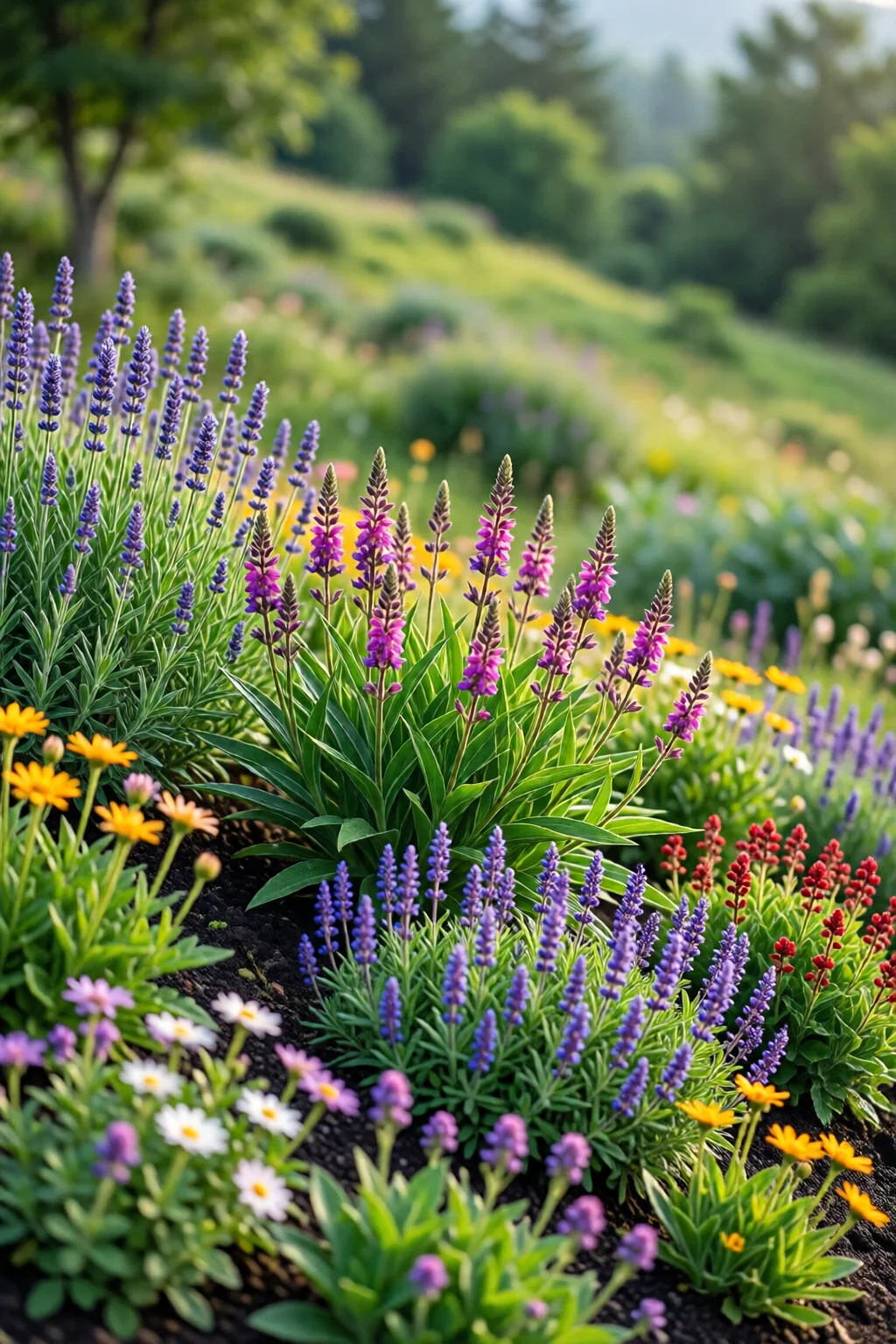
Native perennials are the backbone of any hillside garden because they require little irrigation after establishment. Here are my go‑to selections with cost breakdown:
- Echinacea purpurea (Coneflower) – $4 per plant, 18‑in. spacing.
- Aster novae‑angliae (New England Aster) – $3.50 per plant.
- Coreopsis verticillata (Threadleaf Coreopsis) – $2.80 per plant.
- Liatris spicata (Blazing Star) – $5 per plant.
- Seed mix “Prairie Wildflower” – $12 for 5 lb, covers 500 sq ft.
Group plants in threes to create visual “blocks.” Plant the taller species (Coneflower, Blazing Star) toward the back of each terrace, and the lower ones (Coreopsis, Aster) in front. This tiered effect adds depth without extra hardscape.
One tip: buy 1‑year “starter” plants from local nurseries during the spring sale; they’re often 30 % off.
Step 5 – Mulch, Groundcover, and Water Management
After planting, apply a 3‑in. mulch ring around each plant. Mulch suppresses weeds, retains moisture, and protects the soil from rain impact. Recycled rubber mulch (e.g., Scotts Rubber Mulch) costs $40 for a 2‑cube yard and lasts up to three years.
To improve drainage, install a shallow “dry creek” using PVC pipe and pea gravel. Cut a 1‑ft wide trench, lay a 4‑in. PVC pipe with holes drilled every 6 in., backfill with pea gravel ($0.80 per lb, about $30 for a 20‑ft run). This mimics a natural water‑runoff channel and prevents pooling.
Consider a 5‑gal rain barrel at the top of the slope. Connect it to a downspout with a diverter kit ($18). The barrel provides free water for the first two weeks after planting, cutting irrigation costs by roughly 40 %.
Step 6 – Add Hardscape Features for Function and Flair
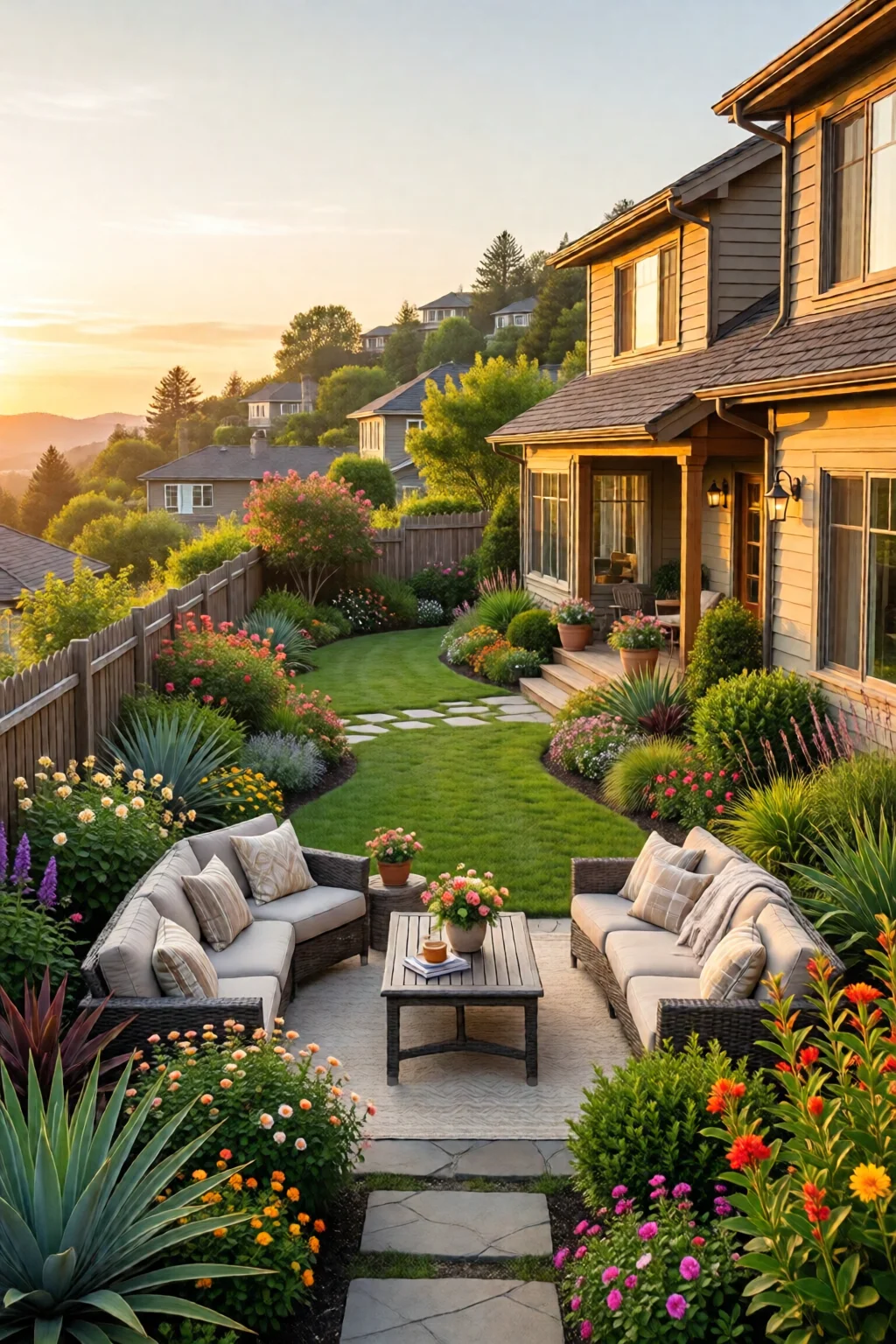
A stepping‑stone path is both practical and cheap. Use reclaimed flagstones ($3 each) set on a bed of sand (1‑in. depth). Space them 24 in. apart for easy foot traffic. A 30‑ft path needs about 12 stones, total $36 plus $5 for sand.
If you want a sitting area, repurpose a garden gazebo kit made of aluminum (e.g., Sunjoy 10‑ft Square, $199). Place it on a compacted terrace and surround with low‑maintenance ornamental grasses ($2 per bunch).
For a splash of color, plant a few roses from cuttings along the edge of the patio. A single cutting costs $1 for the rootstock, and a homemade rooting hormone (honey, 1 tbsp per 1 qt water) eliminates the need for expensive commercial hormone ($0.10 per use).
Step 7 – Final Touches and Seasonal Care
In the first spring, apply a slow‑release fertilizer (Scotts Turf Builder, $15 per 5‑lb bag) at 1 lb per 100 sq ft. This gives plants a nutrient boost without the need for frequent feeding.
Set up a simple “bird‑bath” using a shallow metal basin ($10) filled with water. It attracts pollinators, which improves seed set for your wildflowers.
Lastly, schedule a midsummer inspection. Look for erosion spots, re‑apply mulch if it has thinned, and prune any overgrown shrubs to maintain the original design intent.
Common Mistakes to Avoid
1. Ignoring Soil Drainage – Skipping the geo‑fabric or drainage pipe leads to waterlogged beds and plant loss. Always test soil percolation (a 6‑in. hole filled with water should drain in 30 minutes).
2. Over‑Planting – Crowding plants reduces air flow, encourages disease, and increases water demand. Follow spacing guidelines and remember that hillside plants thrive when they have room to spread.
3. Using Heavy Concrete Walls on Steep Slopes – Concrete is expensive and adds too much weight. Opt for lightweight retaining options like railroad ties or dry stone.
4. Forgetting Seasonal Pruning – Neglecting to cut back spent foliage in late fall can cause wind damage on exposed slopes.
5. Relying Solely on Irrigation – Over‑watering erodes the slope. Combine rain barrels, mulch, and drought‑tolerant plants for a resilient system.
Troubleshooting & Tips for Best Results
Water Runoff Issues? Re‑check the dry creek alignment. If water still pools, add a secondary trench 5 ft downhill and connect it with a larger PVC pipe (6‑in. diameter).
Plants Not Establishing? Ensure the soil pH is between 6.0 and 6.8 (common for native perennials). Amend with lime ($0.30 per lb) if needed, and consider a starter fertilizer (e.g., Miracle‑Gro Water Soluble, $12 per 1‑gal bottle).
Weeds Breaking Through Mulch? Apply a 1‑in. layer of landscape fabric beneath the mulch on newly created terraces. This extra barrier cuts weed emergence by up to 70 %.
Erosion After a Storm? Spot‑treat the affected area with additional GeoFabric and re‑compact the soil using the rented plate compactor.
Remember, hillside landscaping is a gradual process. It’s okay to phase the project over two growing seasons—start with erosion control, then add planting, and finish with hardscape.
Summary
With careful planning, inexpensive materials, and a focus on native, drought‑tolerant plants, you can create a beautiful hillside garden without breaking the bank. By following these steps—assessing the site, stabilizing the slope, building low‑cost terraces, selecting affordable flora, and adding thoughtful hardscape—you’ll achieve lasting curb‑appeal and a functional outdoor space. The key is to work with the land’s natural contours, use reclaimed or budget‑friendly resources, and maintain the garden with seasonal checks.
How much does a basic hillside garden cost?
A minimal budget project (geo‑fabric, mulch, reclaimed ties, and a few native plants) can be completed for $250–$400, not including labor.
Can I use native grasses instead of shrubs?
Yes. Grasses like Schizachyrium scoparium (Little Bluestem) cost $2 per bunch and provide excellent erosion control while staying low‑maintenance.
Do I need a professional engineer for a small retaining wall?
For walls under 3 ft high built with lightweight materials (railroad ties, dry stone), a permit is usually not required. Follow local building codes and ensure proper drainage.
How often should I replace mulch on a slope?
Re‑apply a 2‑in. layer every 2–3 years, or after a heavy storm that washes it away. Recycling mulch from local tree services can keep costs low.
What are good companion plants for a pollinator garden on a hill?
Combine Echinacea, Aster, and Salvia with herbs like thyme and oregano. They attract bees and butterflies while thriving in well‑drained soil.
4 commentaires sur « Hillside Landscaping Ideas On A Budget: Complete Guide for 2026 »