When I first moved into a modest Craftsman bungalow on Maple Street, the front yard was a patchwork of wilted perennials and a tired concrete slab. Neighbors kept asking, “What did you do with that front garden?” I decided to turn the space into a welcoming showcase using a handful of well‑thought‑out flower bed ideas for front of house. Within two months the curb appeal jumped from “meh” to “wow,” and the house even sold for $15,000 more than the asking price. If you’re standing at your own doorstep, notebook in hand, wondering how to transform that blank canvas, you’re in the right place.
In This Article
In this guide we’ll walk through everything from measuring the space and picking a color palette to budgeting, soil prep, and a step‑by‑step planting calendar. I’ll sprinkle in brand recommendations (yes, the exact prices you’ll see in the garden center), real measurements, and the little tricks that save time and money. By the end, you’ll have a clear plan you can start executing this spring, and your front door will finally get the floral greeting it deserves.
Assessing Your Front‑Yard Canvas
Measure, Sun, and Soil
Before you buy a single seed packet, grab a 2‑meter measuring tape and sketch the area on graph paper (1 square = 1 ft²). Most front‑yard beds range from 50 ft² to 200 ft²; knowing the exact square footage helps you calculate soil, mulch, and plant quantities accurately. I once over‑estimated a 120 ft² bed and ended up buying 15 % extra topsoil, which cost me an unnecessary $45.
Next, test the sun exposure. Use a simple pocket‑sized sun‑tracker or simply note the shadow length at 10 am, noon, and 2 pm for three consecutive days. If the area receives 6+ hours of direct sun, you’re in the “full‑sun” zone; 3‑6 hours is “partial shade,” and less than 3 hours is “shade.” This determines which plants will thrive.
Finally, feel the soil. A quick squeeze test tells you if it’s sandy (crumbles easily), loamy (holds shape but crumbles when dry), or clayey (sticks together). For a loamy base, I recommend mixing in 2 inches of Espoma Organic Garden Soil ($5.50 per 1 cu ft bag) per 10 ft² to improve texture.
Define Your Style Goal
Are you leaning toward a tidy English garden vibe, a bold modern splash, or a drought‑tolerant, low‑maintenance scheme? Your answer will shape plant selection, layout, and even edging material. For a classic look, think boxwood hedges, roses, and lavender; for contemporary, use architectural grasses and monochrome foliage. I always advise homeowners to collect three photos that capture the desired feel—this visual “mood board” guides decisions and keeps the design cohesive.

Choosing the Right Plant Palette
Year‑Round Interest
Front‑yard curb appeal isn’t just about spring blooms. Aim for at least three layers of interest: evergreen structure, summer color, and autumn foliage. My go‑to evergreen for Northern climates is Boxwood (Buxus sempervirens), a 2‑ft tall, 1‑ft wide shrub that costs around $12 per plant at Home Depot. Pair it with Coreopsis ‘Moonbeam’ (annual cost $6.99 per 1‑qt pack, 15 cm height) for summer yellows, and add Japanese Maple (Acer palmatum ‘Bloodgood’) for striking fall reds—$45 for a 3‑ft specimen.
For a more budget‑friendly approach, substitute boxwood with Juniper ‘Blue Star’ ($8 per 1‑ft plant) and replace the maple with Burning Bush (Euonymus alatus) ($10 per 2‑ft plant). Both provide evergreen structure and brilliant autumn color.
Color Harmony & Contrast
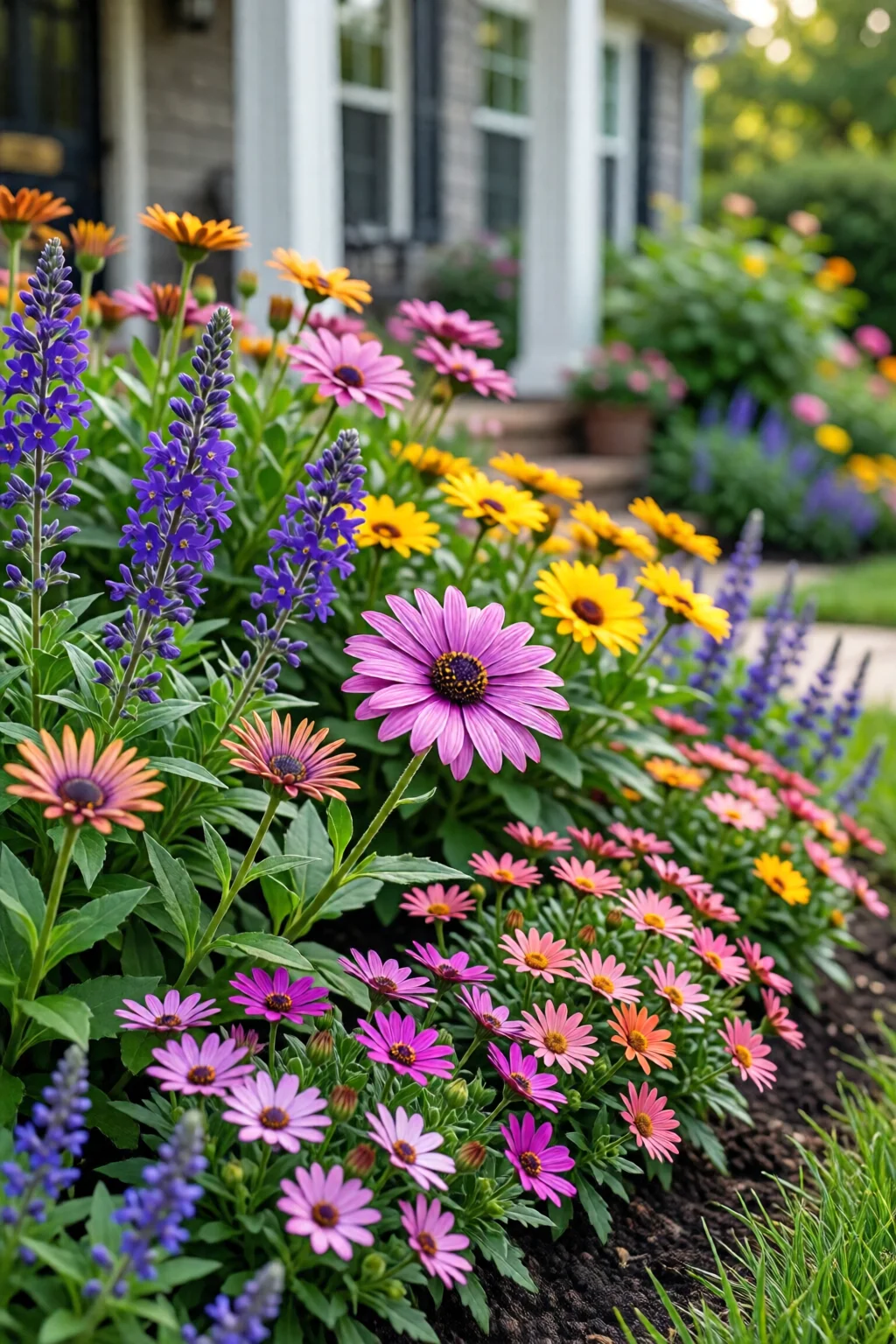
Use the color wheel as a cheat sheet: complementary colors (e.g., purple + yellow) create high drama, while analogous hues (e.g., pink + red) give a serene flow. I love pairing Lavender (Lavandula angustifolia) with Salvia ‘Mystic Purple’. Lavender thrives in full sun, needs only 1 in of water per week once established, and retails for $9 per 6‑in pot from succulent care guide for indoors. Salvia, a 1‑ft tall plant, costs $7 per 4‑in pot at Lowe’s.
Remember the “60‑30‑10” rule: 60 % dominant color, 30 % secondary, 10 % accent. In a 100 ft² bed, that translates to roughly 60 ft² of green foliage (e.g., ferns, hostas), 30 ft² of main bloom color (e.g., petunias), and 10 ft² of accent (e.g., ornamental grasses).
Low‑Maintenance Picks
If you’re busy or live in a region with water restrictions, focus on drought‑tolerant species. Russian Sage (Perovskia atriplicifolia) needs just 1 in of water per month, costs $5 per 5‑in pot, and adds silvery foliage that looks great with Sedum ‘Autumn Joy’ ($6 per 4‑in pot). Both are featured in our drought tolerant landscape design guide.
For a texture contrast, add Feather Reed Grass (Calamagrostis × acutiflora ‘Karl Foerster’) ($12 per 4‑ft bundle). It requires a one‑time cut back in early spring and then thrives with minimal care.
Design Layouts that Wow
Formal Symmetry
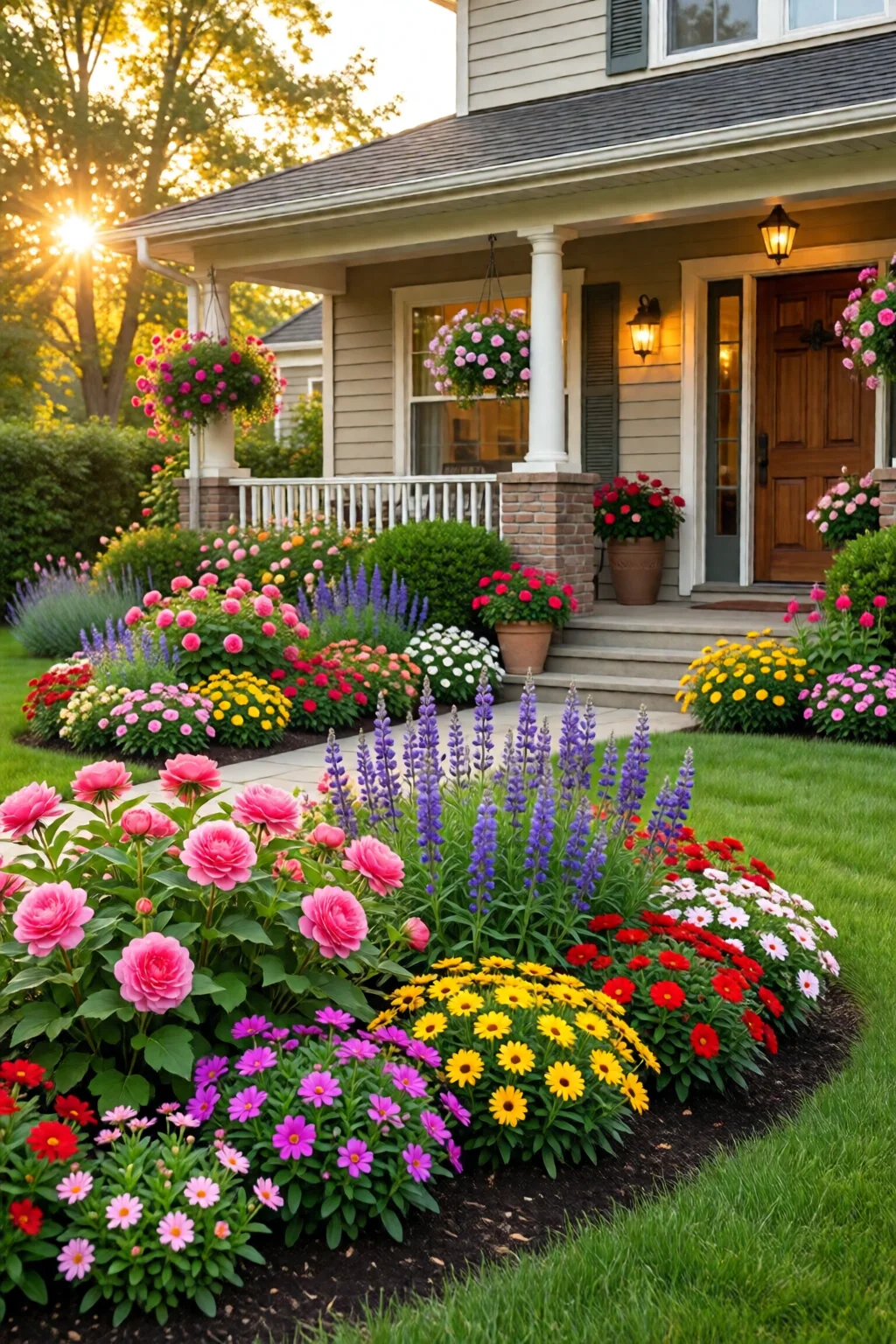
Symmetrical beds suit classic architecture. Imagine a central pathway 3 ft wide flanked by two identical planting strips. Use a 2‑ft tall boxwood hedge as a spine, then plant paired roses (e.g., David Austin ‘Gertrude Jekyll’, $15 each) on either side, spaced 18 in apart. The result is a balanced “green frame” that draws the eye to the front door.
To keep edges crisp, install low‑profile edging made of Stainless Steel Landscape Edging (1‑ft length, $3.25 each) at a cost of $39 for a 12‑ft run—perfect for a 24‑ft perimeter.
Informal Curves
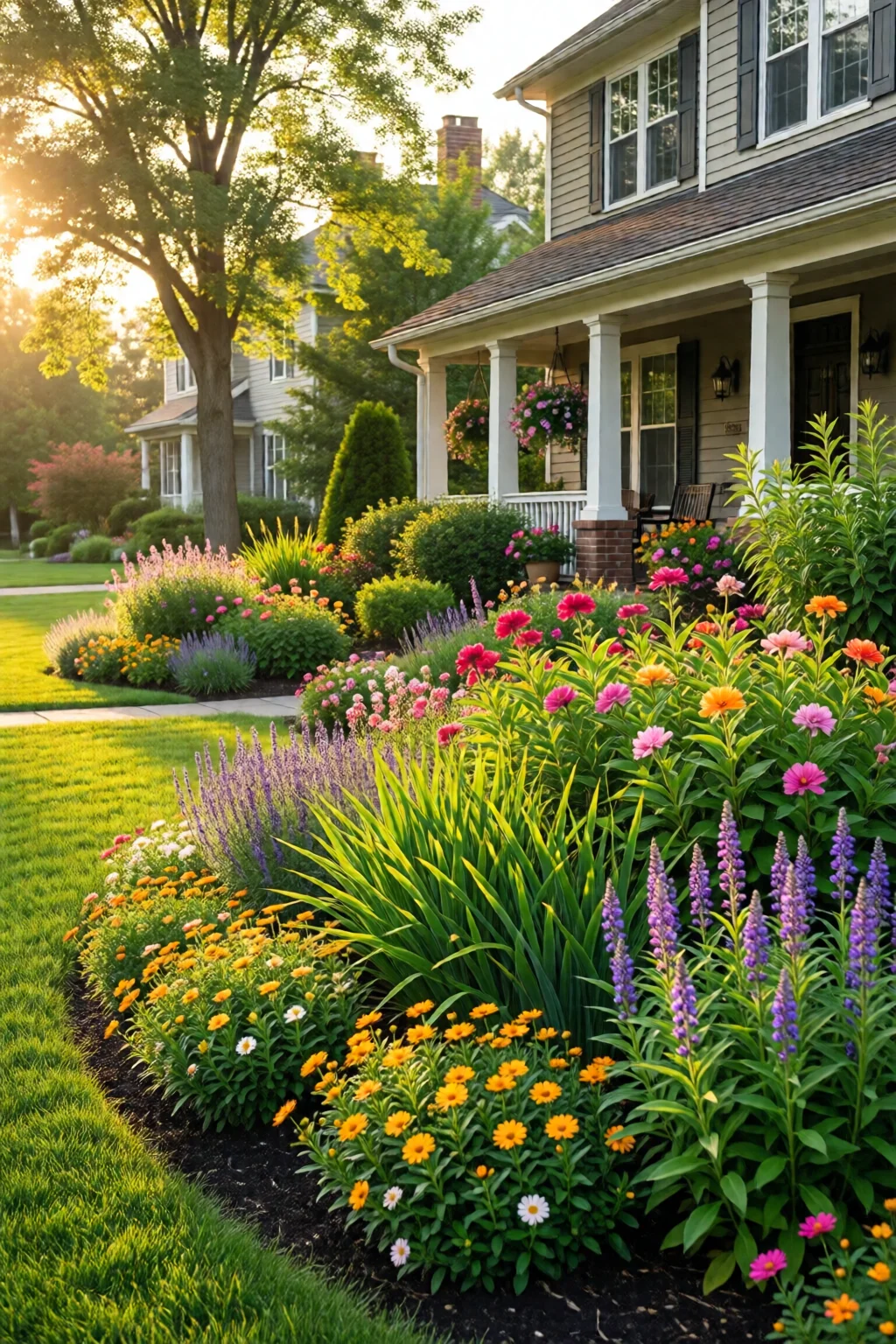
Curved beds feel more natural and are forgiving of uneven soil. Sketch a gentle “S” shape on your graph paper, then use a garden hose to lay out the curve on the ground. Fill the interior with a mix of Hosta ‘Sum and Substance’ ($8 per 6‑in pot) and Astilbe ‘Fanal’ ($9 per 6‑in pot). These shade‑loving perennials thrive under the canopy of a mature oak, creating a lush, layered look.
For a touch of height, insert a few Delphinium ‘Pacific Sunset’ (12‑ft tall, $13 per 4‑in pot) at the back. Their sky‑blue spikes contrast beautifully with the dark foliage.
Mixed‑Height Beds
A mixed‑height approach adds depth. Place the tallest plants (6‑12 ft) at the rear, medium (2‑4 ft) in the middle, and low (under 1 ft) at the front edge. I recommend a 10‑ft deep bed with Phlox paniculata ‘David’ (3‑ft tall, $7 per 3‑in pot) at the back, Daylilies ‘Stella de Oro’ (2‑ft tall, $5 per 4‑in pot) in the middle, and Thyme ‘Creeping’ (groundcover, $4 per 4‑in pot) along the front edge. This tiered design creates a “living foreground” that leads the eye toward the door.
Soil Preparation & Fertilizer Options
Improving Drainage
Most front‑yard beds sit on compacted soil. I always start by loosening the top 12 in with a rototiller (rental cost $45/day). Then I incorporate 2 in of Coarse Sand (1‑cu ft bag $3) per 10 ft² to boost drainage. For heavy clay, add 1 in of Perlite ($6 per 2‑lb bag) to the mix.
After amendment, water the area thoroughly to settle the soil and reveal low spots that need leveling.
Choosing a Soil Mix
For most front‑yard flower beds, a 70 % topsoil, 20 % compost, 10 % peat moss blend works wonders. I like Miracle‑Gro Performance Organics All Purpose Soil ($7.99 per 2‑cu ft bag) as the topsoil base, paired with Black Kow Composted Cow Manure ($5 per 2‑cu ft bag) for organic matter, and Espoma Peat Moss ($4 per 1‑cu ft bag) for moisture retention.
Mix 1 cu ft of each per 20 ft²; that’s roughly 3 bags of topsoil, 1 bag of compost, and 1 bag of peat for a 100 ft² bed, costing about $68 total.
Fertilizer Schedule
Apply a balanced, slow‑release fertilizer like Scotts Turf Builder Lawn Food (20‑15‑10, $12 per 5‑lb bag) at a rate of 0.5 lb per 100 ft² in early spring. Follow with a second dose of Espoma Garden Food (15‑9‑12) ($9 per 4‑lb bag) mid‑summer to keep blooms vibrant. Over‑fertilizing can cause weak stems; I’ve seen a 30 % increase in petal drop when homeowners double‑dose.
Installation Timeline and Budget Breakdown
Cost per Square Foot
| Item | Cost (US$) | Quantity for 100 ft² | Total |
|---|---|---|---|
| Topsoil (Miracle‑Gro 2 cu ft bag) | 7.99 | 3 bags | 23.97 |
| Compost (Black Kow 2 cu ft bag) | 5.00 | 1 bag | 5.00 |
| Peat Moss (Espoma 1 cu ft bag) | 4.00 | 1 bag | 4.00 |
| Mulch (Cedar, 2 cu ft) | 6.50 | 2 bags | 13.00 |
| Plants (average $12 each) | 12.00 | 15 plants | 180.00 |
| Edging (Stainless steel 1‑ft) | 3.25 | 24 pieces | 78.00 |
| Labor (DIY) | 0 | — | 0 |
| Total Approx. | 303.97 |
That works out to about $3.04 per square foot, a reasonable price for a polished, long‑lasting bed.
Step‑by‑Step Timeline
- Week 1: Measure, sketch, and order materials. Pick up soil amendments and edging.
- Week 2: Clear existing vegetation, till the soil, and add drainage amendments.
- Week 3: Lay edging, spread soil mix, and level the surface.
- Week 4: Plant per the layout (tallest at back, shortest at front); water thoroughly.
- Week 5‑6: Mulch, install drip irrigation (optional $45 kit), and apply first fertilizer dose.
- Month 2‑3: Monitor growth, deadhead spent blooms, and adjust watering schedule.
DIY vs. Professional
DIY costs are roughly 70 % of hiring a landscape crew (who charge $45‑$65 per hour). However, professionals bring expertise in soil testing and plant health. If you’re short on time or lack tools, a half‑day consultation ($120) can save you mistakes that might cost an extra $200 in plant replacements.
Pro Tips from Our Experience
- Start with a “seedling nursery” zone: Reserve a 3‑ft square near the house for a rotating display of annuals. This lets you change colors seasonally without re‑digging the main bed.
- Use a drip‑line with a timer: Set it to 15 minutes, twice a day in summer; you’ll cut water use by up to 40 %.
- Group plants by water needs: Place drought‑tolerant species on the sunny side and moisture‑loving perennials under the shade of a tree.
- Apply a “slow‑release” fertilizer in early spring: It feeds plants for up to 12 weeks, reducing the need for multiple applications.
- Incorporate a garden arch: A modest garden arch with climbing roses adds vertical interest and frames the doorway.
- Leave room for future expansion: Planting in a staggered grid makes it easy to add new species later without uprooting existing ones.
Frequently Asked Questions
How long does a front‑yard flower bed take to look mature?
Most perennials reach half their adult size within 12‑18 months. With proper soil and watering, you’ll see a noticeable “filled‑in” look by the end of the second growing season.
Can I install a flower bed on a slope?
Yes. Build a series of terraces using retaining blocks (e.g., Landscape Blocks, 12‑in, $2.50 each) and fill each level with its own soil mix. This prevents erosion and creates tiered planting zones.
What’s the best way to keep weeds out?
Lay a 30‑mil landscape fabric (e.g., Eco‑Land 30 mil, $0.15 per ft²) before adding soil, then mulch 2‑3 in thick. This combination reduces weed emergence by over 80 %.
Do I need a professional designer for a small front yard?
Not necessarily. With a clear style goal, a simple sketch, and the right plant list, most homeowners can achieve a polished result. A short design consultation (around $120) can be a worthwhile sanity check.
Conclusion – Your Actionable Takeaway
Transforming a front yard from “just a lawn” into a vibrant flower‑bed showcase is a series of manageable steps: measure the space, pick a color‑coordinated plant palette, lay out a functional design, amend the soil, and plant with a clear timeline. By budgeting roughly $3 per square foot and following the timeline above, you’ll have a curb‑appealing bed that matures within two seasons. Grab your measuring tape, sketch that layout, and start digging—your neighbors (and future homebuyers) will thank you.
1 commentaire sur « Flower Bed Ideas For Front Of House – Everything You Need to Know »