Ever wondered how a few strategically placed stones can turn a bland patch of yard into a striking, low‑maintenance masterpiece?
In This Article
- What You Will Need – Before You Start
- Step 1 – Choose the Right Location and Map Your Layout
- Step 2 – Prepare the Soil and Build the Base
- Step 3 – Install Hardscape Features
- Step 4 – Plant Selection and Placement
- Step 5 – Mulch, Water, and Finish
- Common Mistakes to Avoid
- Troubleshooting & Tips for Best Results
- Summary – Your Rock Garden in a Nutshell
By the end of this guide you’ll have a clear roadmap to create a stunning rock garden that not only looks like it belongs in a botanical illustration but also thrives with minimal upkeep. You’ll walk away knowing the exact materials, layout tricks, plant selections, and budgeting tips needed to bring your rock garden landscaping ideas to life.
What You Will Need – Before You Start
- Site assessment tools: a 2‑meter measuring tape, a soil pH kit (e.g., Rapitest Soil Test Kit – $12.99), and a level.
- Hardscape materials: river rocks (10‑20 lb bags, $4.50 each), flagstone slabs (12 × 12 in, $3.20 per sq ft), and dry‑stacked stone for a low wall (e.g., Quikrete Stone Mix – $6.45 per 50‑lb bag).
- Soil amendment: coarse sand (1 cu ft – $22), fine gravel (1 cu ft – $18), and organic compost (2 cu ft – $30).
- Plants: drought‑tolerant species such as Alyssum saxatile ‘Flore Pleno’ (3‑gal pot – $14), Sedum ‘Autumn Joy’ (1‑gal – $9), Echinacea purpurea (2‑gal – $11), and Thyme (Thymus vulgaris) (1‑lb pack – $4.50).
- Tools: a sturdy garden trowel, a hand tamper, a rotary hoe, and a garden hose with a spray nozzle.
- Optional decorative touches: a stainless‑steel garden statue ($45), a small water feature pump (Mini Fountain Pump – $28), and LED pathway lights (Solar Spotlights – $39 for a set of 4).
In my experience, the most common oversight is skipping the drainage layer. A simple 2‑inch sand‑gravel mix at the base prevents water pooling and protects your stones from shifting.
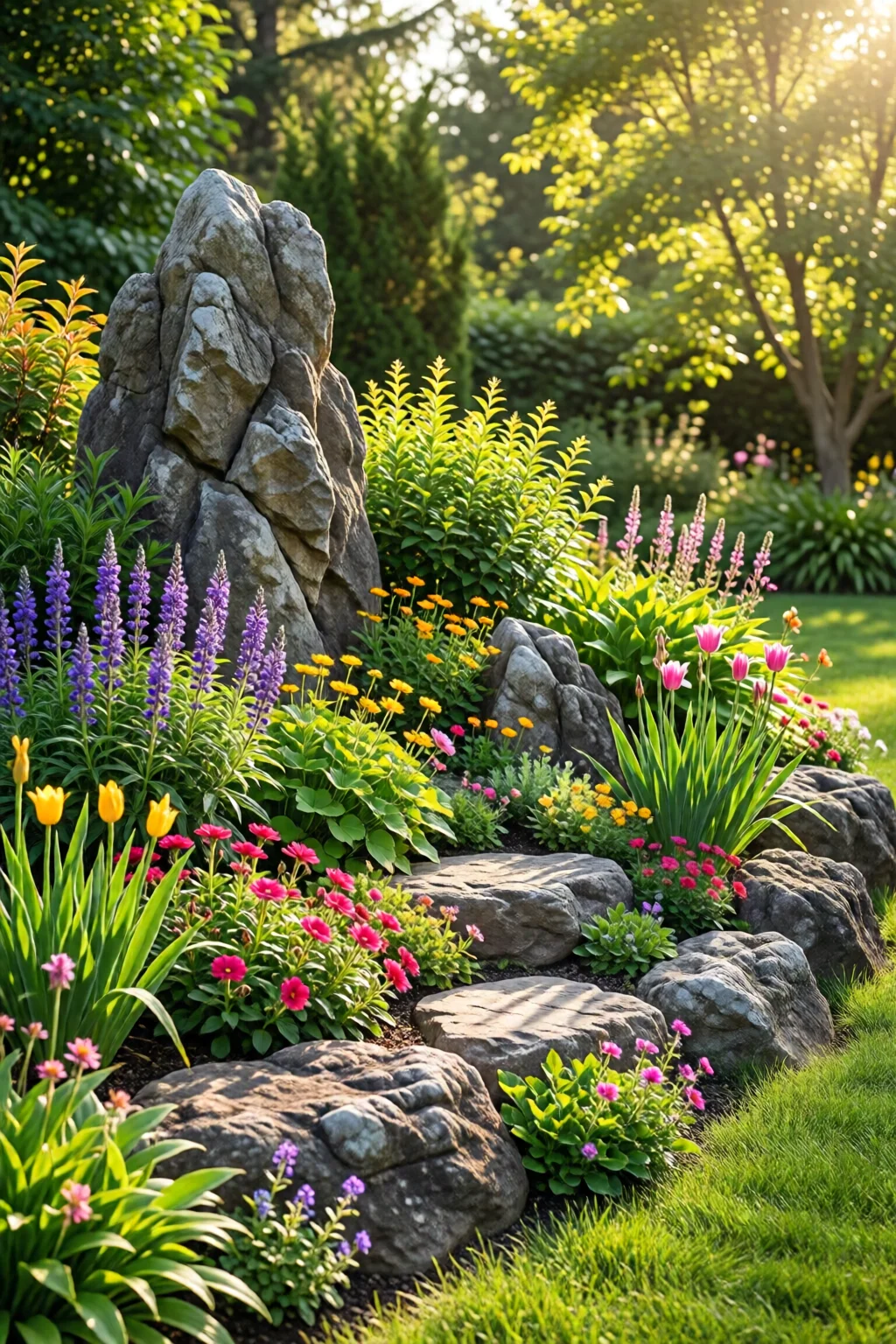
Step 1 – Choose the Right Location and Map Your Layout
Start by selecting a spot that receives 4–6 hours of sunlight daily; most rock‑garden plants love full sun to light shade. Use the 2‑meter tape to sketch a rough rectangle or circle on graph paper, scaling 1 cm to 0.5 ft. This helps you visualize the placement of larger stones and ensures you stay within the desired footprint.
When mapping, consider these design principles:
- Scale: Keep the tallest stones no higher than 1/3 of the garden’s width. A 9‑ft wide garden should not have stones taller than 3 ft.
- Flow: Arrange rocks to guide the eye toward a focal point—perhaps a statue or a mini waterfall.
- Texture contrast: Pair smooth river rocks with rough flagstones for visual interest.
One mistake I see often is placing the garden too close to a building foundation, which can cause moisture issues. Keep at least a 1‑ft buffer zone.
Step 2 – Prepare the Soil and Build the Base
Excavate the area to a depth of 6–8 inches. Remove any grass or weeds, then spread a 2‑inch layer of coarse sand mixed with fine gravel. Lightly water and tamp it down with the hand tamper. This layer acts as a drainage blanket and provides a stable platform for the stones.
Next, blend the existing soil with compost at a 70:30 ratio. This improves fertility without retaining excess moisture—ideal for the xeric conditions of a rock garden.
Step 3 – Install Hardscape Features
Lay the largest flagstones first, positioning them as anchors. Use a rubber mallet to seat each stone firmly. Fill gaps between stones with the sand‑gravel mix, sweeping away excess. For a rustic edge, stack dry‑stacked stones without mortar; this creates a living wall that can be adjusted over time.
If you’re adding a water feature, dig a shallow basin (12 × 12 in, 4 in deep) at the lowest point, line it with pond liner, and install the mini pump. Connect to a power source with a GFCI outlet for safety.
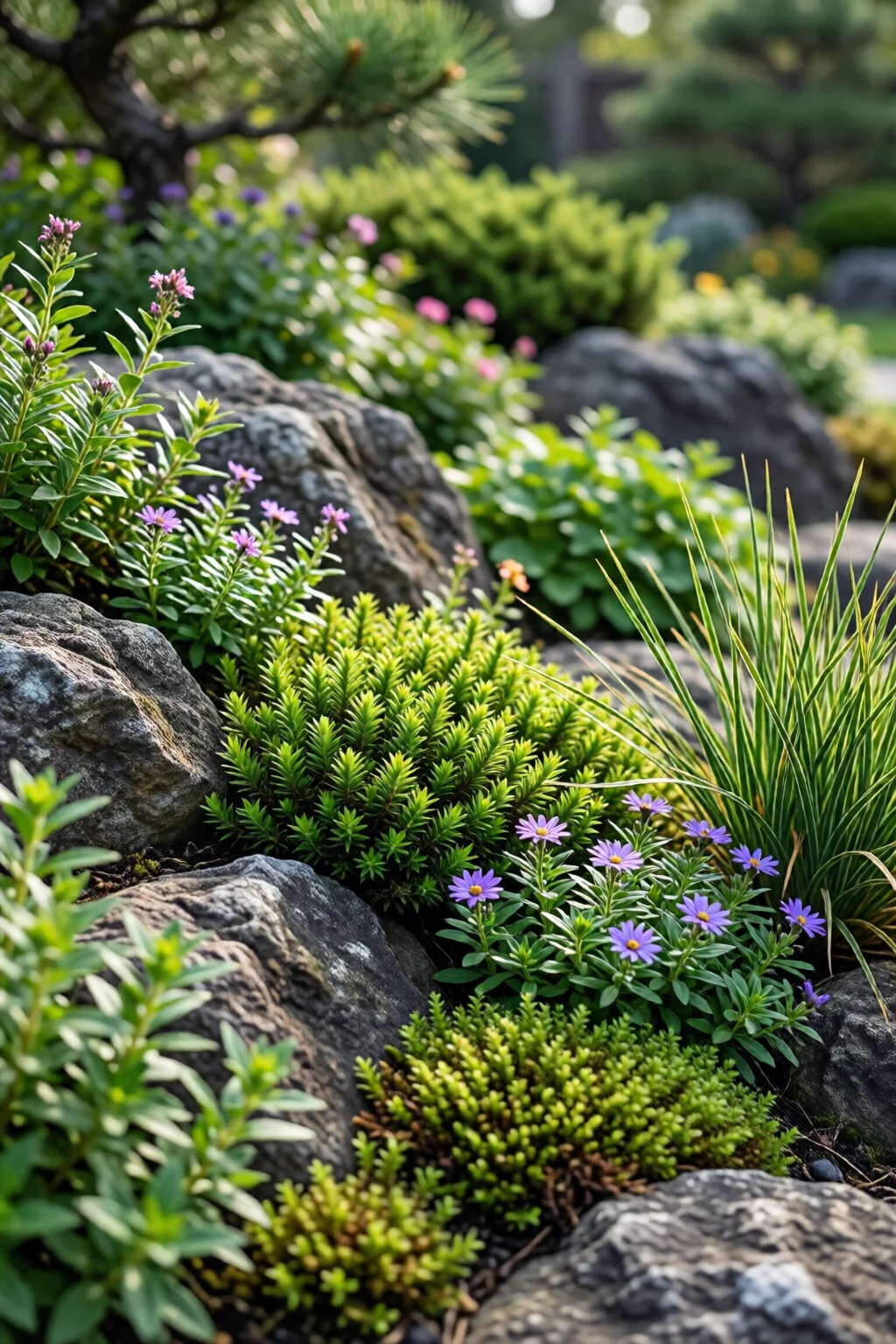
Step 4 – Plant Selection and Placement
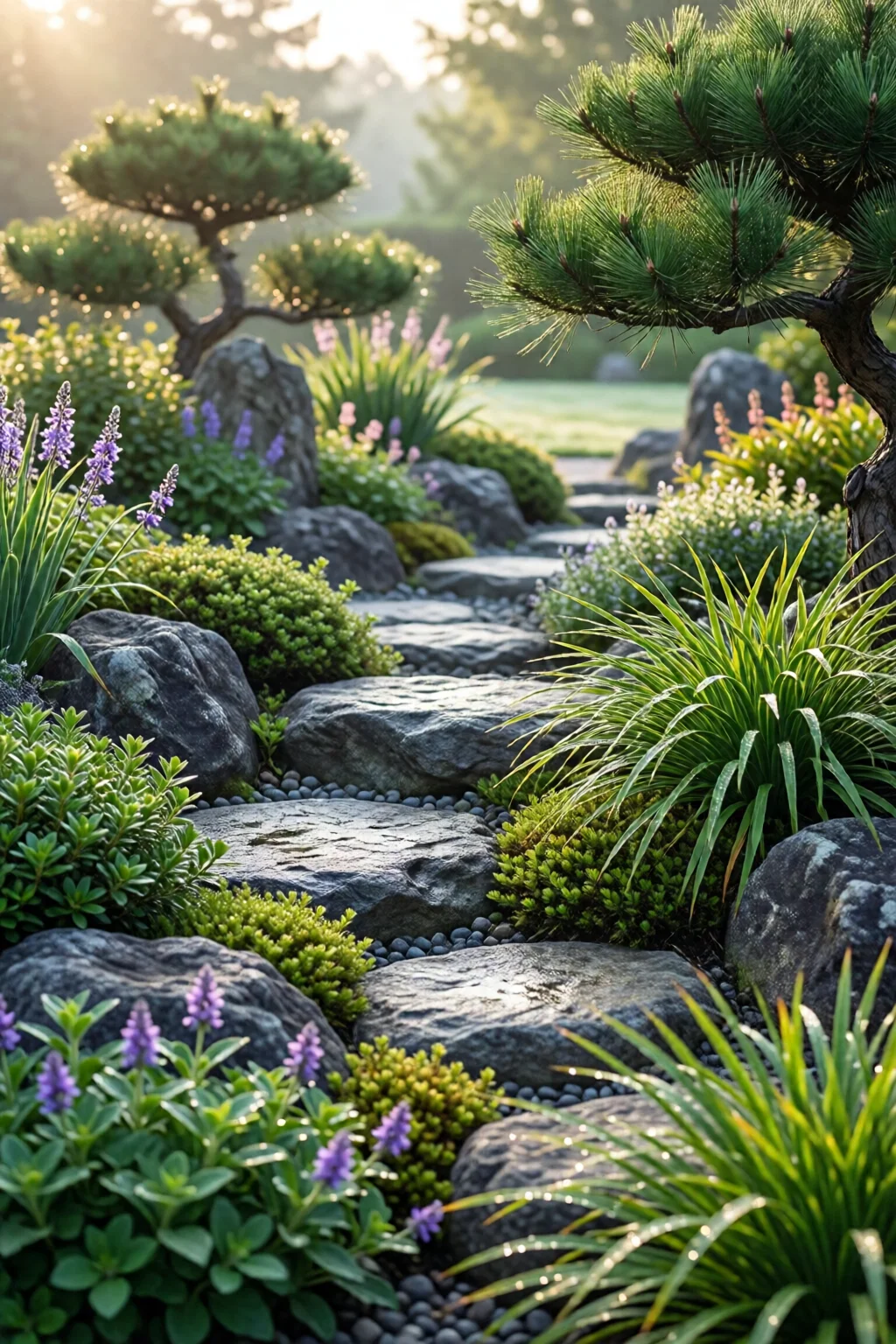
Group plants by water needs and height. Place low‑lying groundcovers like Thyme and Alyssum in the crevices of stones to soften edges. Add mid‑height succulents such as Sedum ‘Autumn Joy’ on raised mounds. Tall, showy perennials like Echinacea should occupy the back or central focal point.
When spacing, follow the plant’s mature width. For example, Thyme spreads 12 in, so plant a few inches apart; Echinacea can reach 24 in, so give it 30 in of clearance. This prevents overcrowding and reduces disease risk.
For more inspiration on low‑water options, check out xeriscaping ideas for front yard and succulent garden design ideas.
Step 5 – Mulch, Water, and Finish
Apply a 1‑inch layer of fine gravel or crushed lava rock as mulch. This mimics a natural alpine environment, suppresses weeds, and improves drainage. Water the garden thoroughly after planting, then let the soil dry out until the top inch feels dry to the touch—typically 3–5 days in summer.
Install solar LED lights around the perimeter for evening ambience. Position them 6 ft apart, bury the stakes 2 in deep, and aim the fixtures upward to highlight the stone textures.
Common Mistakes to Avoid
- Over‑watering: Rock gardens thrive on dry periods. Watering more than twice a week can cause root rot.
- Choosing the wrong soil: Heavy clay retains moisture; always amend with sand and gravel.
- Ignoring plant compatibility: Mixing moisture‑loving ferns with drought‑tolerant succulents leads to uneven growth.
- Neglecting weed control: Weeds can quickly overrun crevices. Apply a pre‑emergent herbicide (Milorganite – $22 per 5‑lb bag) before planting.
- Improper stone placement: Stones that are too tall or too close together can create micro‑climates that trap moisture.
Troubleshooting & Tips for Best Results
Problem: Stones shifting after a rainstorm.
Solution: Re‑level the base sand, add a 1‑inch layer of crushed stone, and compact with a plate compactor.
Problem: Plants looking leggy.
Solution: Increase sunlight exposure by pruning surrounding foliage, or thin out dense plantings to improve air flow.
Tip: In my garden, I rotate the placement of annual color bursts (e.g., Petunia ‘Supertunia’ – $8 per 5‑gal) each spring to keep the visual interest fresh.
Tip: Use a drip‑irrigation timer set to 10 minutes every other day during the establishment phase (first 8 weeks). This conserves water and encourages deep root growth.
For additional design ideas, explore flower bed ideas for front of house or pothos plant varieties and care for vertical accents.
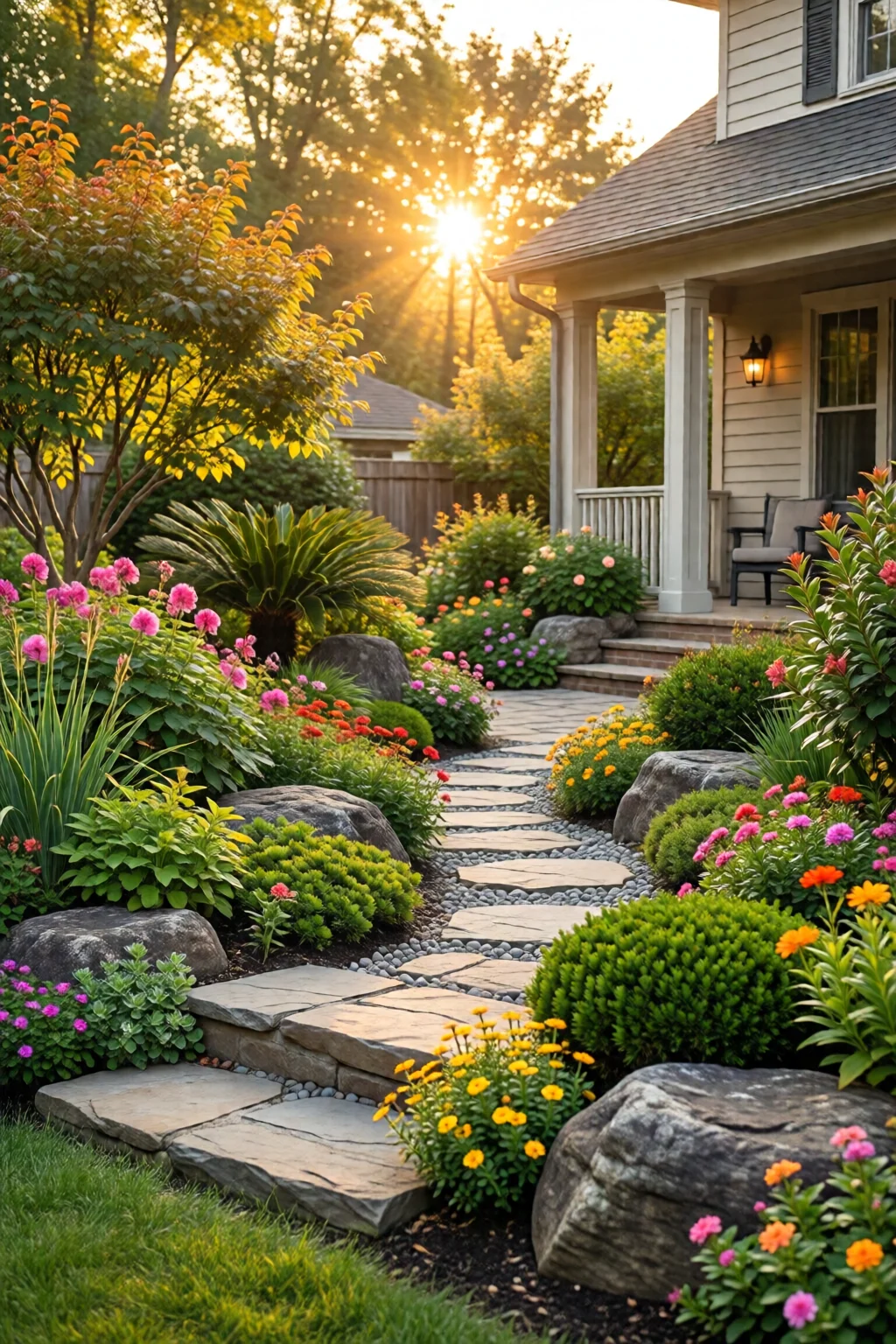
Summary – Your Rock Garden in a Nutshell
Creating a rock garden is a blend of art and science: choose a sunlit spot, build a well‑drained base, arrange stones for scale and flow, plant drought‑tolerant species in thoughtful groups, and finish with gravel mulch and subtle lighting. With a budget of roughly $350–$500 (materials, plants, and optional décor), you can achieve a professional‑looking oasis that requires less than an hour of weekly maintenance.
Follow the step‑by‑step plan, avoid the common pitfalls, and adapt the troubleshooting tips to your local climate. In just a few weeks you’ll watch your rock garden evolve from a pile of stones into a living sculpture that draws compliments from neighbors and provides a serene retreat for you.
How deep should I dig for the rock garden base?
Excavate to a depth of 6–8 inches, then add a 2‑inch sand‑gravel drainage layer before back‑filling with amended soil.
What are the best plants for a low‑maintenance rock garden?
Drought‑tolerant perennials and succulents such as Sedum ‘Autumn Joy’, Alyssum saxatile, Echinacea purpurea, and thyme varieties thrive in rock gardens.
How much does a typical rock garden cost?
A modest 8 × 8 ft rock garden usually costs between $350 and $500, covering stones, soil amendments, plants, and optional decorative elements.
Do I need irrigation for a rock garden?
During establishment water weekly; after plants are established, a drip system set to 10 minutes every other day or natural rainfall usually suffices.
Can I add a water feature to a rock garden?
Yes—install a shallow basin at the lowest point, line it with pond liner, and use a mini pump (around $28) to create a gentle fountain or waterfall.
3 commentaires sur « Rock Garden Landscaping Ideas – Your Complete Resource »