Garden arches are more than just functional structures; they are living works of art that transform ordinary yards into enchanting spaces. By pairing a thoughtfully chosen arch with the right climbing plants, you can create a focal point that draws the eye, adds privacy, and invites pollinators. Whether you’re designing a front‑yard welcome, a backyard retreat, or a cozy patio nook, this guide offers practical tips, expert advice, and actionable steps to help you select, install, and maintain stunning garden arches that flourish year after year.
Why Use Garden Arches?
Garden arches serve multiple purposes that go beyond simple aesthetics. They provide a natural framework for vines to climb, which can soften hard edges, mask unsightly fences, and create a seamless transition between different garden zones. In addition, arches can:
- Increase visual interest: A well‑placed arch draws the eye upward, adding height and drama to flat landscapes.
- Enhance privacy: When vines mature, they form a living screen that blocks sightlines without the need for solid walls.
- Support biodiversity: Flowering vines attract bees, butterflies, and hummingbirds, boosting pollination for nearby plants.
- Improve microclimates: Dense foliage can shade hot summer spots, keeping the ground cooler for shade‑loving plants.
Because arches integrate structure and nature, they’re a favorite feature for homeowners seeking a low‑maintenance yet high‑impact garden element.
Choosing the Right Arch Style
The first step is selecting an arch that complements your home’s architecture and garden style. Consider material, scale, and durability before making a purchase.
Wooden Arches
Wood offers a warm, rustic look that blends beautifully with natural landscapes. Cedar and redwood are popular choices because they resist rot and insects. When installing a wooden arch, treat it with a non‑toxic sealant to extend its lifespan, especially in humid climates.
Metal and Wrought‑Iron Arches
For a more formal or contemporary feel, metal arches provide sleek lines and exceptional strength. Galvanized steel, aluminum, and wrought iron can support heavier vines like wisteria or climbing roses. Be sure to check for rust‑proof coatings and consider adding a protective paint layer every few years.
Garden Trellis Arches
DIY gardeners often build trellis arches using PVC pipes, bamboo, or reclaimed lumber. These structures are lightweight, affordable, and easy to customize. Just ensure the trellis is securely anchored to withstand wind.
Arches with Integrated Seating
Combining an arch with a bench or swing creates a multifunctional space that invites relaxation. Choose sturdy materials and add weather‑resistant cushions for comfort.

Selecting the Perfect Climbing Plants
Choosing the right vines is crucial for ensuring your arch looks spectacular throughout the growing season. Match plant characteristics with your climate, sunlight exposure, and desired bloom time.
Perennial Vines
Perennials return year after year, reducing replanting effort. Clematis offers a wide color palette and thrives in full sun to partial shade. Climbing hydrangea prefers morning sun and afternoon shade, delivering large lace‑like blossoms in summer. Trumpet vine (Campsis radicans) provides vibrant orange‑red flowers that attract hummingbirds.
Annual Vines
If you want rapid coverage, annual vines like sweet pea or morning glory grow quickly and fill gaps within a single season. However, they will need to be replanted each year.
Evergreen Climbers
For year‑round privacy, consider evergreen vines such as English ivy, star jasmine (Trachelospermum jasminoides), or confederate jasmine (Trachelospermum jasminoides). These provide a green backdrop even in winter, which is especially appealing in regions with harsh cold.
Climate Considerations
In USDA zones 5‑9, roses, clematis, and honeysuckle thrive. In hotter zones (10‑11), opt for heat‑tolerant vines like bougainvillea or passionflower. Always check the plant’s hardiness rating before purchasing.

Design Tips for Different Spaces
Where you place your garden arch influences the choice of plant, arch size, and supporting elements. Below are tailored ideas for common garden locations.
Front‑Yard Entry
Make a memorable first impression by positioning an arch over your front door or driveway. Pair it with fragrant vines like star jasmine for a welcoming scent. For a budget‑friendly approach, see our front yard garden design on a budget guide, which includes DIY arch kits and inexpensive plant options.
Patio or Deck Nook
Transform a patio corner into a shaded oasis with a compact wooden arch. Choose vines that tolerate partial shade, such as climbing hydrangea or sweet pea. Add string lights or lanterns for evening ambience.
Garden Border
Arches can serve as elegant transition points along garden borders. Pair a metal arch with a low‑maintenance climber like English ivy and complement it with garden border ideas for edges such as stone pathways or raised beds.
Small Urban Spaces
Even a narrow alley can benefit from a slim, vertical arch. Choose dwarf varieties of vines, such as mini clematis or trailing sweet pea, to keep growth controlled.
Large Estates and Formal Gardens
Grand stone or wrought‑iron arches paired with vigorous climbers like wisteria or trumpet vine create dramatic, sweeping canopies that become the centerpiece of expansive lawns.

Planting and Installation: Step‑by‑Step
Proper installation sets the foundation for a healthy, thriving arch. Follow these detailed steps to ensure success.
Site Preparation
1. Measure the area: Determine the arch’s width, height, and clearance for doors or pathways.
2. Check soil drainage: Dig a test hole 12 inches deep; if water pools, amend with coarse sand or organic matter.
3. Mark anchor points: Use stakes and string to outline where the arch’s legs will sit.
Installing the Arch
1. Set the footings: For heavy arches, dig 12‑inch‑deep holes and pour concrete footings, inserting metal brackets for added stability.
2. Secure the frame: Attach the arch’s legs to the footings with galvanized bolts, ensuring a plumb (vertical) alignment.
3. Backfill and tamp: Fill around the footings with native soil, compacting gently to eliminate air pockets.
Planting the Vines
1. Dig planting holes: Space holes 12‑18 inches apart along the base of the arch, depending on the vine’s mature width.
2. Position the plant: Place the root ball so the crown sits just above soil level.
3. Backfill and water: Fill with a mix of native soil and compost, firm lightly, then water thoroughly.
Training Vines
Use soft plant ties, garden twine, or Velcro strips to gently attach new shoots to the arch. Encourage upward growth by pinching back side shoots, and prune early to shape the plant’s direction.
Mulching and Soil Health
Apply a 2‑inch layer of organic mulch around the base of each vine to retain moisture, suppress weeds, and gradually improve soil structure. For advanced mulching techniques, consult our mulching tips for flower beds article.
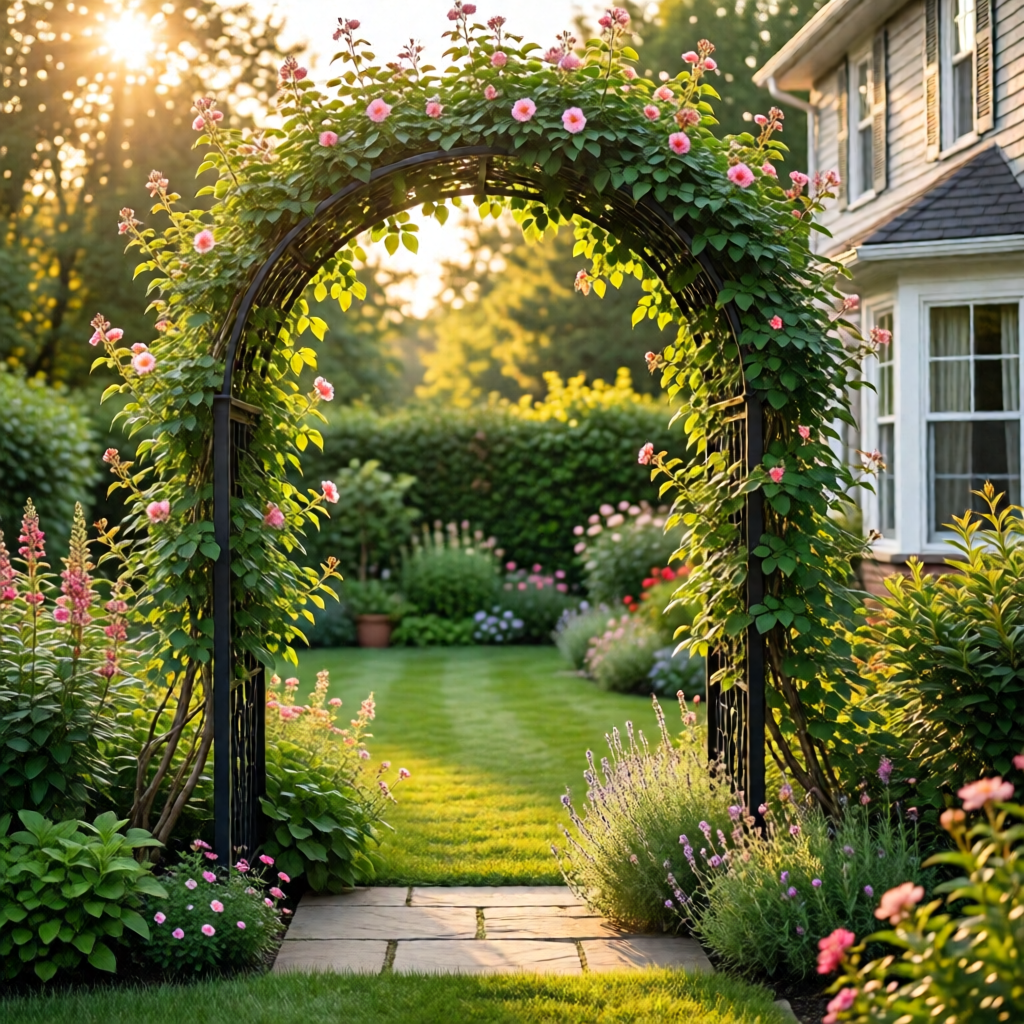
Maintenance and Care
Once established, garden arches require routine maintenance to keep vines healthy and the structure safe.
Pruning
Pruning schedules vary by species:
- Clematis: Prune in late winter for groups 1 (early bloom) and skip for groups 2 (mid‑season). Group 3 (late bloom) needs hard pruning after first frost.
- Wisteria: Perform heavy pruning twice a year—once after flowering and again in late winter—to control vigor.
- English Ivy: Trim back in early spring to prevent overgrowth and maintain shape.
Fertilizing
Feed vines with a balanced, slow‑release fertilizer in early spring. For flowering vines, a higher phosphorus formula (e.g., 10‑30‑10) encourages abundant blooms. Avoid over‑fertilizing, which can lead to excessive foliage at the expense of flowers.
Pest Management
Common pests include aphids, spider mites, and vine weevils. Use neem oil or insecticidal soap for soft‑bodied insects, and introduce beneficial predators like ladybugs. Regularly inspect the arch for signs of disease, especially on woody vines like wisteria.
Winter Protection
In colder climates, wrap the base of woody vines with burlap or frost cloth to protect dormant buds. For evergreen climbers, apply a light coat of mulch to insulate roots. Check for ice buildup on metal arches to prevent damage.
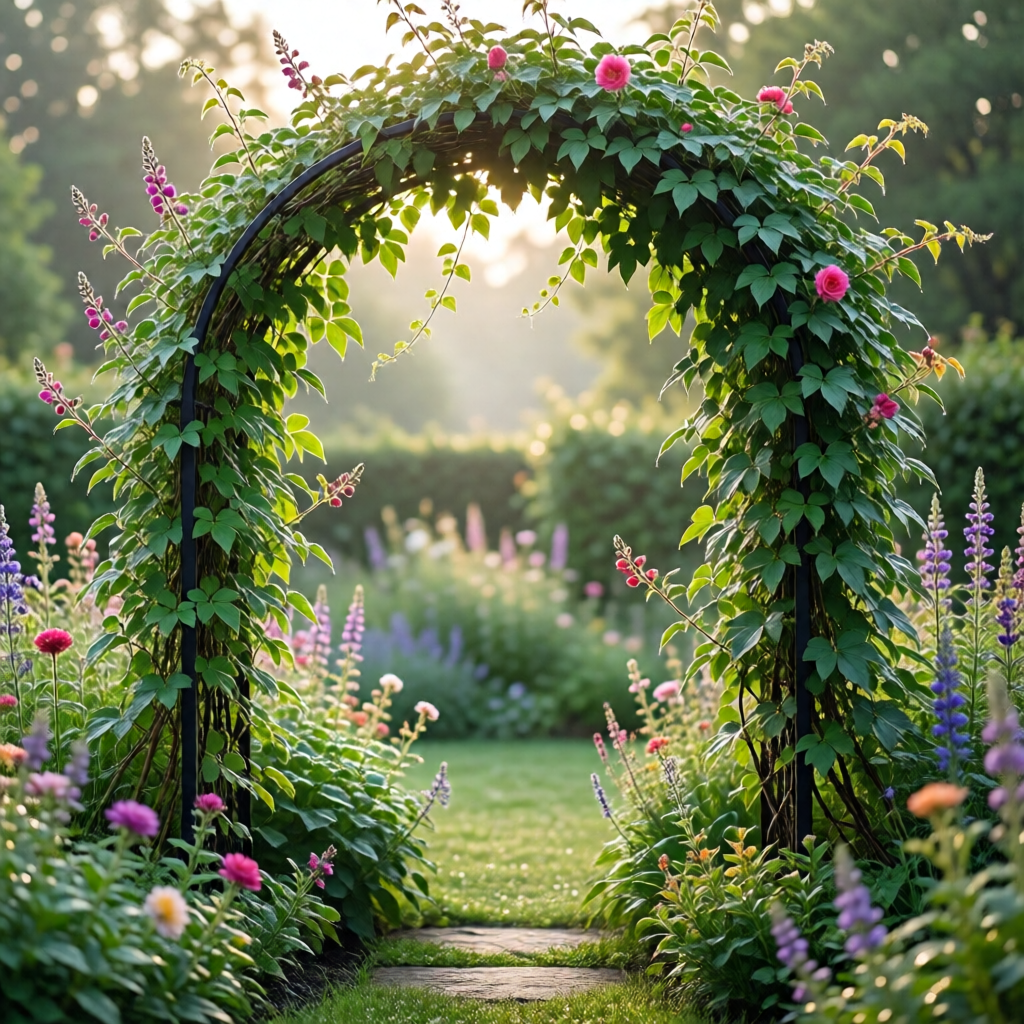
Enhancing the Arch with Accessories
Accessories can turn a functional arch into a decorative masterpiece.
Lighting
Solar‑powered string lights or LED spotlights highlight the arch’s silhouette after dark. For a magical effect, drape fairy lights along the vine’s pathways.
Hanging Baskets and Planters
Attach lightweight hanging baskets filled with seasonal annuals, such as petunias in summer or mums in fall, to add bursts of color.
Seasonal Décor
During holidays, wrap the arch with garlands, ribbons, or weather‑resistant ornaments. In spring, incorporate pastel fabrics for a whimsical feel.
Budget‑Friendly Ideas
Creating a beautiful garden arch doesn’t have to break the bank. Repurpose materials like reclaimed wood pallets, old metal gates, or even sturdy garden hoses bent into an arch shape. Pair these DIY structures with inexpensive fast‑growing vines like sweet pea or morning glory, which can quickly fill gaps while you plan for longer‑term plantings. For a full guide on cost‑saving strategies, explore our front yard garden design on a budget resource.
Low‑Maintenance Options
If you prefer a set‑and‑forget approach, select low‑maintenance vines and sturdy arch materials. Star jasmine and confederate jasmine require minimal pruning and thrive with occasional watering. Pair them with a rust‑proof metal arch that resists weathering. For additional low‑maintenance landscape ideas, check out our low maintenance front yard landscaping article.
Seasonal Highlights and Year‑Round Interest
Designing an arch that shines in every season adds lasting value to your garden. In spring, plant early‑blooming clematis for a burst of color. Summer brings fragrant wisteria or honeysuckle, while autumn can be highlighted with foliage‑changing vines like Virginia creeper. Even in winter, evergreen climbers such as English ivy provide a lush backdrop, and you can incorporate decorative elements like wreaths or bird feeders. For tips on growing vegetables in colder months, see our winter vegetable gardening guide, which includes companion planting ideas that pair well with arch vines.
Mulching and Soil Health for Long‑Term Success
Healthy soil is the cornerstone of thriving vines. Use organic mulches—shredded bark, pine needles, or composted leaves—to conserve moisture and feed the soil as they decompose. Incorporate a slow‑release nitrogen source in early spring to support vigorous growth. For a deeper dive into mulching techniques, refer to our mulching tips for flower beds guide, which outlines best practices for different soil types.
Conclusion
Garden arches paired with climbing plants create captivating vertical gardens that enhance curb appeal, provide privacy, and support wildlife. By selecting the right arch style, choosing vines suited to your climate, and following proper planting and maintenance steps, you can enjoy a living masterpiece that evolves with the seasons. Whether you’re working with a modest budget, seeking low‑maintenance options, or aiming for a grand, show‑stopping entrance, the ideas and expert advice in this guide will help you design an arch that reflects your personal style and nurtures your garden’s health for years to come.
What are the best climbing plants for a sunny garden arch?
Sun‑loving vines such as clematis, wisteria, trumpet vine, and honeysuckle thrive in full sun and provide abundant blooms that attract pollinators.
How do I protect my garden arch and vines during winter?
Wrap the base of woody vines with burlap or frost cloth, apply a thick layer of mulch to insulate roots, and check metal arches for ice buildup to prevent damage.
Can I build a DIY garden arch on a tight budget?
Yes—use reclaimed wood pallets, old metal gates, or PVC pipe frames, and pair them with fast‑growing annual vines like sweet pea or morning glory for quick coverage.
How often should I prune climbing roses on an arch?
Prune climbing roses in early spring after the last frost, removing dead wood and cutting back about one‑third of the previous year’s growth to encourage vigorous flowering.
What maintenance steps keep my arch looking tidy?
Regularly trim side shoots, remove dead foliage, fertilize in early spring, check for pests, and refresh mulch annually to maintain soil health and a neat appearance.