When I first moved into my downtown loft, the only thing that felt truly homey was a narrow floating shelf filled with thriving pothos, a few tiny succulents, and a stray string of pearls draped over the rail. That simple arrangement turned a blank wall into a living gallery and instantly lifted my mood. If you’ve ever stared at an empty wall and wondered how to make it breathe, you’re not alone. Below you’ll find a step‑by‑step guide packed with indoor plant shelf ideas and styling tricks that work in apartments, townhouses, and even cramped studios.
In This Article
- Choosing the Right Shelf for Your Space
- Styling Foundations: Color, Texture, and Balance
- Theme‑Driven Shelf Ideas
- Practical Arrangements for Common Plant Types
- Budget‑Friendly DIY Shelf Projects
- Pro Tips from Our Experience
- Comparison of Popular Shelf Styles
- Frequently Asked Questions
- Conclusion: Your Next Step
Whether you’re a seasoned green thumb or just starting your indoor garden, the right shelf can solve three common problems at once: limited floor space, uneven lighting, and the desire for a cohesive aesthetic. In the sections that follow, I’ll walk you through choosing the perfect shelf, styling it like a pro, and pairing it with the right plants for every type of light and budget. Let’s turn those bare walls into thriving, Instagram‑worthy displays.
Choosing the Right Shelf for Your Space
Material Matters
The first decision is the shelf material. Solid wood such as reclaimed pine or oak adds warmth and can support heavier pots (up to 15 lb each). A West Elm Ladder Shelf in natural walnut costs $199 and holds three rows of 12‑inch‑deep shelves, perfect for a mix of foliage and decorative objects. If you prefer an industrial vibe, powder‑coated steel from Wayfair—the Industrial Metal Shelf at $85—offers a sleek look and a load capacity of 20 lb per shelf, ideal for larger monstera or rubber plants.
Dimensions & Plant Height
Measure the vertical clearance first. A standard floating shelf depth of 10–12 inches works well for most indoor pots, while the height between shelves should be at least 14 inches to accommodate taller plants without crowding. For a ceiling height of 8 ft, a three‑tier shelf with 18‑inch spacing gives you room for a 12‑inch pothos on the bottom, a 15‑inch snake plant in the middle, and a 20‑inch ficus on top.
Light & Placement
Sunlight is the limiting factor for most indoor plants. Position shelves near east‑ or west‑facing windows for bright, indirect light. If you have a north‑facing room, choose a shelf with a built‑in LED grow light—the Spider Plant Shelf Kit includes a 12‑W full‑spectrum panel for $49 and keeps low‑light tolerant species thriving.
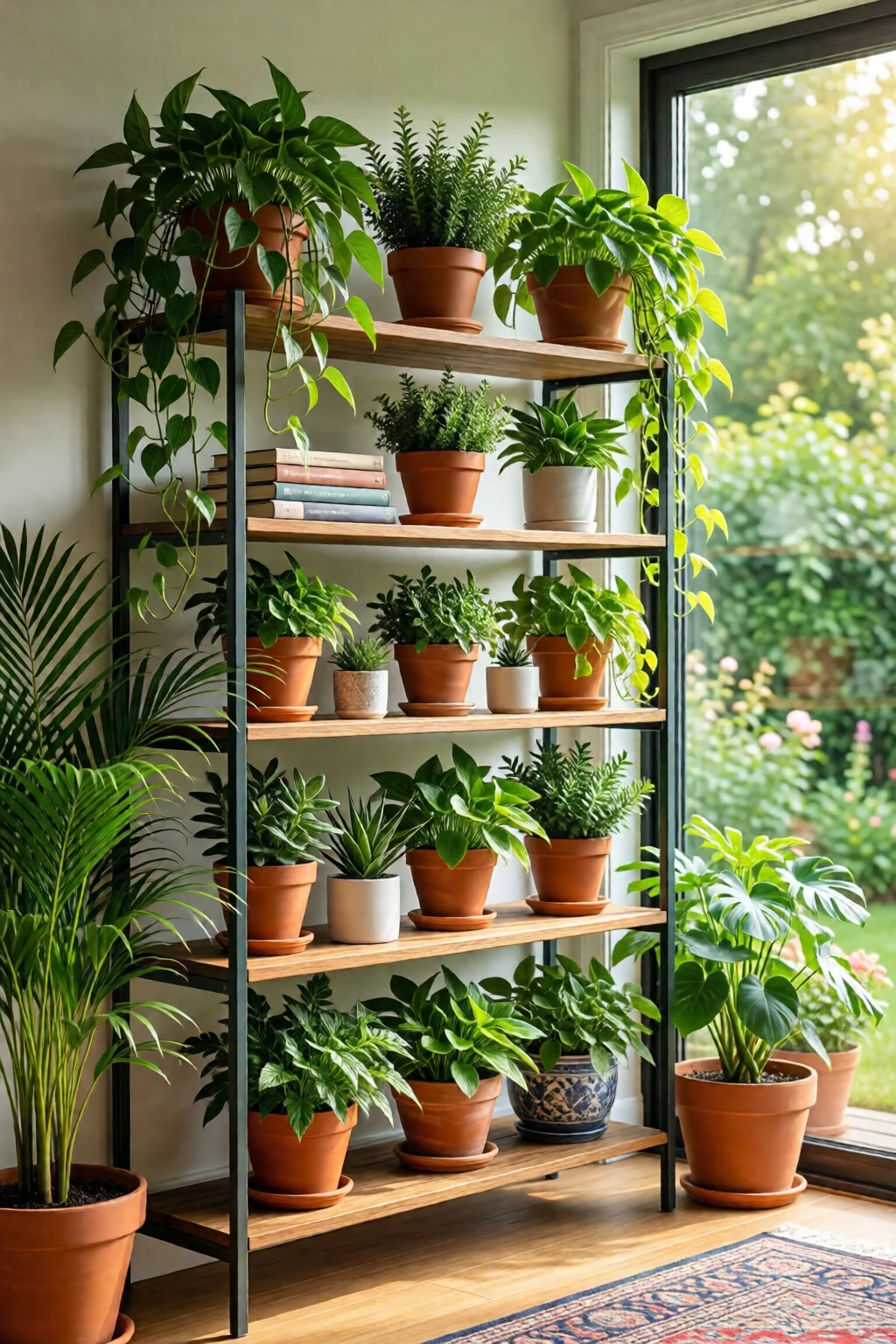
Styling Foundations: Color, Texture, and Balance
Choosing a Color Palette
Neutral tones—soft whites, light grays, and natural wood—create a backdrop that lets the greenery shine. If you love a pop of color, consider a painted matte black shelf (available at IKEA LACK for $15) and pair it with pastel pots in mint, blush, or dusty blue. In my experience, a monochrome shelf with a single accent color feels more curated than a rainbow of pots.
Mixing Textures
Combine ceramic, terracotta, and woven macramé hangers for visual interest. A set of Lechuza Terra Cotta Planters (12 cm, $12 each) adds earthy texture, while a macramé plant hanger from Urban Outfitters ($22) introduces a soft, boho feel. The contrast between glossy succulents and matte pots is especially striking on a polished glass shelf.
Achieving Visual Balance
Plants look most harmonious in odd numbers—three or five objects per tier—because the eye naturally seeks a focal point. Vary heights: a tall fiddle leaf fig on one side, a low‑lying string of pearls (string of pearls plant care) draped on a hook in the middle, and a medium‑sized pothos on the opposite side. This staggered arrangement creates a dynamic rhythm without feeling chaotic.
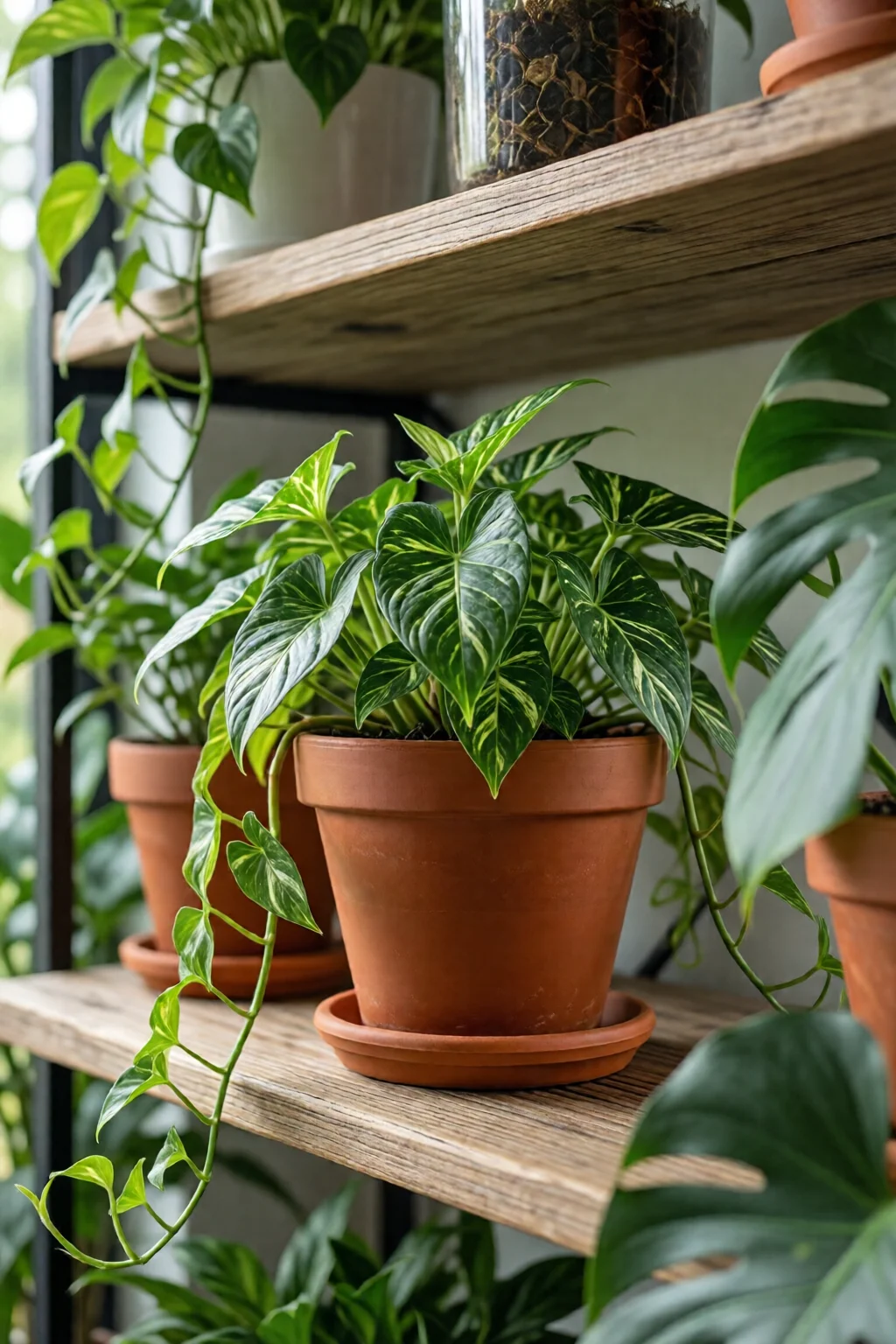
Theme‑Driven Shelf Ideas
Minimalist Monochrome
Use a sleek white floating shelf (e.g., CB2 Minimalist Wall Shelf, $68) and limit pots to one shade of green and one neutral color. Pair a single Monstera deliciosa in a matte black pot ($30) with a trailing Philodendron hederaceum in a clear glass container. The result is a clean, gallery‑like display that works especially well in modern apartments.
Boho Jungle
Layer a reclaimed wood ladder shelf with woven baskets, brass plant stands, and a mix of tropical foliage. Add a Fiddle Leaf Fig in a woven rattan pot ($45) and a cluster of Calathea in patterned ceramic pots ($18 each). Hang a string of pearls from a brass hook for a cascading effect. The key is texture—think macramé, jute, and natural fibers.
Modern Industrial
Combine metal pipes with reclaimed planks for a DIY industrial shelf. A Home Depot Pipe Shelf Kit (5‑ft length, $42) paired with 2‑inch pine boards (cut to 12 inches, $3 per board) creates a rugged look. Populate it with a large ZZ plant in a matte gray pot ($22) and a row of succulents in metal trays ($15). The metal‑to‑wood contrast adds depth while keeping the aesthetic masculine.
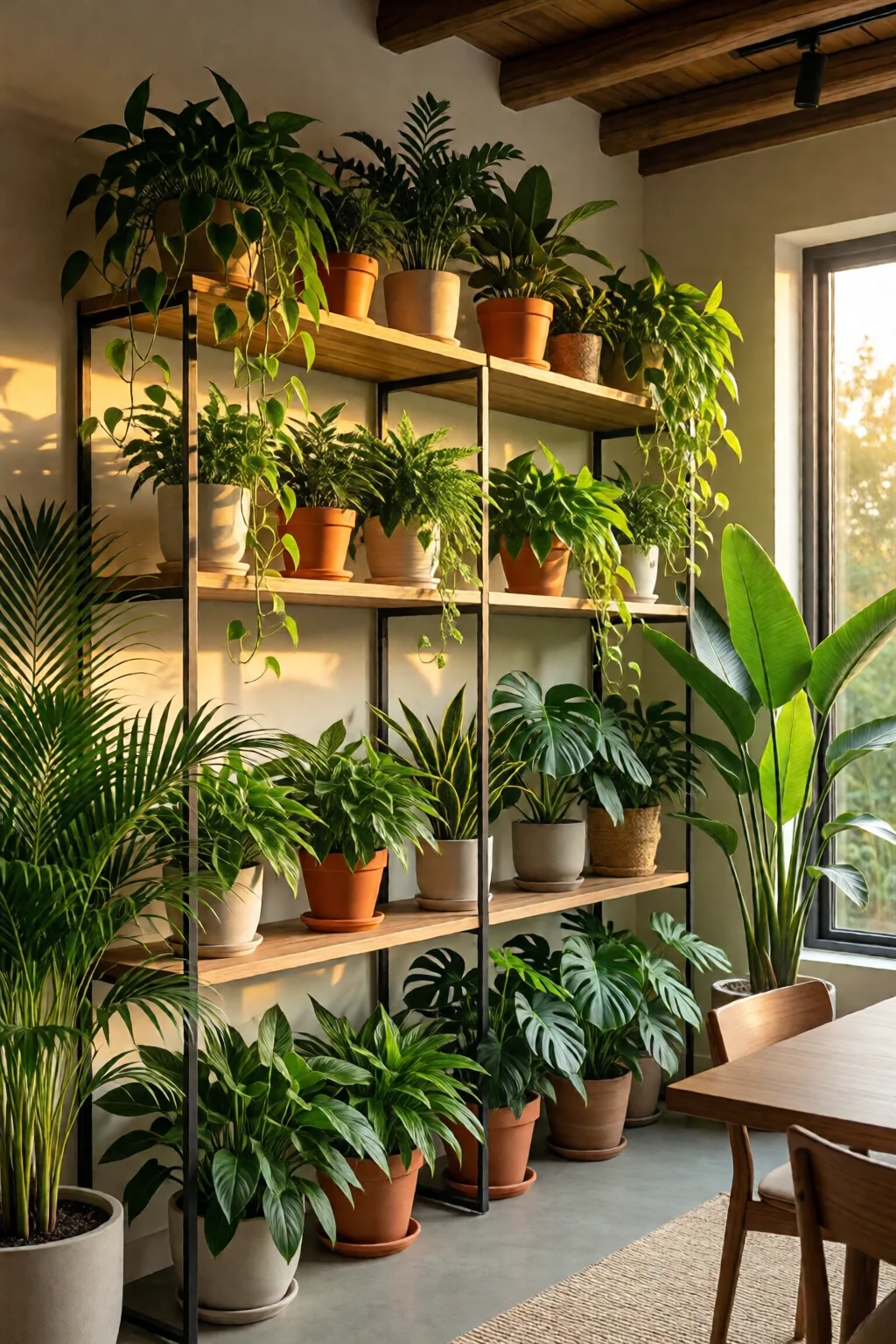
Practical Arrangements for Common Plant Types
Succulents & Cacti
Succulents thrive on heat‑reflecting surfaces. Place a shallow metal tray on the top shelf and fill it with a mix of Echeveria, Aeonium, and Haworthia. Use a succulent care guide for indoors to remind yourself to water only once every two weeks. A 12‑inch diameter tray costs about $12 and keeps the soil contained.
Trailing & Hanging Plants
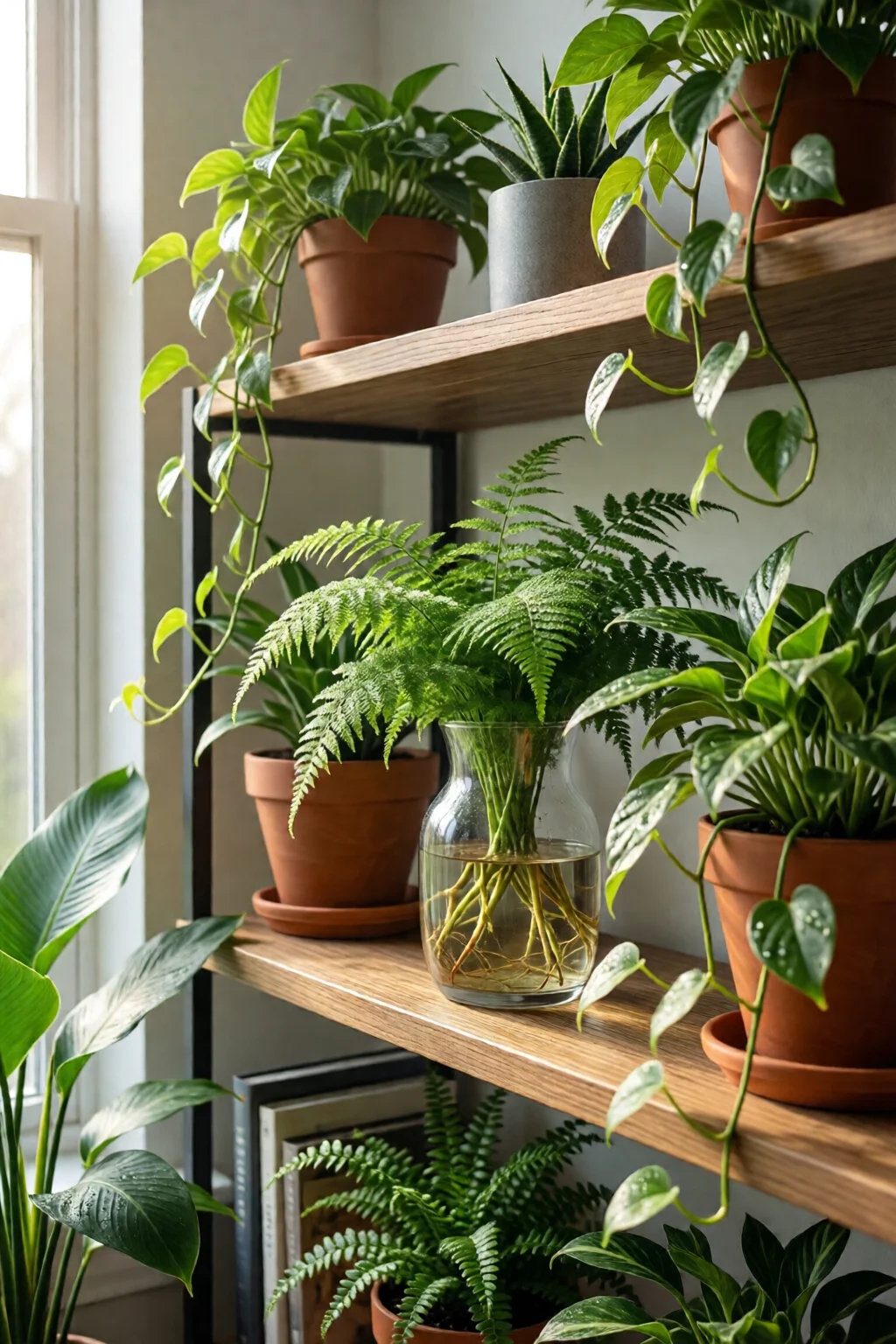
String of pearls, English ivy, and pothos look spectacular when allowed to cascade. Install a small wall‑mounted hook (e.g., Command® Hook, $8 for a pack of 4) and drape a string of pearls vine that can grow up to 4 ft long. The trailing foliage softens the rigid lines of most shelves, especially on industrial or minimalist setups.
Large Foliage & Air‑Purifiers
Peace lilies, snake plants, and rubber plants are both decorative and functional. A peace lily in a 10‑inch ceramic pot ($28) not only adds glossy foliage but also purifies the air—see peace lily care tips and problems for watering cues. Position these larger pots on the bottom shelf for stability and to keep them within reach for occasional leaf cleaning.
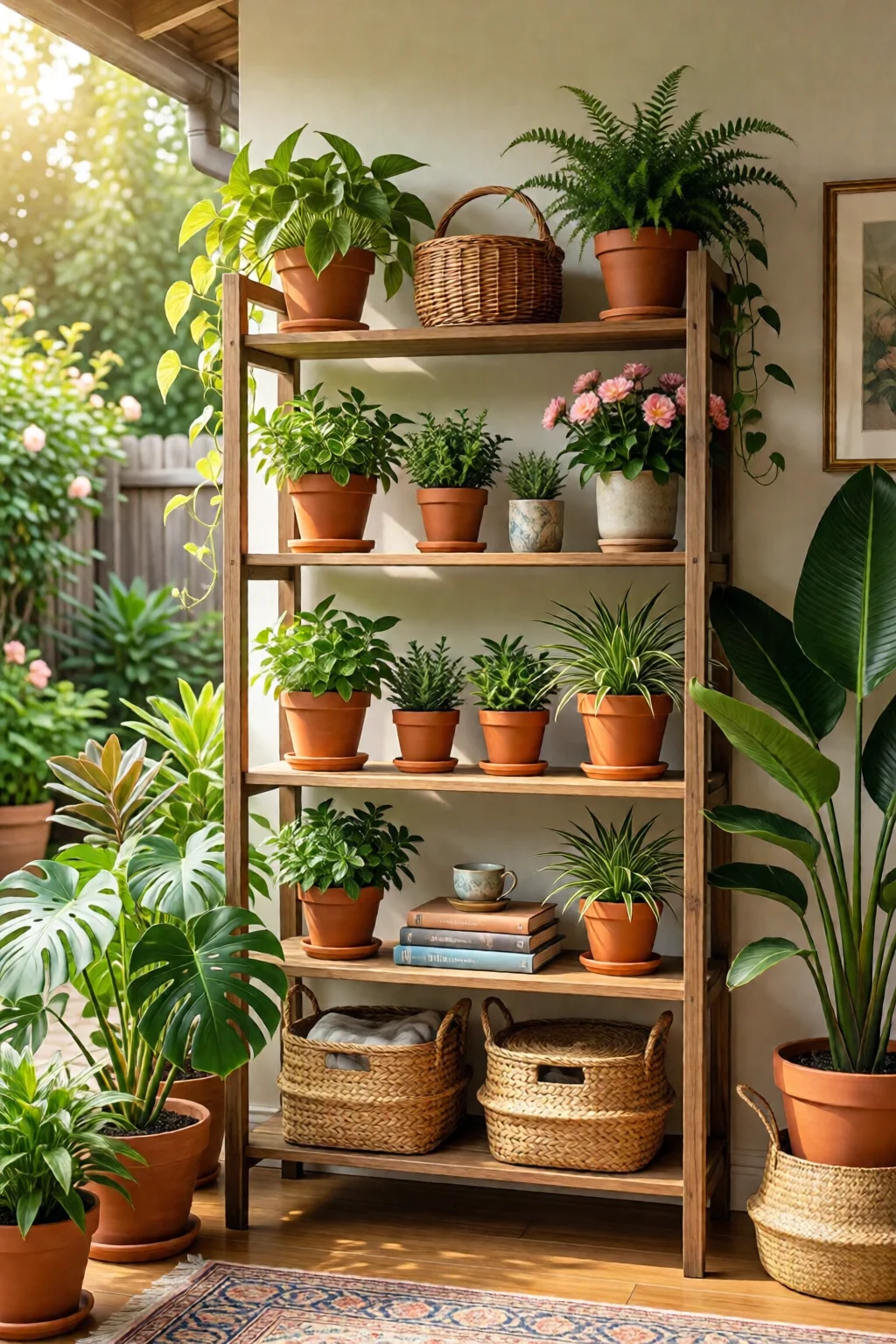
Budget‑Friendly DIY Shelf Projects
Upcycled Crate Shelf
Find a pair of wooden wine crates at a local thrift store for $10 each. Sand them, stain with a walnut finish ($5), and stack them on a wall using two L‑brackets ($7). This creates a two‑tier shelf that holds up to 8‑inch‑deep pots and costs under $40 total.
Pipe & Wood Floating Shelf
Purchase ½‑inch black steel pipe fittings (set of 6 for $18) and cut 2‑ft pine boards (12 inches wide, $4 each). Assemble with pipe brackets, mount with wall anchors, and you have a sturdy, industrial‑style shelf for $30–$40. The pipe design distributes weight evenly, allowing for heavier pots like a 12‑inch ficus.
IKEA Hack: KALLAX Corner
The IKEA KALLAX corner unit (4‑cube, $79) can be turned into a tiered plant shelf by adding 2‑inch plywood inserts ($3) and a coat of white paint ($2). The result is a compact, modular system that fits snugly into corners and can be expanded with additional cubes as your collection grows.
Pro Tips from Our Experience
- Rotate your shelves quarterly. Plants grow toward light, so a 180° turn ensures even foliage and prevents one side from becoming leggy.
- Use a moisture meter. Even experienced growers can misjudge watering; a handheld meter ($12) eliminates guesswork.
- Group plants by humidity needs. Succulents love dry air, while ferns thrive in higher humidity. Placing them together on separate shelves maintains optimal micro‑climates.
- Integrate decorative elements. Small sculptures, vintage books, or a scented candle add personality without stealing the spotlight.
- Secure tall plants. Anchor a tall ficus with a discreet metal brace to the wall—prevents tipping in high‑traffic areas.
Comparison of Popular Shelf Styles
| Style | Typical Cost (USD) | Ease of Installation | Best Plant Types | Ideal Room |
|---|---|---|---|---|
| Minimalist Monochrome | $150–$250 | Easy (pre‑drilled brackets) | Fiddle Leaf Fig, Snake Plant, Peace Lily | Modern loft or studio |
| Boho Jungle | $200–$350 | Moderate (mix of hanging & standing) | String of Pearls, Calathea, Monstera | Eclectic apartment |
| Industrial | $120–$200 | DIY (pipe & wood assembly) | ZZ Plant, Cacti, Large Ferns | Urban loft or converted space |
Frequently Asked Questions
How high should the spacing be between shelves?
Leave at least 14 inches between shelves for most indoor plants. This accommodates pot height, leaf spread, and allows you to reach the foliage without crowding.
Can I use a bookshelf as a plant shelf?
Yes, but ensure the wood can bear the weight of wet soil (typically 10–15 lb per pot). Reinforce the middle shelves with metal brackets if you plan to place larger plants.
What lighting is ideal for a mixed‑plant shelf?
Bright, indirect light works for most foliage. For low‑light corners, add a 12‑W full‑spectrum LED panel (around $49) to keep shade‑tolerant plants healthy.
How often should I water plants on a shelf?
It varies by species: succulents every 2–3 weeks, tropical foliage once a week, and peace lilies when the top inch of soil feels dry. Use a moisture meter for accuracy.
Is it okay to place a humidifier near my shelf?
Absolutely. A small tabletop humidifier (around 1 gallon capacity, $30) benefits ferns, calatheas, and other humidity‑loving plants without over‑watering the soil.
Conclusion: Your Next Step
Indoor plant shelf ideas and styling are less about buying the fanciest furniture and more about understanding light, balance, and the personality you want to showcase. Start by measuring your space, pick a shelf that matches your aesthetic, and then curate with a mix of textures and plant heights. Remember to rotate, monitor moisture, and keep the design fluid—plants grow, and so should your display.
Pick one of the styles above, gather a few pots, and within a weekend you’ll have a living wall that not only purifies the air but also turns heads. Happy shelving!
1 commentaire sur « Indoor Plant Shelf Ideas And Styling – Everything You Need to Know »